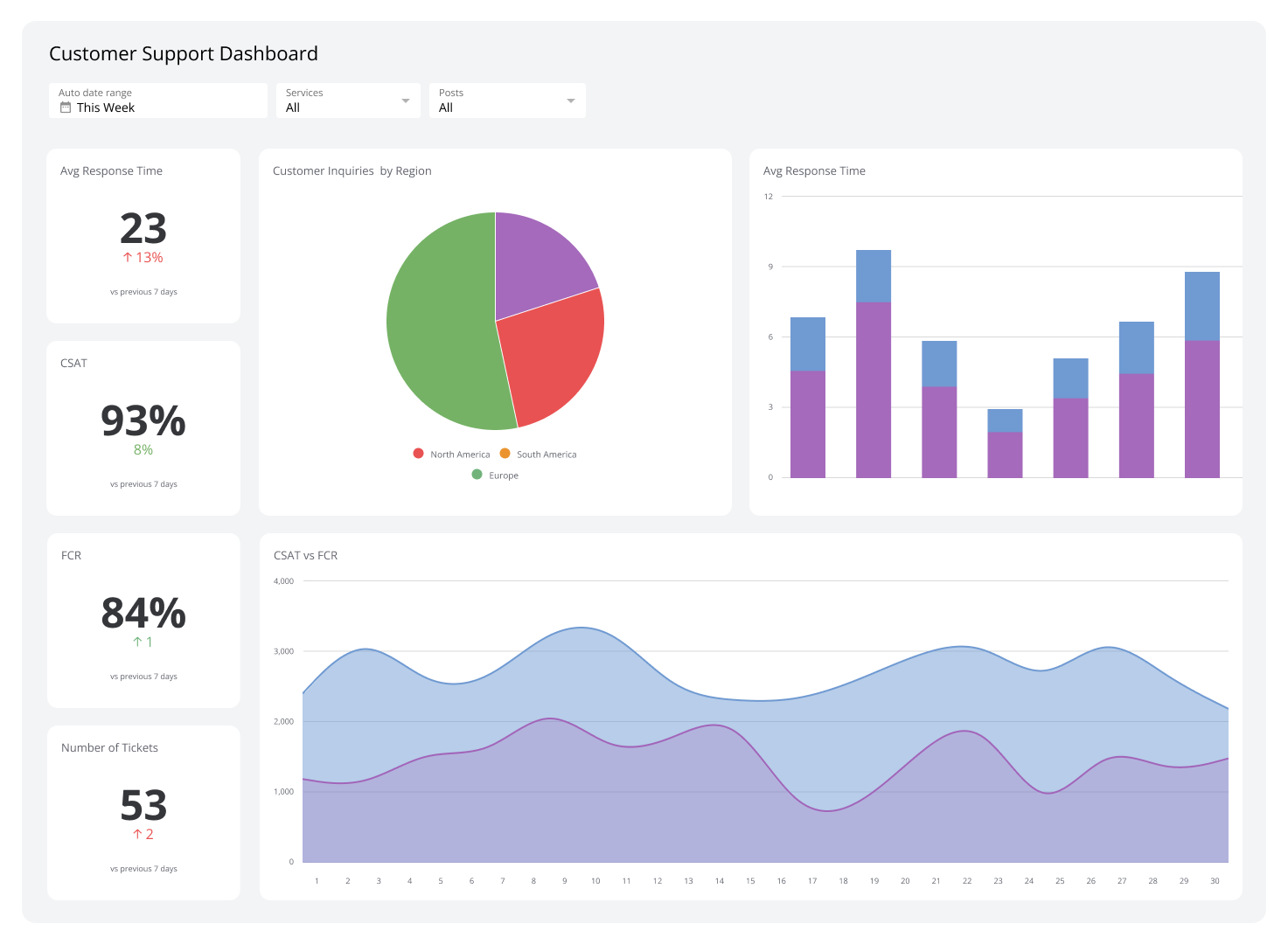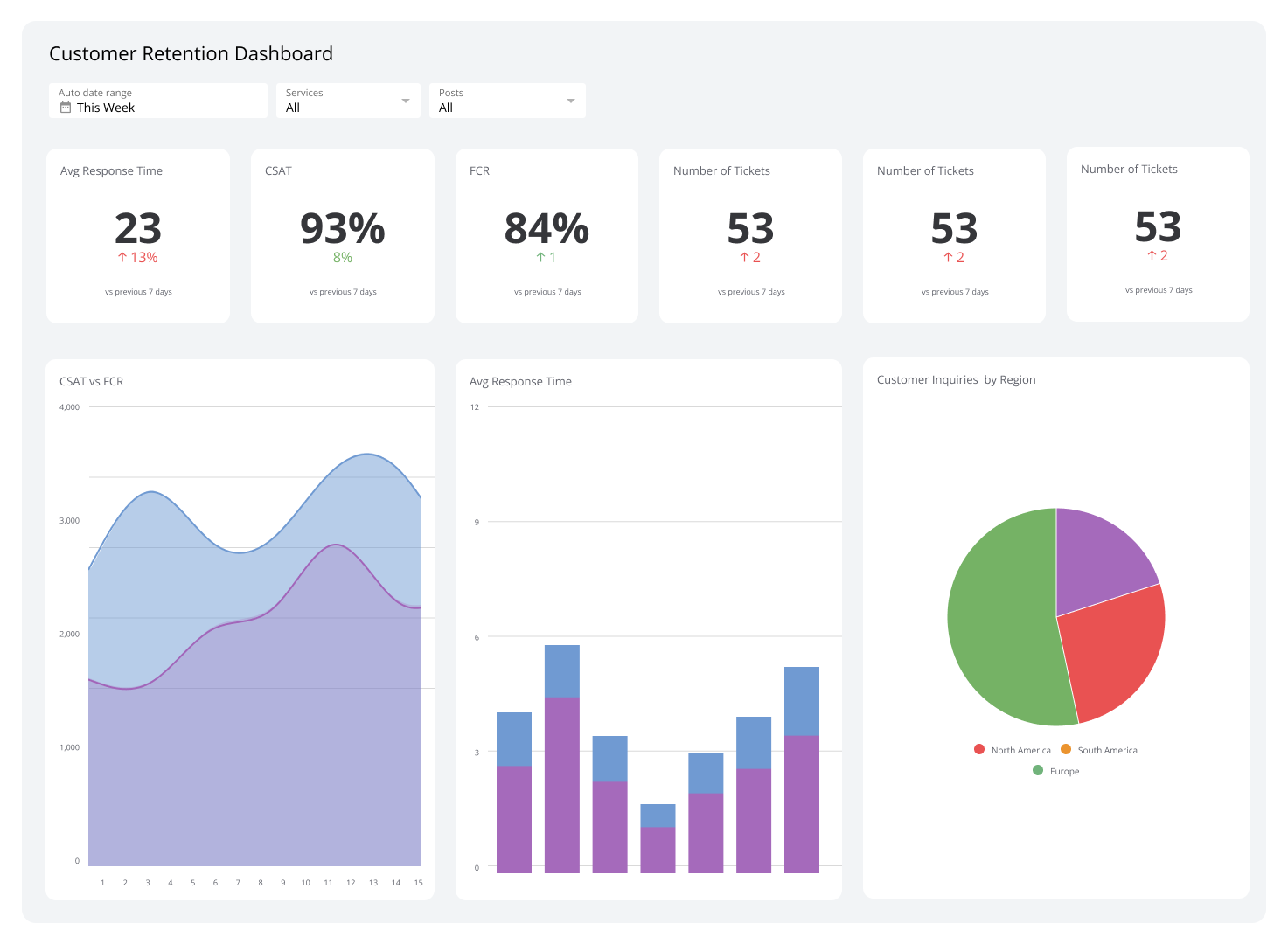
Time to Healthcare Service
Measure the time it takes for patients to receive care and improve operational efficiency.
Time to Healthcare Service by Stage
What is Time to Healthcare Service?
Time to Healthcare Service measures the duration between a patient's arrival and when they receive care. It is not a single number but a set of time-based metrics: time to first nurse contact, time to physician assessment, time to discharge, and more.
Why this KPI matters
Long wait times erode patient trust fast. When care is delayed, satisfaction drops, outcomes worsen, and staff face compounding pressure. Healthcare managers who track Time to Healthcare Service know where the gaps are before they become crises.
This KPI also drives better decisions on staffing levels, budget allocation, and equipment purchasing. Without it, those decisions rely on instinct. With it, they rely on evidence.
How to define and segment Time to Healthcare Service
Not all wait times carry equal urgency. An emergency room visit demands a far faster response than a scheduled walk-in appointment. Treating them as the same metric distorts both.
Segment Time to Healthcare Service by service type:
- Emergency care: time from arrival to physician assessment, where minutes matter most
- Urgent care: time to first clinical contact for non-life-threatening but time-sensitive needs
- Scheduled appointments: time from check-in to provider contact, where efficiency signals respect for the patient's time
- Discharge: time from care completion to patient exit, which affects throughput and bed availability
Tracking these streams separately gives you a cleaner picture of where performance is strong and where it needs attention.
How to calculate Time to Healthcare Service
The core formula is straightforward:
Time to Healthcare Service = Time Care Was Received - Time of Patient Arrival
Apply this formula within each service segment. Aggregate results over a set period (shift, day, week, month) to identify trends rather than reacting to individual outliers.
Related healthcare KPIs
Tracking Time to Healthcare Service alongside related metrics gives a fuller view of emergency department performance:
How to monitor Time to Healthcare Service on a dashboard
Knowing your wait times is one thing. Knowing them in real time, without waiting for someone to pull a report, is what lets you act. A real-time dashboard surfaces Time to Healthcare Service and related metrics automatically, so you can spot a bottleneck during a shift instead of discovering it in a weekly review.
With Klipfolio Klips, you can pull data from your existing systems, track each service segment separately, and give every team member a consistent, up-to-date view of performance. No manual spreadsheets. No lag. Just the numbers you need to make the right call.