Longest Call Length
Monitor the duration of the longest call handled by your team.
Longest Call Length
What is Longest Call Length?
Longest Call Length is the duration of the single longest call handled by your team during a reporting period. It reveals outliers that average metrics hide.
Overview
Most call centre leaders watch Average Handle Time. Longest Call Length tells a different story. It shows the upper extreme of your call complexity, and what's sitting at that edge matters: a call that runs 90 minutes when your average is 8 minutes is a signal worth understanding, not just a number to file away.
Tracking Longest Call Length helps you catch coaching gaps, spot systemic process problems, and make staffing decisions with a fuller picture of what your team actually handles.
Why Longest Call Length matters
Long calls aren't always bad. Some customer situations are genuinely complex. But when your longest calls keep climbing, or when they consistently involve the same agents, queues, or issue types, you have something actionable in front of you.
Here's what this metric helps you see:
- Training gaps: Calls that run far longer than average often mean an agent is searching for answers, unsure of the process, or struggling to de-escalate. That's a coaching opportunity, not a performance write-off.
- Complex customer issues: Some calls are long because the problem is hard. Knowing that helps you staff the right specialists and set realistic resolution timelines.
- Staffing and scheduling needs: Understanding the full range of call durations, not just the average, helps you plan queue coverage and break schedules more accurately.
- Process and system inefficiencies: Slow internal tools, gaps in your knowledge base, and unclear escalation paths all show up in call length before they show up anywhere else.
- Realistic service level targets: When you know your duration range, your performance goals reflect what's actually happening on the floor.
How to calculate Longest Call Length
Longest Call Length doesn't require a formula in the traditional sense. You're identifying the single longest call duration within your reporting period.
Longest Call Length = Duration of the longest call handled in the period
Example: Your team handled 500 calls last week. The longest ran 45 minutes (2,700 seconds). Your Longest Call Length for that week is 45 minutes. That's the number to track, trend, and investigate.
Longest Call Length vs. Average Handle Time
These two metrics answer different questions. You need both.
| Metric | What it tells you |
|---|---|
| Average Handle Time (AHT) | Typical call duration across all interactions |
| Longest Call Length | The upper extreme, your most demanding call |
A team with an AHT of 8 minutes and a longest call of 90 minutes has a very different performance profile than a team where every call falls between 7 and 10 minutes. The average looks the same. The reality isn't.
Longest Call Length surfaces what AHT smooths over. Use Average Handle Time to assess overall efficiency. Use Longest Call Length to understand the edges.
Benchmarks by call type
There's no universal target for Longest Call Length. What's reasonable depends on what your team handles. These ranges give you a starting point:
| Call type | Benchmark range |
|---|---|
| Customer service / support | 12 to 30 minutes (720 to 1,800 seconds) |
| Sales calls | 10 to 20 minutes (600 to 1,200 seconds) |
| Technical support | 15 to 40 minutes (900 to 2,400 seconds) |
| Complaint resolution | 20 to 60 minutes (1,200 to 3,600 seconds) |
Rather than chasing a specific number, use this metric to:
- Set a reasonable upper limit for your service type
- Flag and review any call that exceeds that limit by 50% or more
- Track the trend over time: rising longest calls often signal growing complexity or thinning resources before either shows up in your CSAT or attrition numbers
How to bring Longest Call Length down
If your longest calls are consistently unreasonable, the fix is rarely "tell agents to wrap up faster." The root cause is almost always structural.
- Improve your knowledge base: Agents who can't find answers quickly spend time searching instead of resolving. A well-maintained, searchable knowledge base is one of the highest-leverage investments you can make.
- Sharpen escalation procedures: Sometimes the fastest path to resolution is a warm transfer to a specialist. If agents are holding long calls because they don't know when or how to escalate, that's a process gap.
- Review long calls with the agents involved: Targeted coaching based on real call recordings is more effective than general training. Listen for where the call stalled and address that specifically.
- Simplify internal tools: Slow systems, clunky navigation, and multiple screens to check force agents onto hold while they work. Streamlining the tools reduces dead time in every call.
- Set escalation thresholds by call type: For certain queues, define a duration at which agents should escalate or offer a callback. This protects both the customer experience and your team's capacity.
Create custom dashboards for you and your team.
Get started with KlipsTracking Longest Call Length in a dashboard
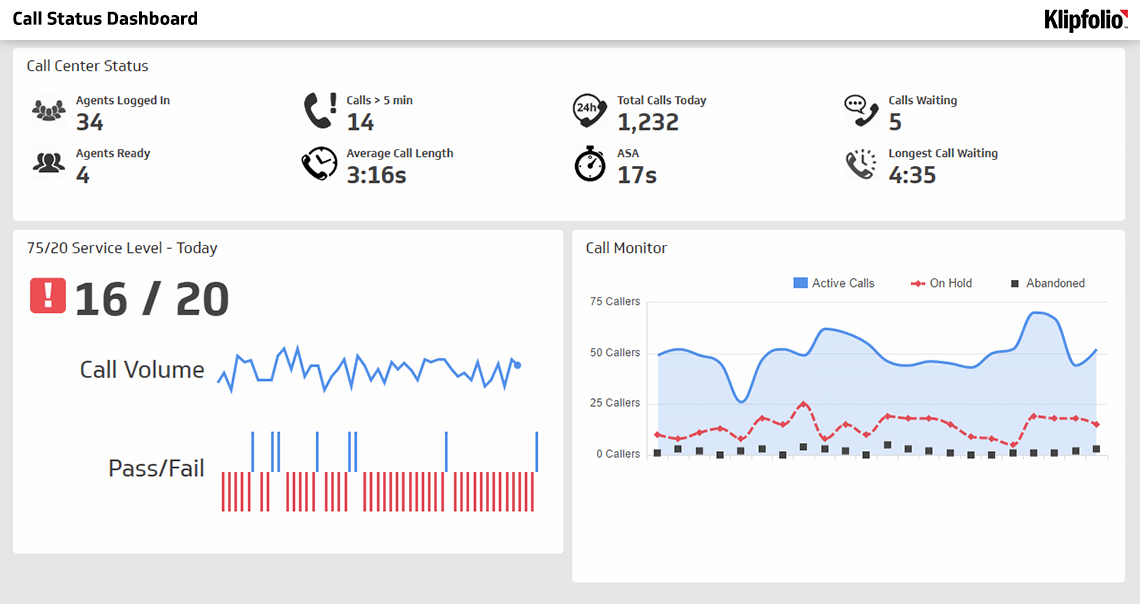
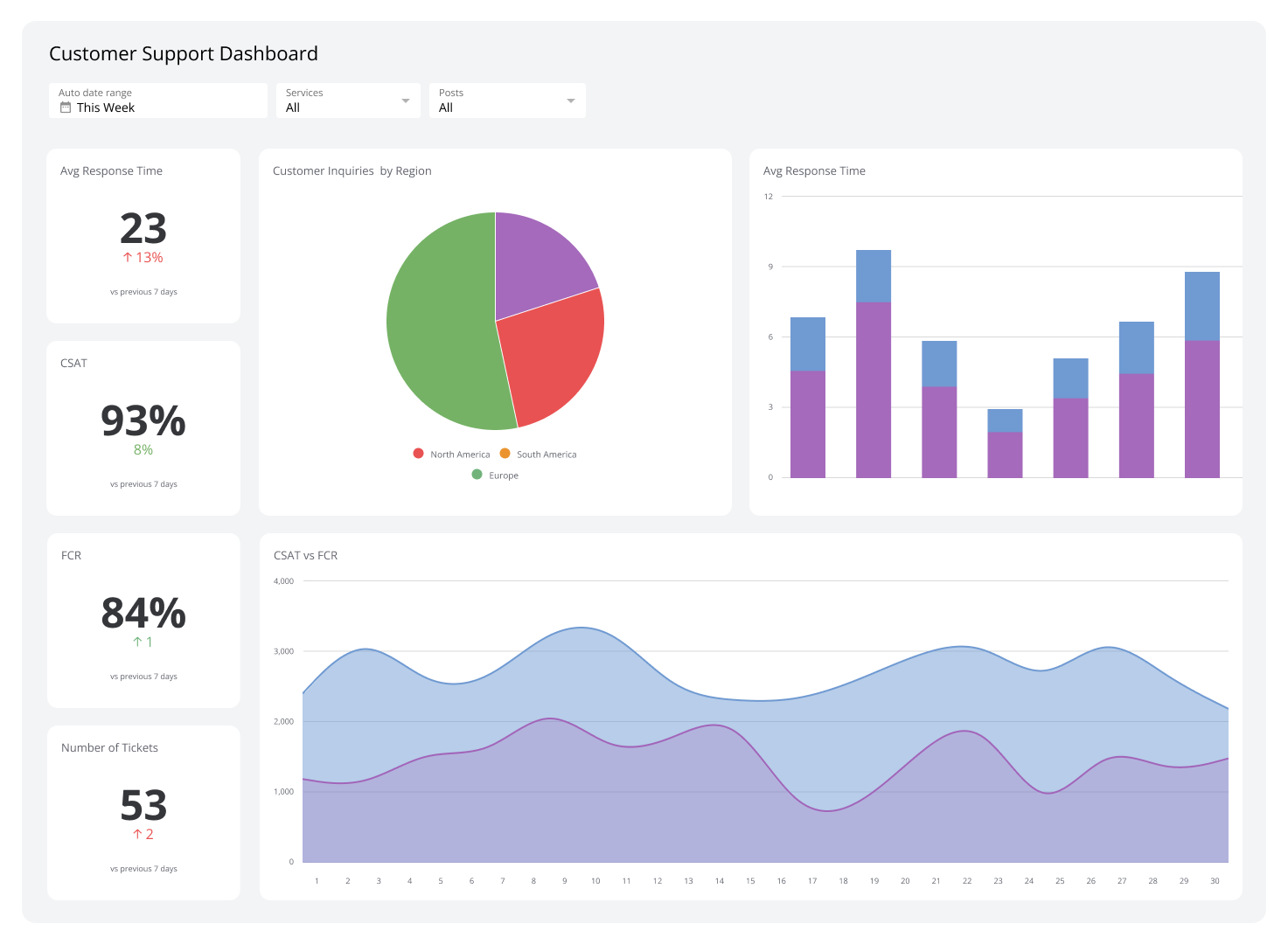
Longest Call Length is most useful when you can see it alongside related metrics: Average Handle Time, Service Level, and Customer Satisfaction Score. Watching one number in isolation gives you a data point. Watching them together gives you a picture of what's actually happening in your operation.
With Klips, you can pull call centre data from your phone system or CRM, set it to refresh automatically, and share a live view with your team leads without anyone having to pull a report or paste numbers into a spreadsheet. The metrics are there when you need them, not just when someone remembers to check.