Repeat Calls
Measure the percentage of calls that addressed the same issue or subject, and identify opportunities to improve first contact resolution.
Repeat Call Rate by Issue Type
| Issue Type | Repeat Calls | Rate |
|---|---|---|
| Billing | 34 | 12.8% |
| Technical | 28 | 9.2% |
| Account | 18 | 7.1% |
| General inquiry | 11 | 4.3% |
| All issues | 91 | 8.5% |
Overview
Repeat Calls measures the percentage of incoming calls that address the same issue as a previous call. A high rate tells you customers aren't getting their problems solved the first time.
High Repeat Call rates signal underlying issues: incomplete resolutions, poor knowledge transfer, or recurring product and service problems. Tracking this KPI helps you identify where your support process breaks down and what to fix first.
Why Repeat Calls matters
Every callback costs you twice. An agent handles the same problem again, a new customer waits longer, and the customer calling back is already frustrated before the conversation starts.
Repeat Calls are a leading indicator of quality. They reveal whether your team is truly resolving issues or just closing tickets. A high Repeat Call rate often points to:
- Incomplete resolutions: Agents closing calls without fully addressing the customer's concern.
- Poor knowledge transfer: Agents lacking the information or tools needed to resolve issues on the spot.
- Systemic problems: Recurring product, billing, or service issues that affect many customers.
- Unclear communication: Customers misunderstanding next steps or what to expect.
Catching these patterns early means you can fix the root cause before it damages customer relationships or inflates your operational costs. When your Repeat Call rate is visible and current, you don't have to wait for a complaint spike to know something's wrong.
How to calculate Repeat Calls
Repeat Call Rate = (Number of repeat calls / Total number of calls) × 100
Example calculation
If your call centre handled 1,000 calls last week and 85 were follow-ups on issues from a previous call:
(85 / 1,000) × 100 = 8.5%
Your Repeat Call Rate for the week is 8.5%.
What counts as a repeat call?
A repeat call is any inbound call where the customer is contacting you about an issue they've already called about. This includes:
- Customers calling back because their problem wasn't resolved.
- Customers seeking clarification on a previous interaction.
- Customers reporting that a promised solution didn't work.
- Follow-up calls initiated by the customer (not agent-initiated outbound calls).
Note: Some call centres distinguish between "repeat calls" (same issue) and "repeat callers" (same customer, any issue). Clarify your definition with your team to ensure consistent tracking.
Benchmarks and targets
Repeat Call rates vary by industry and call type:
- Customer service / support: 5–15% is typical. Aim for under 10%.
- Collections / billing: 10–20% is common due to the nature of the work.
- Technical support: 8–12% is standard, though complex issues may run higher.
- Sales: 3–8% is expected for inbound sales calls.
A well-run operation typically sees Repeat Call rates between 5% and 10%. If yours is consistently above 15%, investigate root causes immediately rather than waiting for the next reporting cycle.
How to reduce repeat calls
1. Strengthen First Contact Resolution
Empower agents to resolve issues completely on the first call. Give them access to knowledge bases, system tools, and enough decision-making authority to close issues without escalation. Train agents to ask clarifying questions and confirm the customer's concern is fully addressed before ending the call.
2. Improve call documentation
Ensure agents document every interaction thoroughly: the issue, the resolution steps, and any follow-up actions. Good documentation means the next agent has the full picture and the customer doesn't have to repeat themselves.
3. Identify and fix systemic issues
Use repeat call data to spot patterns. If many customers call back about the same problem, escalate it to product, engineering, or operations. Treating the symptom without fixing the cause just moves the repeat call to next week.
4. Invest in agent training
Regular coaching on product knowledge, troubleshooting, and communication reduces repeat calls. Pair newer agents with experienced mentors and use call recordings to identify specific coaching opportunities.
5. Set clear expectations
Customers call back when they're unsure what happens next. Before ending a call, confirm what will happen, when they'll hear back, and how to reach you if needed.
6. Act on feedback
Post-call surveys and customer feedback tell you why repeat calls happen. Share those insights with your team and adjust processes accordingly.
Create custom dashboards for you and your team.
Get started with KlipsTracking Repeat Calls with dashboards
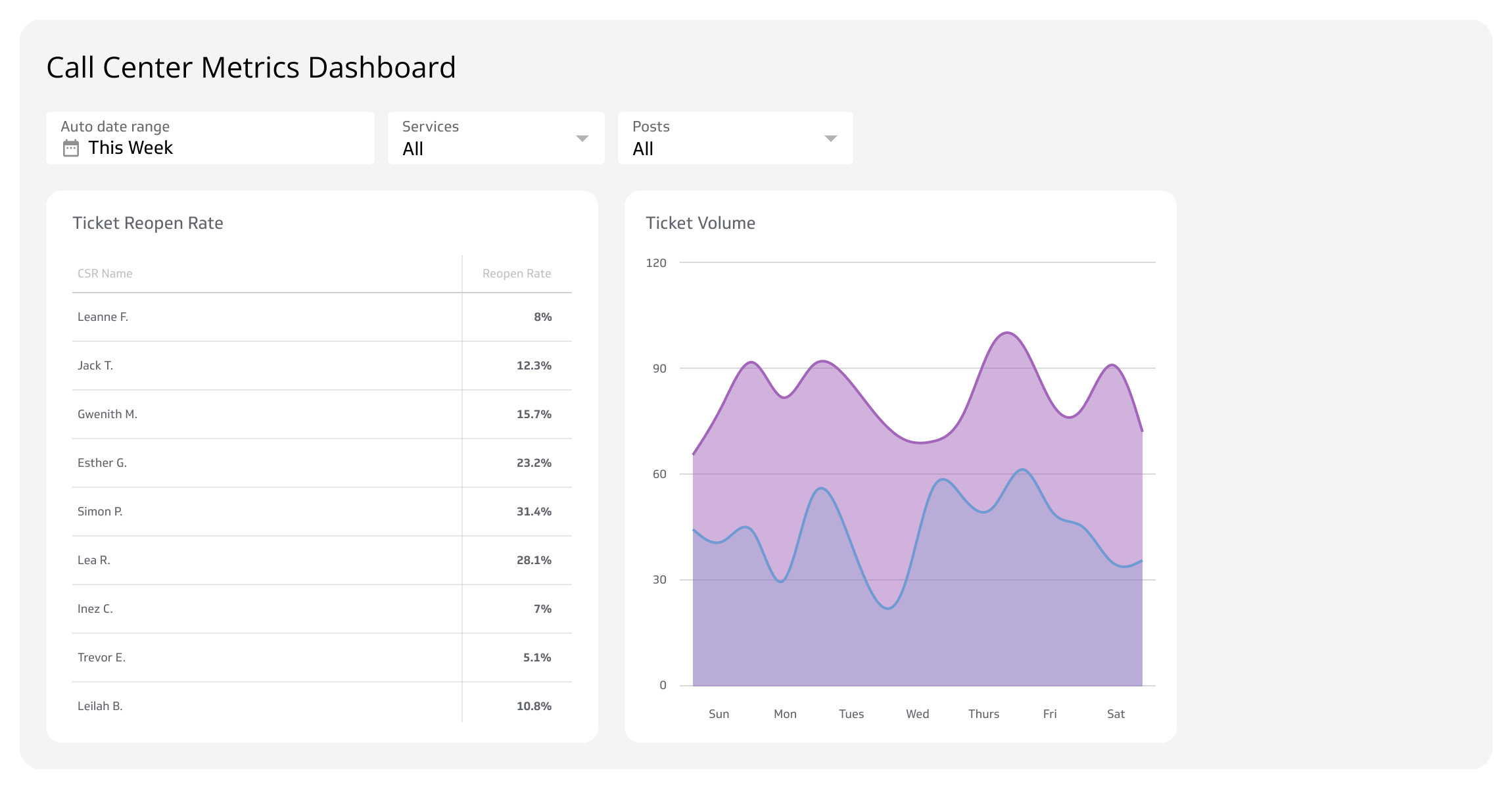
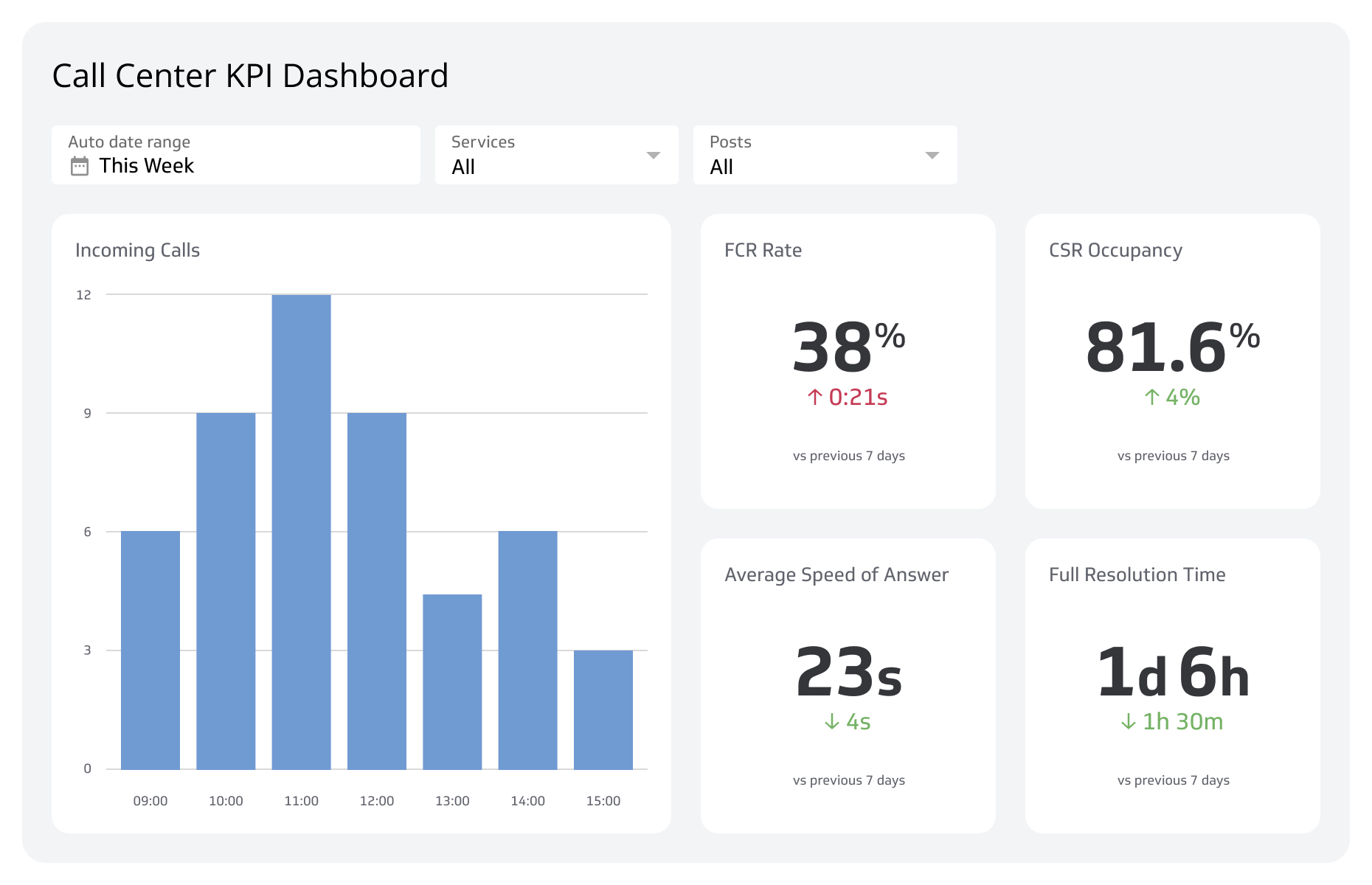
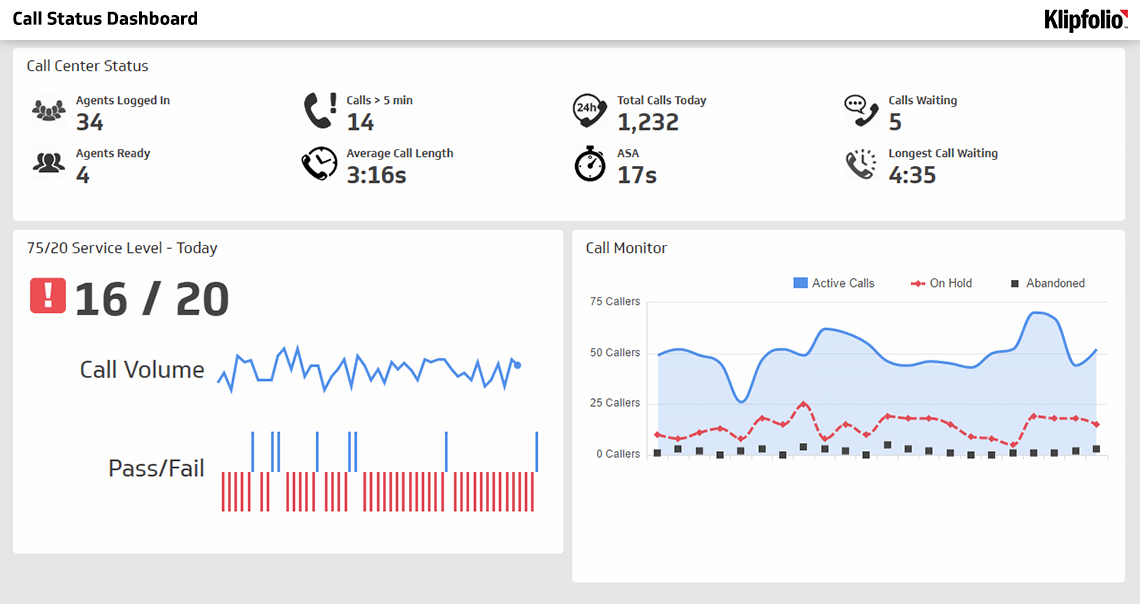
A Repeat Calls dashboard gives you the visibility to act before problems compound. Set yours up to show:
- Weekly Repeat Call Rate: Trend over time to spot improvements or declines.
- Repeat calls by issue type: Identify which problems drive the most callbacks.
- Repeat calls by agent: Recognize top performers and surface coaching opportunities fairly and constructively.
- Time to repeat call: How long after the first call does the customer call back? Immediate repeats signal incomplete resolutions; delayed repeats may point to product or fulfilment issues.
When these numbers update automatically and stay in one place, you stop waiting for someone to pull a report. You know where things stand, and you know what to do next. That's the difference between a call centre that reacts and one that stays ahead.