Call Abandonment
Measure how many callers hang up or disconnect before they can be connected to one of your agents.
Call Abandonment Rate
Call Abandonment measures the number of callers who hang up or disconnect before reaching a live agent. It signals where your call center is losing customers before service even begins.
This metric connects directly to your Service Level KPI and Customer Satisfaction metrics. Callers have limited patience. When wait times stretch too long, they hang up, and some don't call back.
What is Call Abandonment?
Call Abandonment is the total number of callers who disconnect before being connected to a live agent, whether they drop during the queue or before reaching an automated system.
Why Call Abandonment matters
A high Call Abandonment rate points to a gap between call volume and your team's capacity to handle it. That gap costs you in two ways: lost service opportunities and damaged customer trust.
Tracking this metric over time reveals patterns, peak periods, understaffed shifts, or routing problems you can fix. Tracking it in real time lets you catch a spike before it becomes a service failure.
Key terms
Before calculating Call Abandonment, it helps to understand the components:
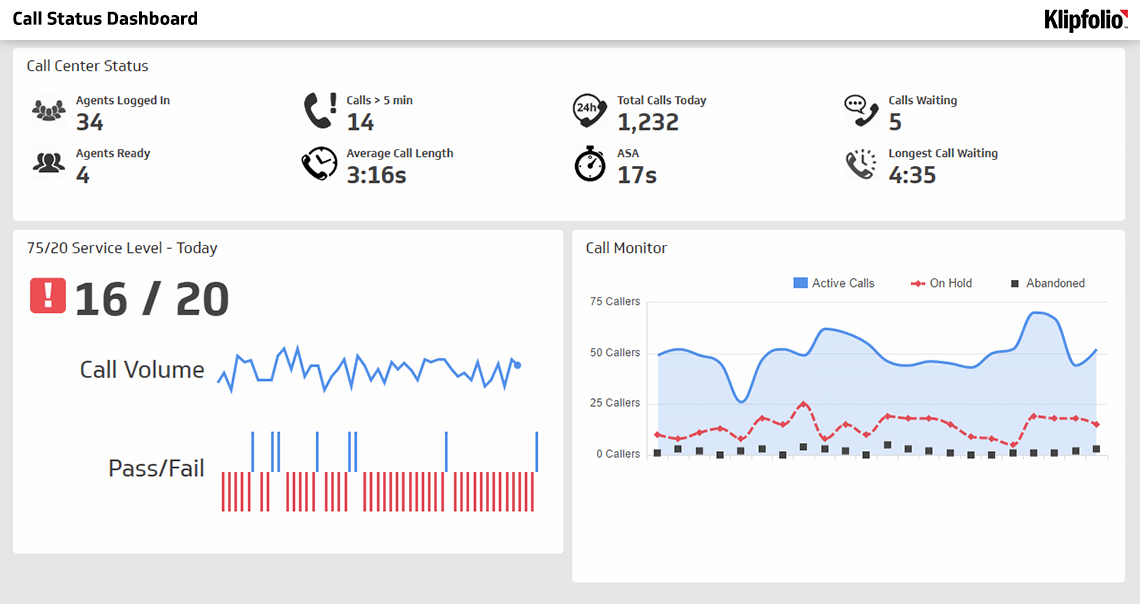
- Active calls: The number of callers currently being handled by a live agent.
- On-hold calls: The number of callers who have passed through a forwarding agent or automated system and are waiting in the queue for a live agent.
- Abandoned calls: The number of callers who hang up before reaching a live agent, either before or after entering the queue.
How to calculate Call Abandonment
Call Abandonment Rate = (Abandoned Calls / Total Incoming Calls) × 100
For example, if your call center receives 500 calls in a day and 40 callers hang up before reaching an agent, your Call Abandonment Rate is 8%.
Industry benchmarks vary, but most call centers target a rate below 5%. Rates above 10% typically indicate a staffing or routing problem that needs immediate attention.
What a good Call Abandonment rate looks like
Two indicators suggest your call center is managing abandonment well:
- Consistently meeting SLAs while keeping the abandonment rate low, which shows your staffing and routing are aligned with demand.
- A low abandonment rate alongside a high first call resolution rate, which means callers who do connect are getting their issues resolved without needing to call back.
How to reduce Call Abandonment
Reducing Call Abandonment usually comes down to one of three levers:
- Staffing: Align agent schedules with peak call periods to reduce queue times.
- Routing: Use call routing rules that direct callers to available agents faster and reduce unnecessary transfers.
- Self-service: Offer automated options for common requests so callers can resolve simple issues without waiting for an agent.
Tracking Call Abandonment on a dashboard
Once you have benchmarks and targets in place, monitoring Call Abandonment alongside your other call center KPIs keeps your team aligned and responsive. A real-time dashboard surfaces spikes as they happen, so you can act before a short-term problem compounds.