Queries Resolved in the Same Day
Measure what share of incoming support queries your team closes on the day they arrive, and act on it before the queue falls behind.
Queries Resolved in the Same Day
Queries Resolved in the Same Day tells you what share of incoming support queries your team closes on the day they arrive, giving you a direct read on responsiveness and capacity.
When customers reach out with a problem, waiting overnight for a response erodes trust. Tracking Queries Resolved in the Same Day shows whether your team is keeping pace with demand or letting issues carry over, and it gives leaders a concrete number to act on instead of a vague sense that things are "mostly fine."
What is Queries Resolved in the Same Day?
Queries Resolved in the Same Day is the percentage of support queries that are fully resolved within the same calendar day they are received. A high rate signals a responsive, well-staffed team. A declining rate is an early warning that volume, complexity, or process gaps are slowing your team down.
How to calculate Queries Resolved in the Same Day
(Queries resolved in the same day / Total queries logged) × 100
Example: If your team logs 200 queries on a Monday and resolves 172 of them before the day ends, your same-day resolution rate is 86%.
The formula is straightforward, but the inputs matter. "Resolved" should mean fully closed, not just acknowledged or assigned. Define that threshold clearly before you start tracking, so the number is consistent and trustworthy across reporting periods.
Why this metric matters
A high same-day resolution rate means customers get answers while the issue is still top of mind for them. That matters because unresolved queries compound: a ticket that carries over to the next day competes with fresh incoming volume, which puts pressure on the whole queue.
For support leaders, this metric connects daily team performance to a business outcome that's easy to explain: customers who get fast answers are more likely to stay. If you're checking this number once a week and finding out on Friday that Monday's queue never fully cleared, you're already behind.
Tracking Queries Resolved in the Same Day alongside metrics like First Response Time and Reopened Ticket Rate gives you a fuller picture. A strong same-day rate paired with a rising reopened rate, for example, can mean your team is closing tickets quickly but not thoroughly.
What affects same-day resolution rates
Several factors can push this rate up or down:
- Query complexity: Straightforward questions resolve faster. A spike in complex or technical issues will naturally pull the rate down, which is worth noting in context rather than treating as a performance failure.
- Staffing and shift coverage: Queries that arrive late in the day may not get resolved until the next morning if coverage is thin. Shift structure and handoff processes directly affect this number.
- Routing and triage: Queries that land in the wrong queue or wait for reassignment lose time before anyone even starts working on them.
- Access to information: Agents who have to search for answers, escalate for approvals, or wait on other teams take longer to close tickets. A well-maintained knowledge base and clear escalation paths shorten resolution time.
- Volume spikes: Sudden increases in incoming queries, from a product issue, a campaign, or a seasonal pattern, can overwhelm capacity even when the team is performing well.
What is a good target for Queries Resolved in the Same Day?
A commonly cited target is 85% or higher, though the right number depends on your team's size, the nature of your queries, and your support model. A team handling complex technical issues will have a different baseline than one fielding billing or account questions.
Set your target based on historical performance first, then raise it incrementally. A target that's too aggressive can push agents to close tickets prematurely, which inflates the same-day rate while quietly increasing your Reopened Ticket Rate.
How to improve same-day resolution rates
If your rate is below target, start by understanding why queries are carrying over. Common fixes include:
- Reviewing triage and routing rules to ensure queries reach the right agent the first time
- Identifying recurring query types that could be handled with templates, macros, or self-service content, freeing agents for higher-complexity work
- Adjusting staffing coverage to match peak incoming volume, so queries that arrive in the morning don't sit until afternoon
- Reducing internal dependencies that slow resolution, such as approval chains or cross-team handoffs that could be streamlined
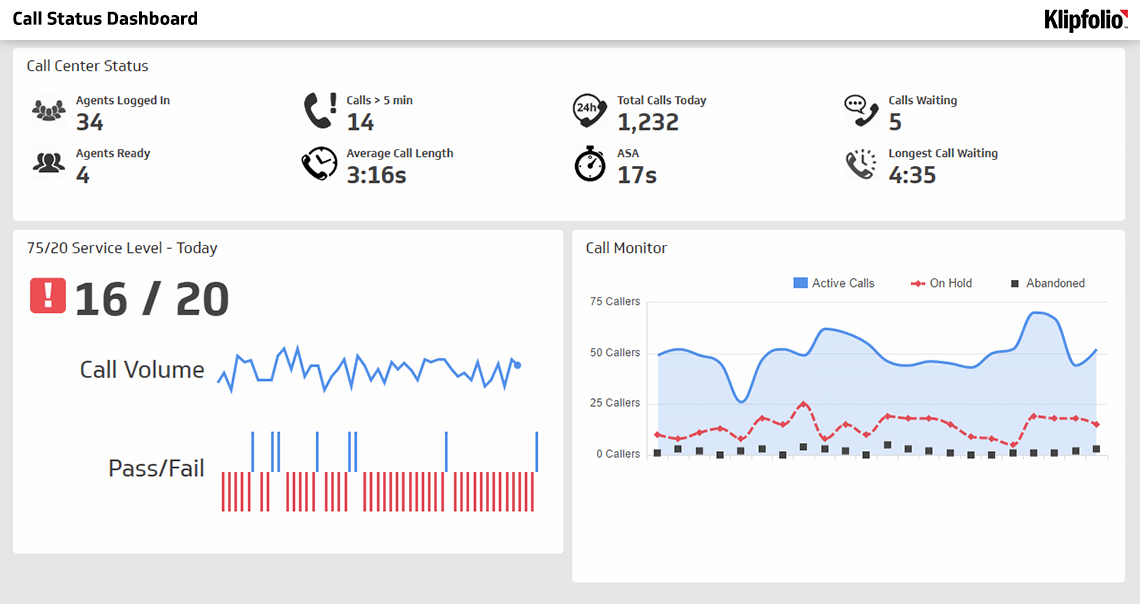
Tracking this metric on a dashboard that updates in real time means your team lead can see by midday whether the queue is on track, not just in the weekly report. That shift from checking after the fact to knowing while there's still time to act is where the metric earns its value.
Create custom dashboards for you and your team.
Get started with KlipsReporting frequency and audience
Reporting frequency: Weekly, with real-time or daily monitoring recommended for high-volume teams.
Primary audience: Support Team, Support Managers.
Variations: Same-Day Query Resolution, Same Day Resolution Rate, Resolution of Queries in the Same Day.