Non-Operating Expenses
Non-Operating Expenses are costs a business incurs that fall outside its core, day-to-day operations, such as interest payments, asset losses, and restructuring charges.
Non-Operating Expenses
Non-Operating Expenses are costs a business incurs that fall outside its core, day-to-day operations, such as interest payments, asset losses, and restructuring charges.
What are non-operating expenses?
A non-operating expense is any cost unrelated to a company's regular operations. These expenses appear on the income statement but sit apart from the costs of running the business day to day.
The most common examples are interest charges on debt and losses from selling assets. Because they fall outside normal operations, non-operating expenses are easy to overlook, and that oversight can quietly erode your financial position.
Operating expenses cover the predictable costs of keeping a business running: payroll, rent, utilities, marketing. Non-operating expenses are different. They arrive irregularly, often without warning, and they don't fit neatly into a monthly budget line.
Why non-operating expenses matter
Non-operating expenses affect your bottom line whether you plan for them or not. A lawsuit settlement, a debt restructuring, or an inventory write-off can shift your profitability picture significantly, even when your core operations are performing well.
Because these costs sit outside day-to-day operations, they often go untracked until they appear on a financial statement. By then, the damage is done. Leaders who understand non-operating expenses can spot the warning signs earlier and make better decisions about reserves, financing, and risk.
The goal isn't to eliminate non-operating expenses entirely. Most businesses will always carry some. The goal is to know what you're dealing with so you're not caught off guard.
Common types of non-operating expenses
Several categories of non-operating expenses appear regularly across industries. Knowing what to watch for is the first step to managing them.
Interest payments
Companies that finance growth through debt, whether from a bank, a private lender, or investors, carry monthly interest obligations. These payments are non-operating expenses because they relate to financing decisions, not to the business of making or selling a product or service.
For example, a company that secures a growth loan from a private equity firm will pay monthly interest on that loan. That cost shows up below the operating line on the income statement.
Losses on asset sales
When a company sells an asset for less than its book value, the difference is recorded as a non-operating loss. This applies to property, equipment, or any long-term asset the business isn't in the business of trading.
A manufacturing firm that sells an older facility at a loss, for instance, records that shortfall as a non-operating expense, even if the sale was a smart strategic move.
Restructuring costs
Restructuring charges are one-time costs tied to reorganizing the business: laying off staff, closing locations, or consolidating operations. They are non-operating because they reflect a structural change, not ongoing activity.
A software company that reduces headcount to extend its runway will incur restructuring costs, including severance, legal fees, and any related administrative expenses.
Inventory write-offs
When inventory loses its value, whether through spoilage, obsolescence, or damage, the business must write it off. That write-off is a non-operating expense.
An organic food brand with a batch of expired product records the fair market value of that loss as a non-operating expense on its income statement.
Create custom dashboards for you and your team.
Get started with KlipsLawsuit costs
Legal proceedings generate non-operating expenses: attorney fees, court costs, and any settlements or judgments. These costs are unrelated to what the business actually does, but they are real and can be significant.
A company defending a trademark dispute, for example, will incur legal costs that flow through as non-operating expenses regardless of the outcome.
How non-operating expenses appear on financial statements
Non-operating expenses sit below the operating profit line on an income statement. Understanding where they appear helps you read financials clearly.
The income statement flows like this:
- Revenue is recorded at the top.
- Cost of goods sold is subtracted to arrive at gross profit.
- Operating expenses are subtracted from gross profit to arrive at operating profit (also called EBIT: earnings before interest and taxes).
- Non-operating expenses are subtracted from operating profit to arrive at earnings before taxes.
- Taxes are applied to derive net income.
Placing non-operating expenses below the operating line is intentional. It lets investors and stakeholders evaluate the performance of core operations separately from one-time or financing-related costs. A business can have strong operating profit and still show a lower net income because of significant non-operating expenses, and vice versa.
How to manage non-operating expenses
Managing non-operating expenses well comes down to visibility, separation, and planning.
- Keep non-operating expenses separate. Track them in a dedicated ledger or budget line. Mixing them with operating costs distorts both pictures.
- Review them consistently. Non-operating expenses that go unreviewed tend to accumulate. A monthly or quarterly review keeps them visible.
- Build a reserve. Because many non-operating expenses are unpredictable, setting aside a fixed amount each period creates a buffer when they arrive.
- Track inventory closely. Regular inventory audits reduce the risk of large, unexpected write-offs.
- Retain legal counsel proactively. Early legal advice is almost always less expensive than litigation.
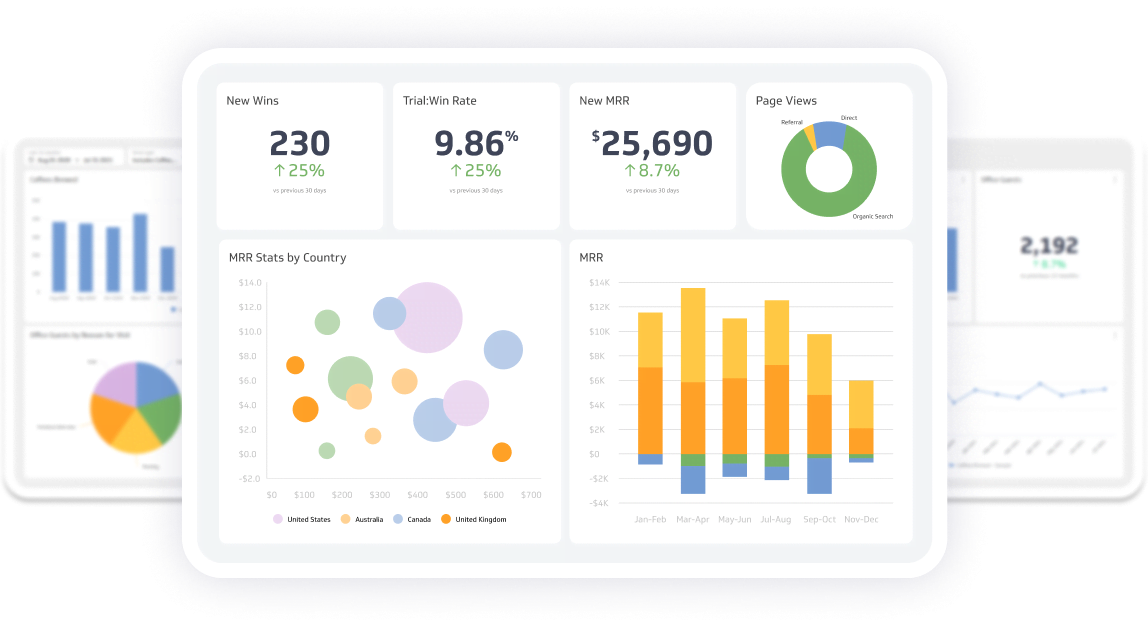
Tracking non-operating expenses in a dashboard alongside your operating metrics gives you the full financial picture in one place, without waiting for a monthly report to tell you something has shifted.
Frequently asked questions
What is the difference between operating and non-operating expenses?
Operating expenses are the recurring costs of running the business: payroll, rent, utilities, marketing, and research and development. Non-operating expenses are costs that fall outside regular operations, such as interest payments, asset losses, restructuring charges, and lawsuit costs.
Do rent and utilities count as non-operating expenses?
No. Rent and utilities are operating expenses because they are necessary to run the business day to day. They may be classified as indirect costs, but they sit above the operating profit line, not below it.
What is non-operating income?
Non-operating income is revenue from activities unrelated to core operations. Examples include investment gains, dividend income, foreign exchange gains, and tax write-offs. Many businesses use non-operating income to offset non-operating expenses.
How does non-operating income relate to non-operating expenses?
Both appear below the operating profit line on the income statement. Non-operating income adds to earnings before taxes; non-operating expenses reduce it. A business with strong non-operating income can partially or fully offset its non-operating expenses, though the two should always be tracked separately.
Create custom dashboards for you and your team.
Get started with KlipsWhat is the difference between non-operating expenses and indirect expenses?
Indirect expenses, such as administrative overhead, are still tied to running the business and count as operating expenses. Non-operating expenses are entirely outside business operations. The distinction matters for how each appears on the income statement and how investors interpret your results.