Net Burn Rate
Manage your SaaS startup's runway with the Net Burn Rate KPI
Monthly Net Burn Rate
Net Burn Rate measures how quickly a startup uses its cash reserves after accounting for the revenue it generates. It's a critical metric for assessing financial health and forecasting runway.
What is Net Burn Rate?
Net Burn Rate is the amount of cash a startup spends each month minus the revenue it generates. Unlike gross burn (total monthly expenses), Net Burn Rate accounts for incoming revenue, which extends your runway. For SaaS companies, this metric is typically calculated on a monthly basis.
Formula:
Net Burn Rate = Monthly Expenses - Monthly Revenue
Knowing your Net Burn Rate tells you exactly how long your business can operate before it needs more cash, which is the number every founder and investor watches most closely.
Net Burn Rate example
Consider a SaaS company spending $50,000 per month on overhead while generating $15,000 per month in revenue:
Net Burn Rate = $50,000 - $15,000 = $35,000 per month
This company uses $35,000 of its cash reserves each month. With $700,000 in the bank, its runway is approximately 20 months, before any changes to revenue or costs.
That 20-month window is the number that drives hiring decisions, fundraising timing, and growth bets. Miss it, and you're raising money from a position of weakness.
Why Net Burn Rate matters
Net Burn Rate directly determines your cash runway: the number of months your business can operate before running out of cash. Investors expect founders to deploy capital strategically to fund growth. But companies that burn too quickly risk failure, even when revenue is climbing.
Monitoring Net Burn Rate helps you:
- Forecast cash runway with accuracy, so you know when to raise before you have to
- Make confident hiring and spending decisions grounded in what the business can actually support
- Communicate clearly with investors and stakeholders about financial health
- Adjust strategy early before cash reserves become critical
The difference between a team that checks this number monthly and one that doesn't often shows up at the worst possible moment.
Net Burn Rate benchmarks
There are no universal benchmarks for burn rate. The right pace depends on your growth stage, market, and investor expectations. That said, experienced investors offer practical guidance worth knowing.
Fred Wilson, Partner at Union Square Ventures:
"A good rule of thumb is to multiply the number of people on the team by $10,000 to get the monthly burn. That is not the number you pay an employee. That is the 'fully burdened cost' of a person, including rent and other costs."
Danielle Morill, CEO and Co-founder at Mattermark:
Fred's 2011 estimate has risen significantly due to inflation and higher cost of living. In 2014, when Morill surveyed the startup community, Marc Andreessen (General Partner at Andreessen Horowitz) suggested a fully burdened cost per employee of $200,000 per year, approximately $16,666 per month.
Mark Suster, Managing Partner at Upfront Ventures:
"Your value creation must be at least 3 times the amount of cash you're burning, or you're wasting investor value. Money spent should add equity value or create intellectual property that eventually will."
Net Burn Rate best practices
The founders and investors who have seen the most burn-rate disasters share consistent advice.
From Danielle Morill:
- Confirm product-market fit first before aggressively increasing your burn rate
- Keep non-payroll spending tight: limit spending outside payroll, benefits, and rent to 5% of your budget
- Avoid premature scaling: early hiring that outpaces revenue is one of the fastest ways to shorten your runway
From Mark Suster:
- Stay lean until you're ready to accelerate: only raise a large funding round when you're confident you've achieved product-market fit, then move quickly
- Maintain at least six months of cash in the bank: "Take cash balance plus the net of your receivables and payables to get 'net cash.' Divide net cash by your monthly net burn rate as an approximation of how many months of cash you have"
- Have a clear reason for raising if your Net Burn Rate is low: investors want to know exactly what the capital unlocks
- A higher burn rate can be justified when you have substantial cash reserves, an untapped credit line, rapidly growing revenue, supportive investors, and a reasonable valuation, particularly if competitors are cash-constrained
How to monitor Net Burn Rate
Once you're tracking Net Burn Rate, the goal is to stop checking it manually and start knowing it automatically. Pulling numbers from your accounting tool, cross-referencing your bank feed, and updating a spreadsheet every month creates lag and leaves room for error. By the time you notice a problem, you've already lost weeks.
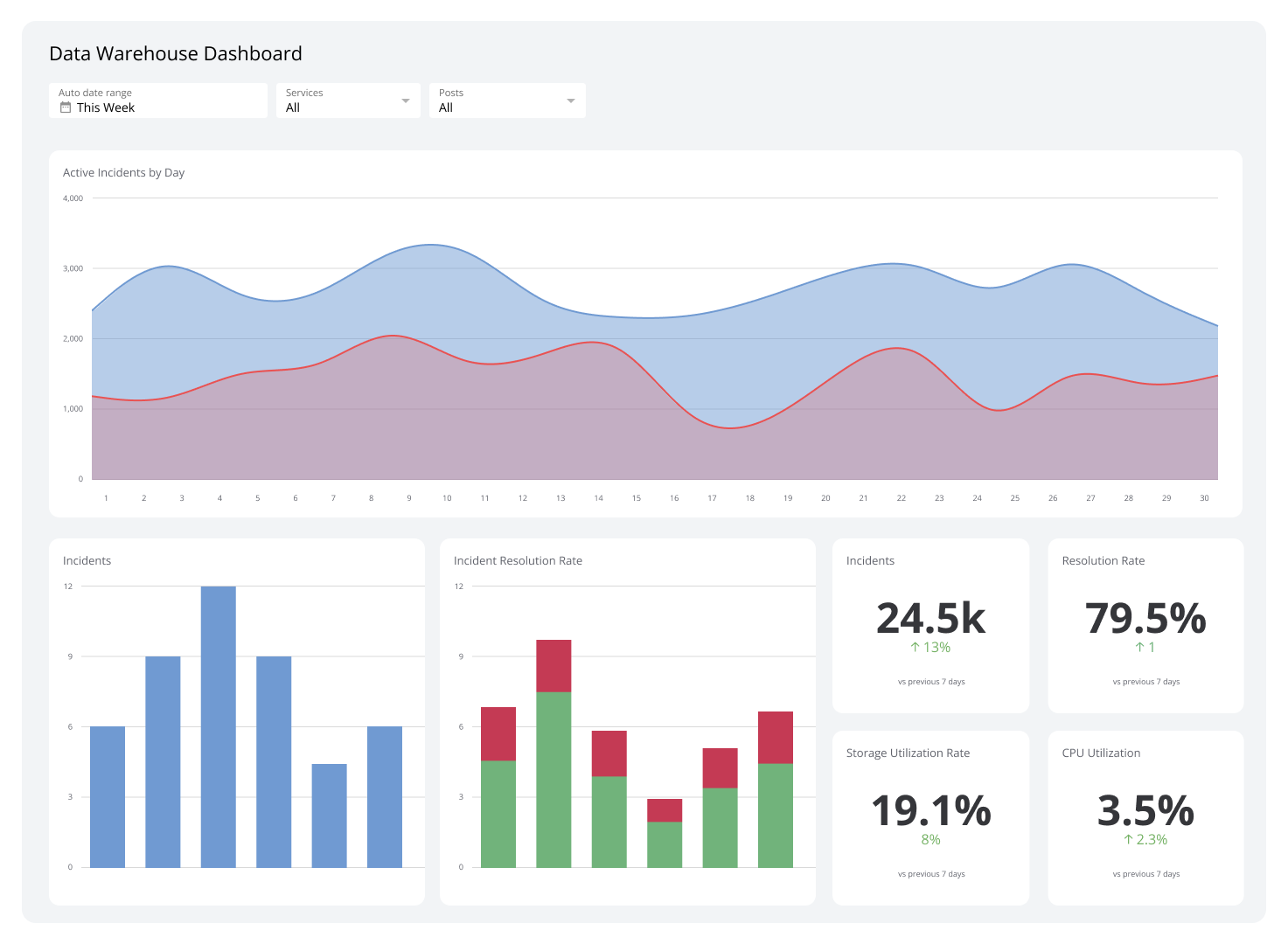
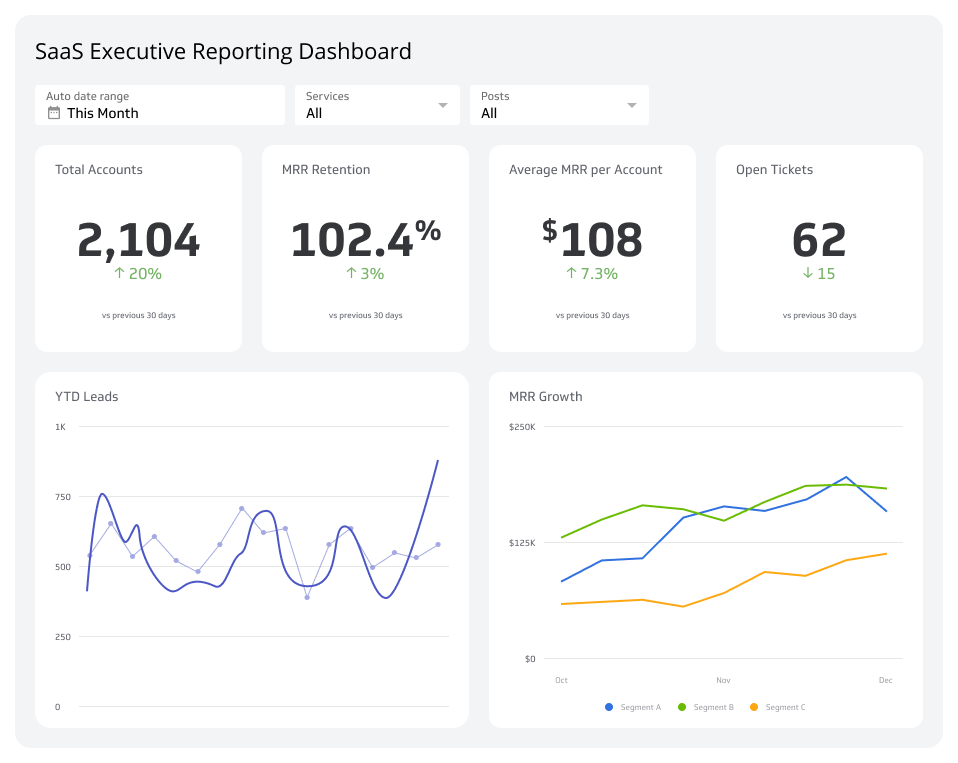
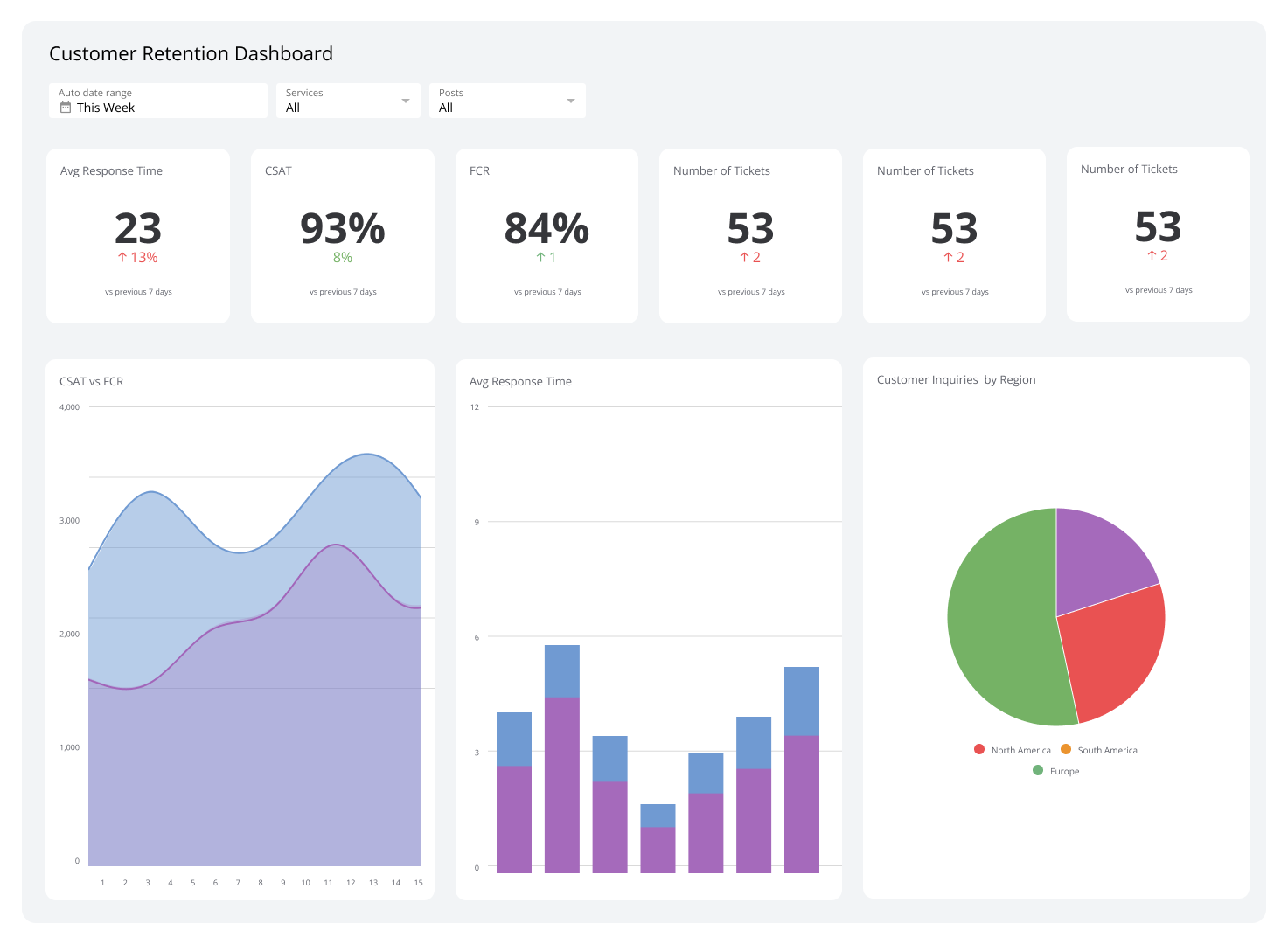
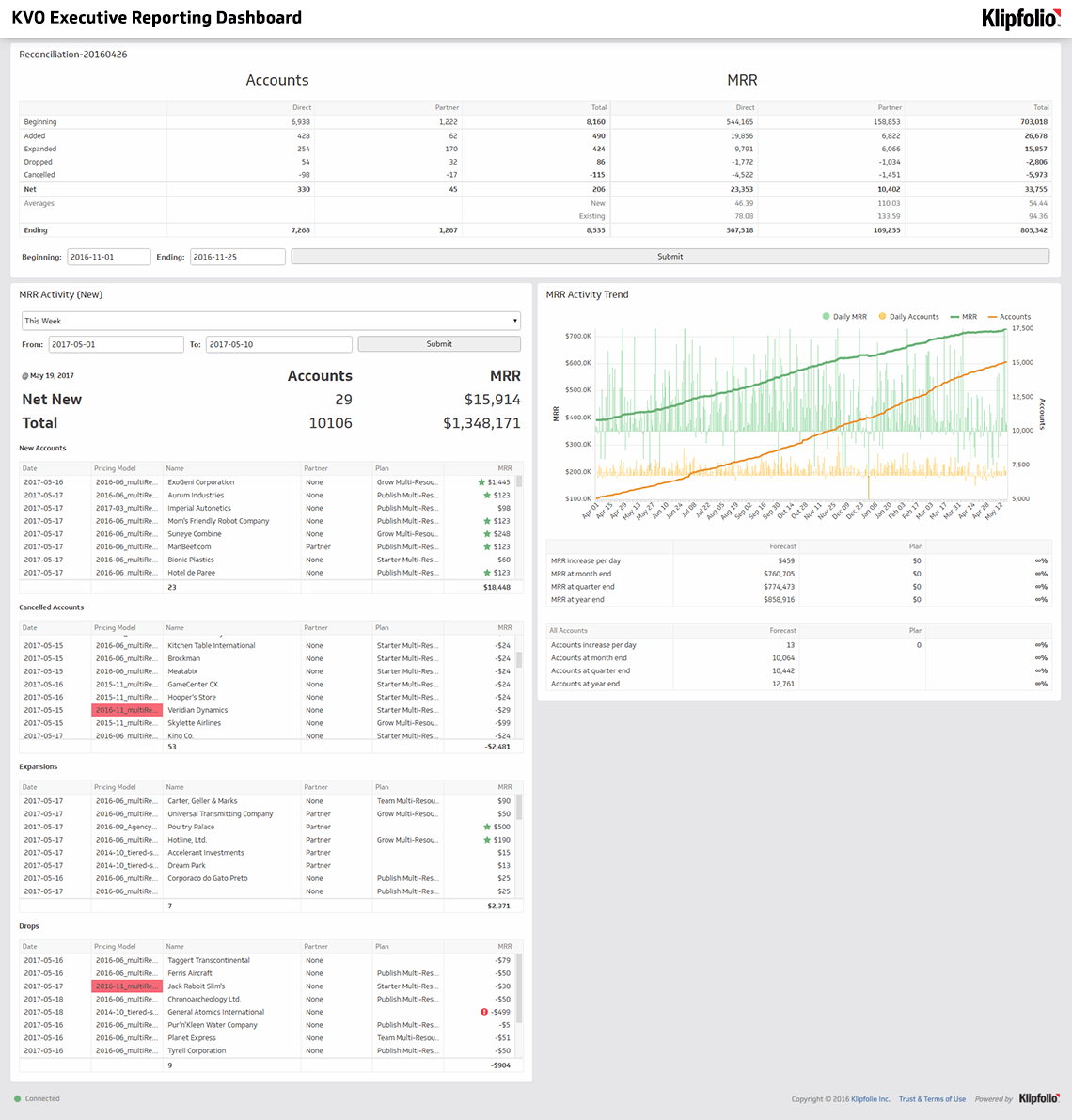
Real-time dashboards solve this by centralizing financial data from accounting tools, bank feeds, and billing systems into a single, always-current view. You see Net Burn Rate alongside related metrics like Monthly Recurring Revenue, Customer Acquisition Cost, and runway, without having to ask someone to pull a number or paste figures into a spreadsheet.
Klipfolio connects to 130+ data sources and lets you build dashboards that refresh automatically, so your whole team stays aligned on financial health without anyone having to go looking for it. When the number changes, you know.
Explore SaaS KPIs worth tracking alongside Net Burn Rate.
Create custom dashboards for you and your team.
Get started with KlipsTop resources
- What's The Right Burn Rate For Your Company? — Mark Suster, Managing Partner at Upfront Ventures
- Is my Startup Burn Rate Normal? — Danielle Morill, CEO and Co-founder at Mattermark
- Burn Rates, How Much? — Fred Wilson, Partner at Union Square Ventures
- Why You Need to Ring the Frigging Cash Register — Mark Suster, Managing Partner at Upfront Ventures