Gross Margin
Gross Margin is the percentage of revenue remaining after subtracting the cost of goods sold (COGS). It shows how efficiently a company turns sales into profit.
Gross Margin
Gross Margin is the percentage of revenue remaining after subtracting the cost of goods sold (COGS). It shows how efficiently a company turns sales into profit.
What is Gross Margin?
Gross Margin is a key performance indicator that measures the proportion of revenue left after deducting the cost of goods sold (COGS). It tells you how much money remains to cover operating expenses like rent, salaries, and marketing, and is expressed as a percentage.
A higher Gross Margin means a company is generating more profit from its core operations relative to what it costs to produce its goods or services.
Consider a straightforward example: if a company generates $100 million in revenue and incurs $60 million in COGS, their gross profit is $40 million. The Gross Margin is 40%.
Gross Margin vs. Gross Profit
Gross Margin and Gross Profit are closely related financial metrics, but they measure different things.
Gross Profit is a dollar amount. It is the revenue remaining after subtracting COGS, and it reflects the absolute profit generated from core operations before accounting for other operating expenses.
Gross Margin is a percentage. It expresses Gross Profit as a proportion of revenue, making it easier to compare performance across companies of different sizes or across time periods.
Use Gross Profit to understand the raw dollars your business generates. Use Gross Margin to benchmark efficiency and profitability against peers or industry standards.
Gross Margin formula
Gross Margin (%) = ((Total Revenue - COGS) / Total Revenue) × 100
How to calculate Gross Margin
- Determine total revenue. Add up all income from net sales during the period.
- Identify your COGS. Include all direct costs tied to producing your product or delivering your service: materials, direct labour, and manufacturing overhead.
- Apply the formula. Subtract COGS from total revenue, divide by total revenue, then multiply by 100.
Example calculation
A company reports $5,000 in net sales and $3,000 in COGS over two months.
($5,000 - $3,000) / $5,000 × 100 = 40%
The company's Gross Margin is 40%. For every dollar of revenue, 40 cents remain after covering production costs.
Why Gross Margin matters
Gross Margin is one of the clearest signals of a company's financial health. It tells investors, owners, and analysts whether a business can sustain itself and grow.
It shows pricing and cost efficiency. A strong Gross Margin indicates a company manages production costs well and prices its products effectively.
It supports better decisions. Understanding Gross Margin helps leadership evaluate pricing strategies, assess product lines, and identify where cost reductions will have the most impact.
It enables benchmarking. Because Gross Margin is a percentage, it is easy to compare against industry averages, competitors, or prior periods, regardless of company size.
It signals room for growth. A higher Gross Margin leaves more revenue available to invest in marketing, R&D, and operations, fuelling long-term expansion.
Factors that affect Gross Margin
Several internal and external forces can push Gross Margin up or down.
- Production costs: Raw material prices, labour rates, and overhead costs all feed directly into COGS. Supply chain disruptions or commodity price swings can compress margins quickly.
- Pricing strategy: Cost-plus, value-based, and competitive pricing each carry different margin implications. Pricing too low to win customers erodes margin; pricing on perceived value protects it.
- Sales volume: Higher volume often reduces cost per unit through economies of scale, improving Gross Margin.
- Product mix: Selling more of your highest-margin products lifts the overall Gross Margin. A shift toward lower-margin items has the opposite effect.
- Supply chain efficiency: Lean, well-managed supply chains reduce carrying costs and waste. Disruptions inflate COGS and narrow margins.
- Currency fluctuations: Companies that source materials or sell internationally are exposed to exchange rate risk, which can alter cost structures and revenue in ways that affect margin.
- Competitive pressure: In crowded markets, price competition can force discounts that erode Gross Margin. Differentiated products tend to hold pricing power.
- Regulations and tariffs: Import tariffs or new compliance requirements raise COGS and reduce margin if costs cannot be passed on to customers.
- Seasonality and demand shifts: Periods of strong demand allow for higher prices and better margins. Slow periods may require promotions that compress them.
Create custom dashboards for you and your team.
Get started with KlipsHow to improve Gross Margin
Gross Margin improvement comes from reducing costs, increasing revenue, or both.
Streamline operations
Identify inefficiencies in production or fulfilment workflows and eliminate them. Automating routine tasks such as inventory management and order processing reduces labour costs. Applying Lean principles helps teams distinguish value-adding activities from waste.
Negotiate better supplier terms
Negotiating better deals with suppliers, such as bulk discounts, longer payment terms, or lower unit prices, directly reduces COGS without affecting product quality.
Refine your pricing strategy
Dynamic pricing adjusts prices based on demand, seasonality, and competition. Value-based pricing anchors prices to the perceived benefit a customer receives rather than your internal costs. Both approaches can lift Gross Margin without requiring cuts to production.
Shift your product mix
Analyse which products carry the highest margin and focus sales and marketing efforts there. Phasing out low-margin products or bundling them with high-margin ones can improve the overall Gross Margin.
Grow revenue
More sales volume spreads fixed costs across more units, lowering cost per unit. Targeting new customer segments, upselling to existing customers, or launching higher-margin products all contribute to revenue growth and margin improvement.
Common challenges in maintaining Gross Margin
Sustaining a strong Gross Margin is an ongoing effort. These are the most common pressures businesses face.
- Volatile commodity prices: When raw material costs spike, COGS rises. If prices cannot be passed on to customers, margin shrinks.
- Increased competition: Price wars compress margins, particularly in markets with limited product differentiation.
- Labour cost increases: Rising wages in tight labour markets add to COGS, especially when productivity gains do not keep pace.
- Supply chain disruptions: Natural disasters, geopolitical events, or logistics failures raise costs and reduce reliability, both of which hurt Gross Margin.
- Technological disruption: Products can become obsolete quickly. Clearing out inventory at a discount or investing in new technology affects margin in the short term.
- Regulatory changes: New environmental or compliance requirements increase operating costs, which feed into COGS.
- Economic downturns: Reduced consumer spending forces discounts and promotions that lower effective selling prices and compress margins.
- Currency volatility: A strengthening home currency makes exports more expensive for foreign buyers, potentially reducing sales volume and pricing power.
Tracking Gross Margin on a dashboard
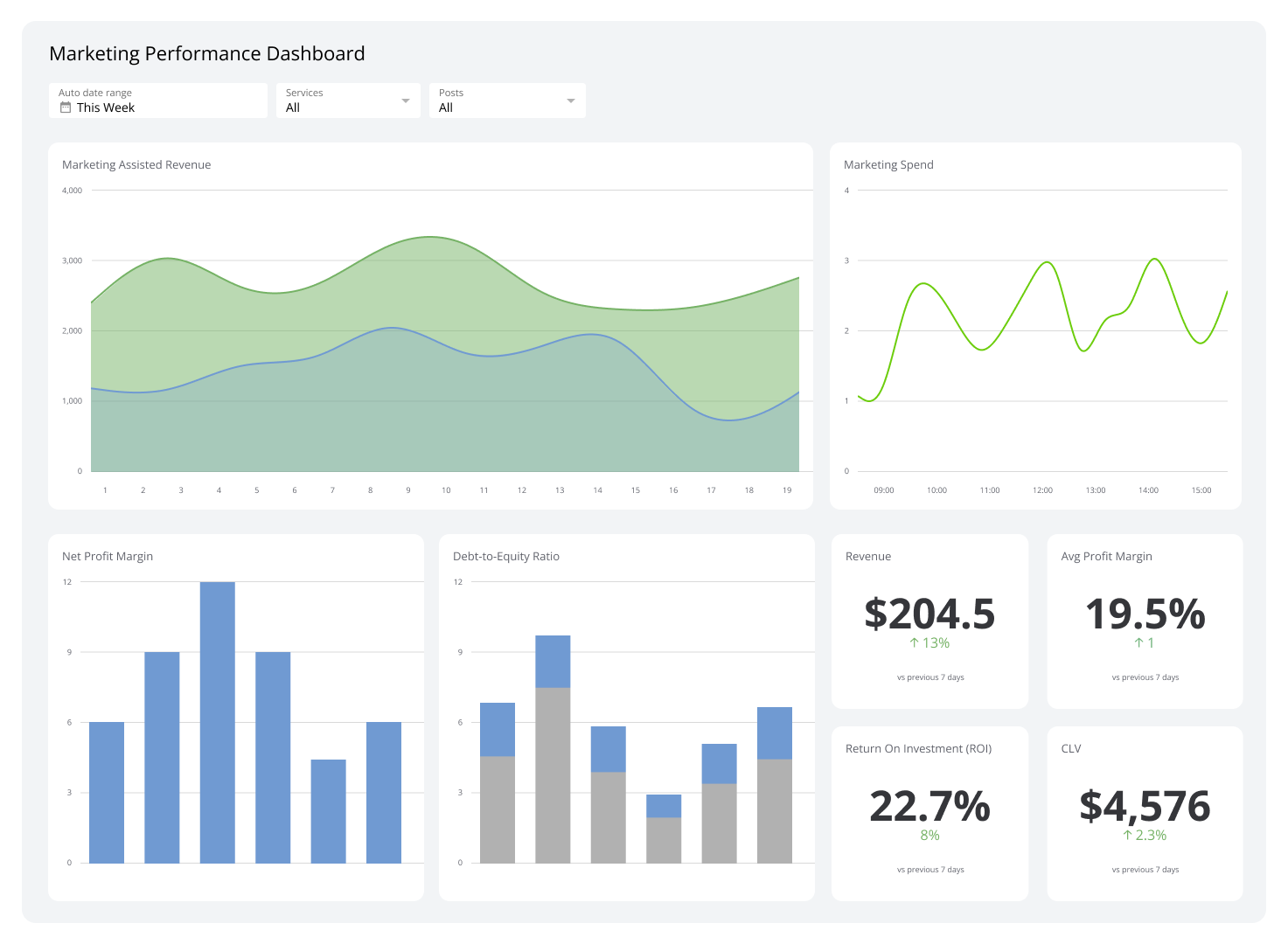
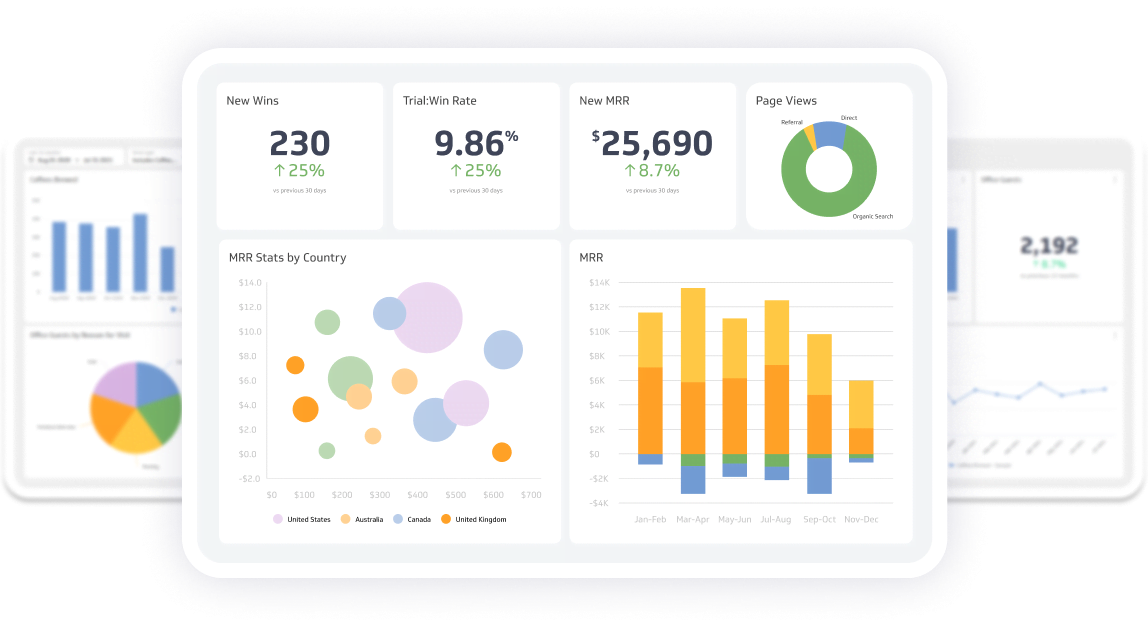
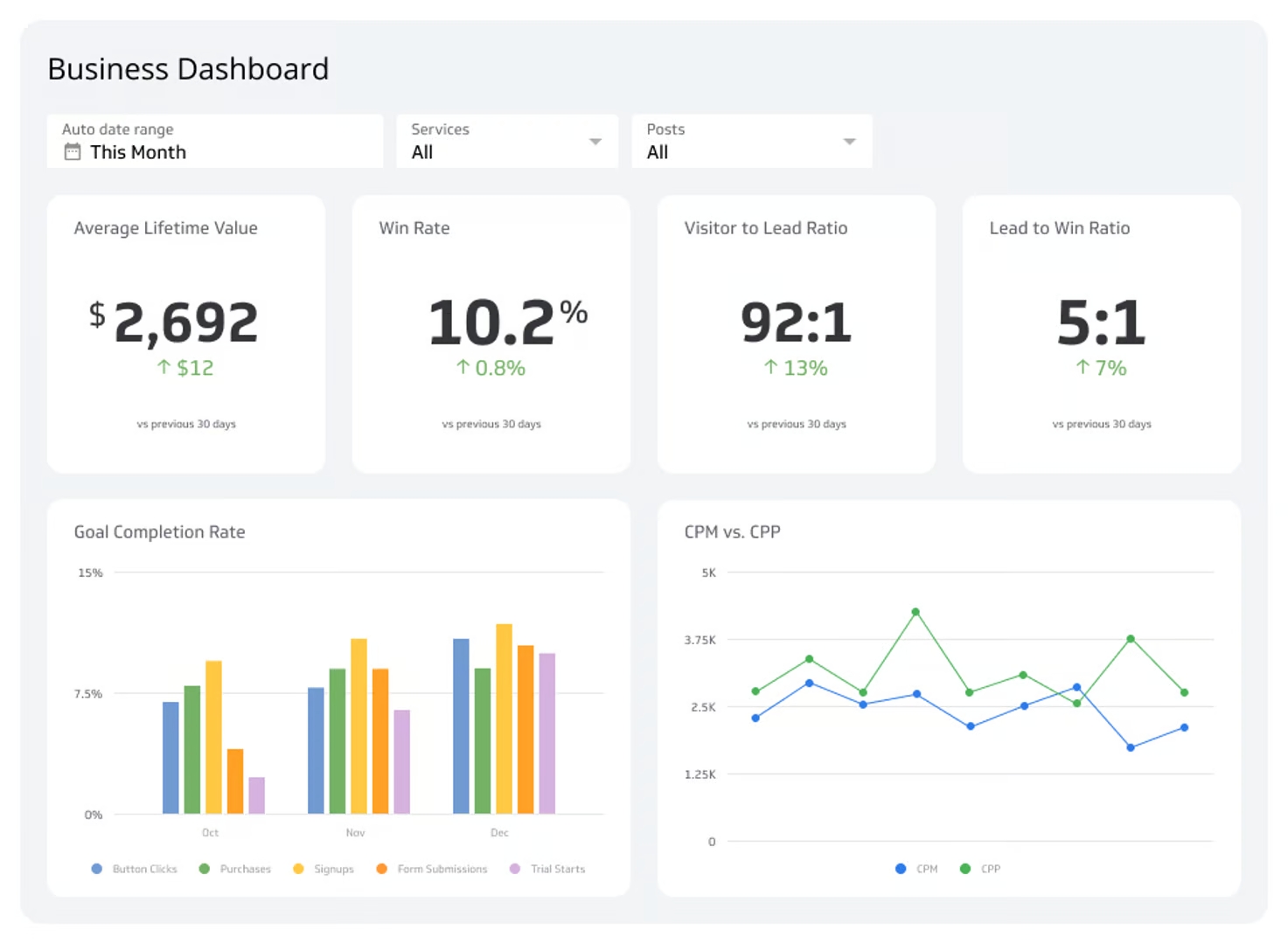
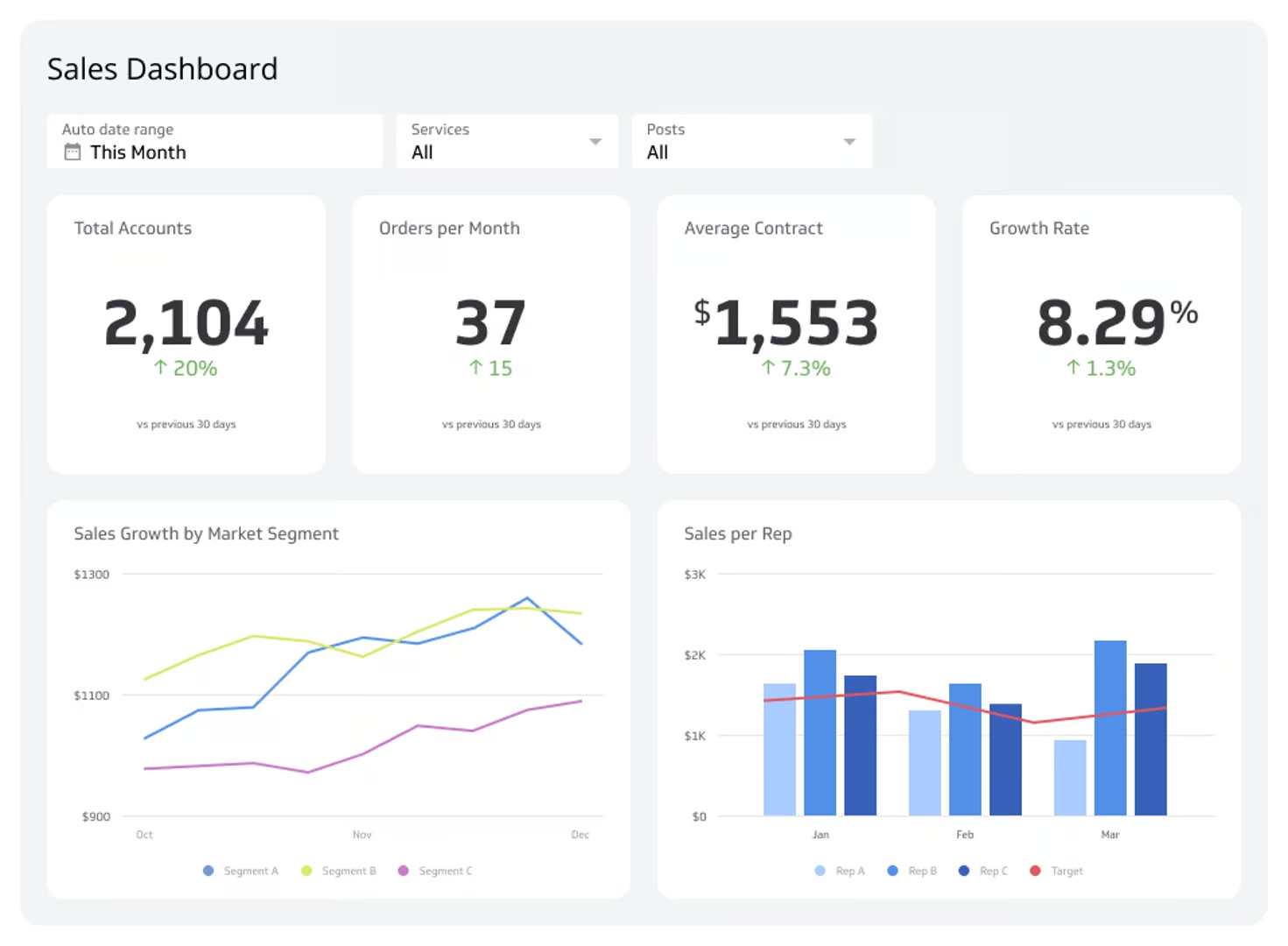
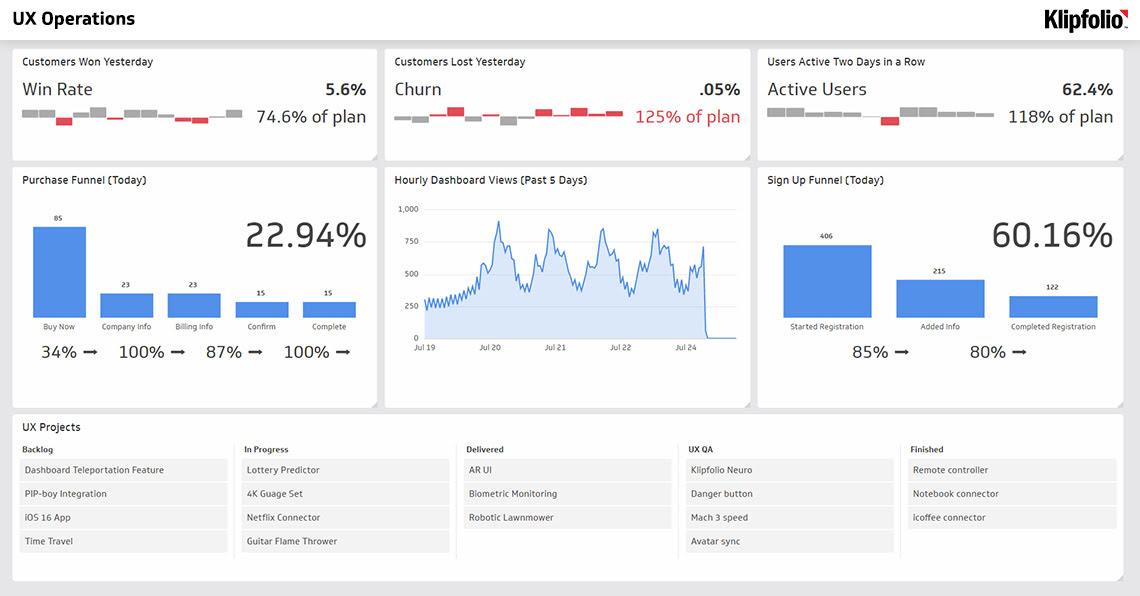
Monitoring Gross Margin over time, alongside related metrics like Gross Profit and COGS, gives your team a clear picture of financial performance. A financial dashboard in Klipfolio connects your data sources and updates automatically, so you always have current numbers without manual calculations. Tracking Gross Margin alongside revenue trends and operating expenses helps leadership spot margin compression early and act before it affects the bottom line.