Payment Acceptance
Payment Acceptance measures how reliably your business receives payment across every method and channel it supports, and why getting it right matters for revenue, trust, and growth.
Payment Acceptance Rate
What is Payment Acceptance?
Payment Acceptance is a measure of a business's ability to successfully receive payment from customers for products or services, across every method and channel it supports.
For SaaS and e-commerce businesses especially, Payment Acceptance has become a core operational metric. A failed payment isn't just a lost transaction; it's a signal that something in your revenue process is broken. Getting this right means customers can pay the way they want, every time, without friction.
Why Payment Acceptance matters
Every declined transaction or unsupported payment method is a decision point for your customer, and not in your favour. If the checkout experience fails, they leave. If a recurring charge doesn't process, you lose the subscription.
Beyond the individual transaction, Payment Acceptance shapes how efficiently your business runs. A reliable payment process reduces manual intervention, lowers administrative overhead, and gives your team one less fire to fight. For a lean team managing growth, that reliability is worth more than any single feature.
The metric also tells you something about trust. Customers who feel confident their payment data is handled securely are more likely to complete a purchase and return. That confidence doesn't happen by accident; it's built through the systems and standards you put in place.
Technology used for Payment Acceptance
The infrastructure behind Payment Acceptance has changed significantly. Businesses that once relied on cash or cheques now operate across multiple payment environments simultaneously.
Common payment technologies include:
- Credit card terminals: The standard for physical storefronts, processing chip, tap, and swipe transactions.
- Mobile payments: Customers pay using a smartphone by tapping a payment terminal or scanning a QR code. Adoption has grown steadily across retail and food service.
- Online payment gateways: Essential for any business operating online. Gateways connect your platform to card networks and banks, processing credit card and bank transfer payments without requiring a physical interaction. Integrating a gateway directly with your e-commerce platform reduces manual data entry and the errors that come with it.
- Subscription billing platforms: For SaaS businesses, these handle recurring payments automatically, managing retry logic, failed payment recovery, and billing cycle management.
Choosing the right combination depends on where your customers are and how they prefer to pay.
Types of payments accepted
Customers arrive with different payment expectations depending on their age, location, and the platform they're using. Meeting them where they are isn't optional if you want to avoid losing sales at the final step.
Common payment types businesses support include:
- Credit and debit cards: Still the dominant method for most markets.
- Digital wallets: Apple Pay, Google Pay, and PayPal reduce friction at checkout, particularly on mobile.
- Bank transfers: Preferred in some regions and for higher-value B2B transactions.
- International wire transfers and multi-currency payments: Necessary for businesses selling across borders. Accepting payments in local currencies reduces hesitation and cart abandonment from international customers.
- Cryptocurrency: A growing option for specific industries and markets, though not yet mainstream.
The broader your accepted payment range, the fewer customers you turn away. This is especially relevant for businesses expanding into new markets, where local payment preferences may differ significantly from your home market.
Security measures for Payment Acceptance
Security is not a secondary concern in payment processing. A single data breach can cost more in fines, legal exposure, and lost customer trust than years of revenue growth.
Key security measures include:
- Encryption: Sensitive data, including card numbers and bank details, is encrypted in transit and at rest, preventing unauthorized access even if a system is compromised.
- Two-factor authentication: Requires customers to verify their identity through a second channel before completing a transaction, reducing the risk of unauthorized payments.
- Fraud detection tools: Machine learning models flag suspicious transaction patterns in real time, allowing businesses to intervene before a fraudulent payment clears.
- Payment Card Industry Data Security Standard (PCI DSS) compliance: Any business that accepts card payments must meet PCI DSS requirements. This includes maintaining a secure network, protecting cardholder data, and regularly testing security systems. Non-compliance carries fines, legal consequences, and potential loss of the ability to process card payments.
Security measures protect your customers, and they protect your business from liability. Treating them as foundational rather than optional is the cleaner, lower-risk path.
Create custom dashboards for you and your team.
Get started with KlipsTracking Payment Acceptance
Knowing your Payment Acceptance rate tells you how often transactions succeed relative to how often they're attempted. A low rate points to a specific problem: a payment method that isn't working, a gateway with reliability issues, or a fraud filter set too aggressively.
The formula is straightforward:
Payment Acceptance Rate = (Successful Transactions / Total Attempted Transactions) × 100
For SaaS businesses, tracking this alongside churn and Monthly Recurring Revenue gives you a clearer picture of where revenue is leaking. A subscription that fails to renew because of a payment issue looks like churn, but it isn't. Separating those two signals helps you respond correctly.
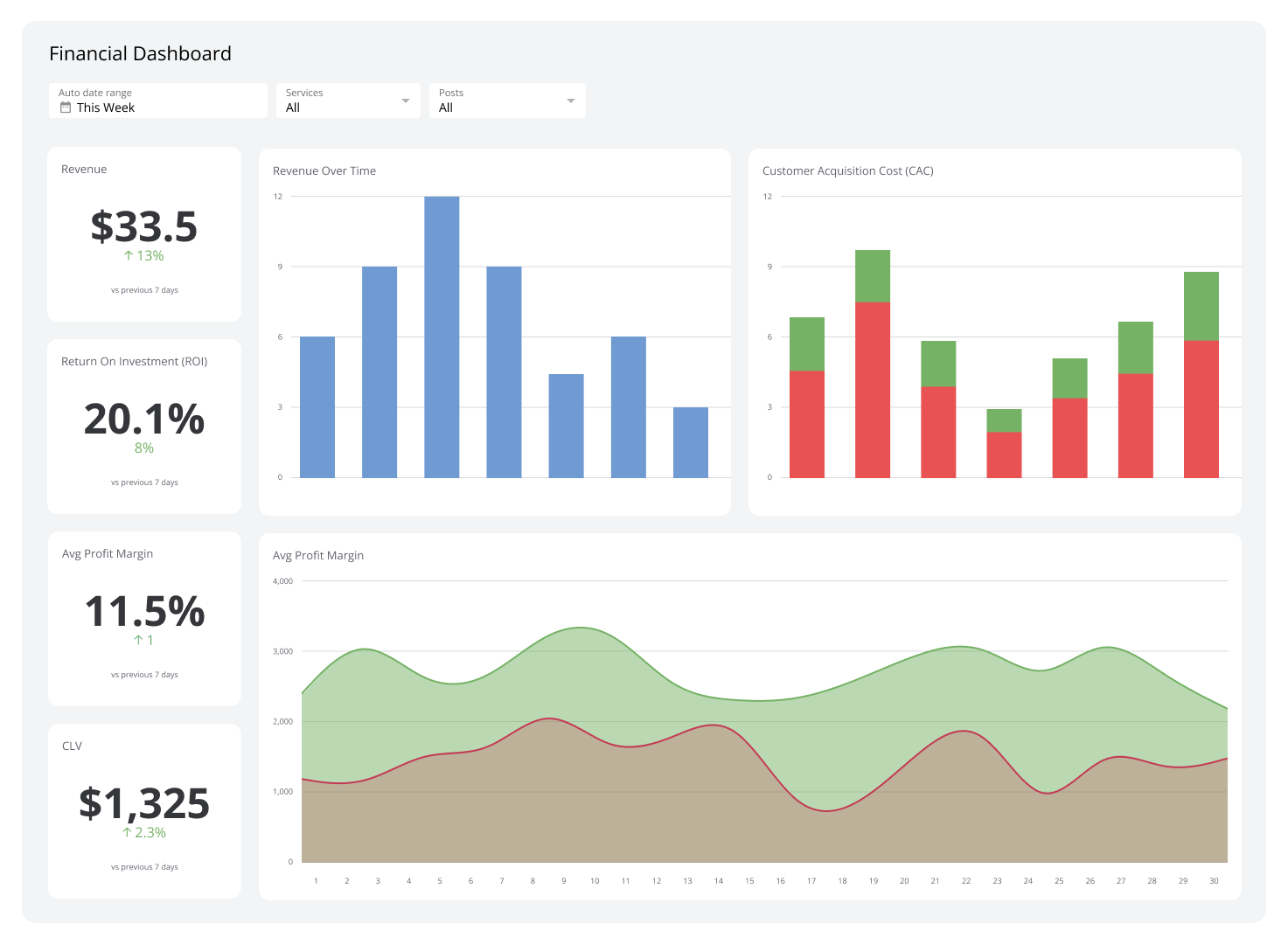
Klipfolio lets you pull payment data from your billing platform and surface Payment Acceptance Rate alongside the other financial metrics your team tracks, so you're not waiting for a monthly report to spot a problem.