Revenue vs. Income
Revenue is the total money a company earns from sales. Income is what remains after subtracting expenses and taxes. Knowing the difference helps you read financial statements accurately and make confident decisions about pricing, spending, and growth.
Revenue vs. Net Income
Revenue and income are two different financial metrics. Revenue is the total money a company earns from sales. Income is what remains after subtracting expenses and taxes.
Knowing the difference helps you read a financial statement accurately, set realistic targets, and make confident decisions about pricing, spending, and growth.
What is Revenue?
Revenue is a crucial financial metric that reflects how much money a company brings in from its core business activities. In accounting terms, revenue is recognized when a sale is made, regardless of whether payment has been received.
There are two main types:
- Gross revenue is the total amount earned from all sales, before any deductions.
- Net revenue is what remains after subtracting discounts, refunds, returns, and any costs directly tied to generating that revenue.
Revenue sits at the top of the income statement. It shows the scale of a business, but not its profitability.
Where does revenue come from?
Revenue sources vary by industry and business model:
- Retail: sales of physical goods to customers
- Services: fees charged for work delivered to clients
- Licensing: payments for the right to use software, content, or intellectual property
- Rentals: income from leasing property or equipment
- Partnerships: referral fees, co-marketing agreements, or revenue-sharing arrangements
High revenue does not mean high profit. A company generating $10 million in sales but spending $9.5 million to do it is not in a strong position. Revenue tells you how much came in; it does not tell you how much stayed.
What is Income?
Income is the money left after a company deducts its expenses and taxes from total revenue. It answers a more important question than revenue: is the business actually making money?
Income is also recognized when earned, regardless of when cash changes hands.
Types of income
- **Gross income** is total revenue minus the direct cost of producing goods or services (cost of goods sold). It shows how efficiently a company produces what it sells.
- Net income is what remains after all expenses, including operating costs, interest, and taxes, have been deducted. Net income is also called profit or the "bottom line."
Net income is the number that tells you whether a business can sustain itself, invest in growth, and return value to owners, without relying on outside funding to survive.
How to calculate Revenue vs. Income
The formulas are straightforward:
Revenue = Price per unit × Units sold
Net Income = Total Revenue - Total Expenses - Taxes
A company with high revenue and high expenses will have low or negative income. That gap is what financial analysis is designed to close.
On an income statement, Revenue appears near the top. Net Income appears at the bottom, which is why it is called the bottom line. Revenue is the broader figure; income is the result after everything has been accounted for.
Create custom dashboards for you and your team.
Get started with KlipsFactors that affect Revenue vs. Income
Several forces shape both metrics. Some are within a company's control; many are not.
External factors
- Economic conditions: During a downturn, consumers cut discretionary spending, which reduces revenue and compresses margins.
- Competition: A crowded market can force price reductions that shrink both revenue per unit and overall income.
- Consumer behaviour: Shifts in preferences, seasonal demand, and buying patterns all affect how much a company sells and at what price.
Internal factors
- **Pricing strategy:** A well-designed pricing model attracts the right customers and protects margin. Premium pricing, when it reflects real value, can lift both revenue and income simultaneously.
- Operational efficiency: Reducing waste, streamlining processes, and investing in the right tools lower the cost base and improve income without necessarily changing revenue.
Tracking both metrics over time gives you the clearest picture of where the business is gaining ground and where it is leaking value.
Is Revenue more important than Income?
Income is generally the more meaningful number for assessing financial health. A company can report strong revenue while losing money on every sale. Income shows whether the business model actually works.
That said, revenue matters too. It signals market traction, growth trajectory, and the ability to scale. Early-stage companies often prioritize revenue growth while managing toward profitability over time. Established businesses are typically held to both.
The most useful view is always both together, not one in isolation.
Revenue vs. Income: real-world examples
These examples show how the two metrics diverge in practice.
Apple Inc.: In 2020, Apple reported revenue of $274.5 billion. Net income for the same year was $57.4 billion, roughly 21% of revenue. The gap reflects the significant costs of manufacturing, distribution, research, and operations required to run a business at that scale.
A small restaurant: A restaurant generating $500,000 in annual revenue may clear only $50,000 in net income after rent, labour, food costs, and supplies. Revenue looks healthy; income tells the real story about how much the owner actually keeps.
An individual investor: An investor earning $10,000 per year in dividends and interest may net only $7,000 after brokerage fees and taxes. The difference between gross and net income is just as relevant for individuals as it is for companies.
Tracking Revenue and Income with a dashboard
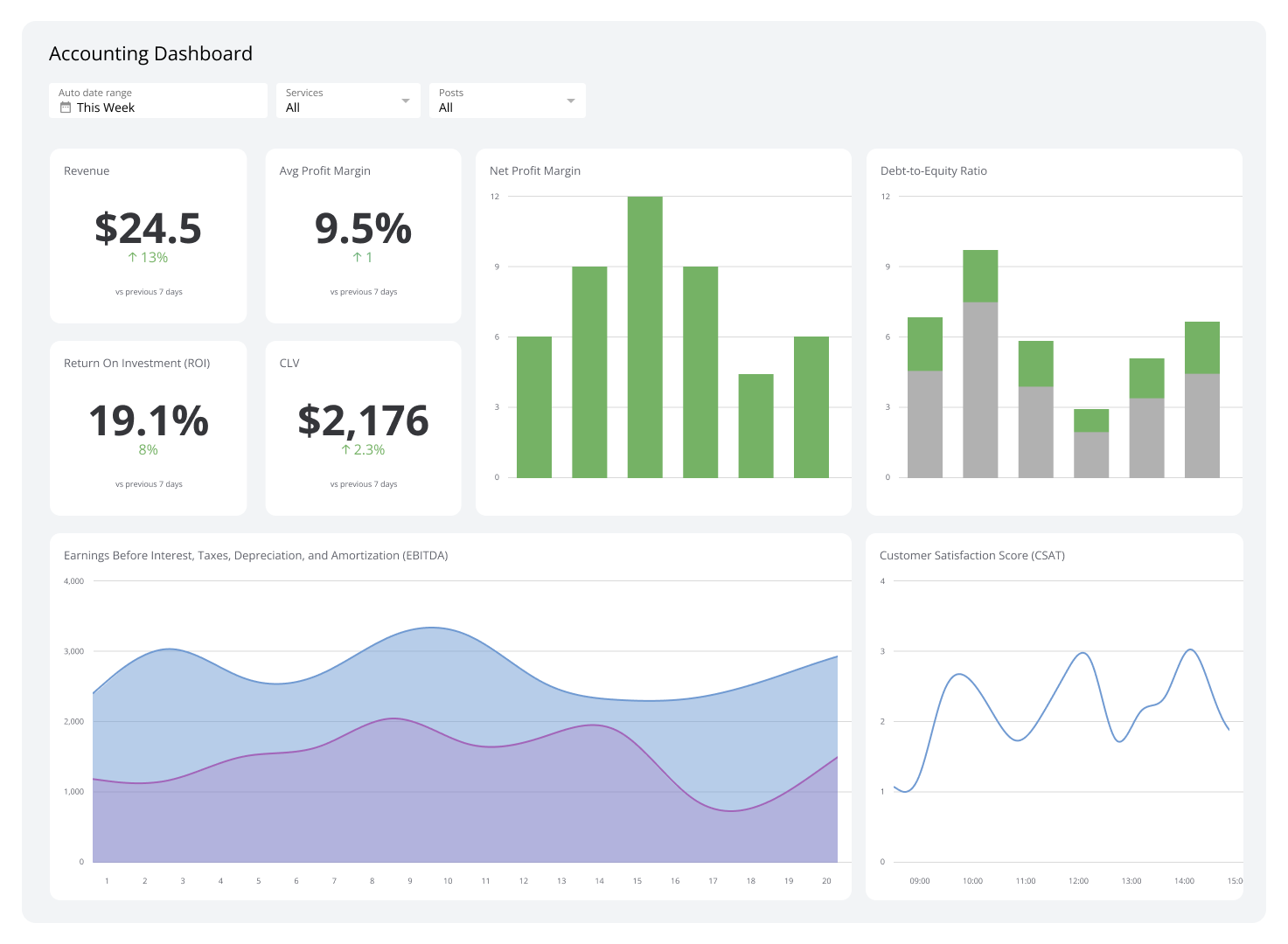
Spreadsheets make it easy to lose track of which number you are looking at and whether it is current. A dashboard pulls Revenue and Net Income from your financial sources automatically, so the numbers you are working from are always up to date and consistent across your team.
With Klips, you can connect your accounting tools, set refresh schedules, and share a single view with everyone who needs it, without waiting for someone to pull a report or paste figures into a chat.
Create custom dashboards for you and your team.
Get started with KlipsRevenue vs. Income: key takeaways
Both metrics belong on every financial review. Revenue shows the scale of what a business generates. Income shows whether that business is actually sustainable.
Use them together to guide pricing decisions, evaluate operational costs, and set growth targets grounded in what the numbers actually say.