Vendor Expenses
Track outstanding supplier payments and manage cash flow with the Vendor Expenses KPI.
Vendor Expenses by Category
| Category | Amount | Change |
|---|---|---|
| Materials | $54,200 | +8.3% |
| Services | $48,900 | +5.1% |
| Labour | $18,350 | +2.7% |
| Other | $6,000 | -1.2% |
| Total outstanding | $127,450 | +4.9% |
What are Vendor Expenses?
Vendor Expenses is the total amount your business currently owes to suppliers for goods or services received but not yet paid. Tracking this KPI gives you a clear picture of outstanding obligations, cash flow pressure, and supplier spending patterns.
Key terms
Vendors are external suppliers who provide goods or services to your business. This includes manufacturers, distributors, contractors, consultants, and any other third parties you pay for operational needs.
Expenses are the costs your business incurs to acquire goods, services, or resources necessary for operations. Vendor Expenses is a specific category tied to supplier payments.
Accounts Payable (AP) is the total amount your business owes to vendors at a given point in time: the sum of all unpaid invoices and outstanding bills.
Why Vendor Expenses matter
Knowing what you owe, and when, is the difference between proactive cash management and scrambling to cover a shortfall. Leaders who track Vendor Expenses regularly can make faster, more confident decisions about supplier commitments, payment timing, and budget allocation, without waiting for someone to pull a number or pasting figures into a spreadsheet to figure it out.
Here is why this KPI earns attention:
- Cash flow visibility: You know what is coming due before it becomes a problem, not after.
- Supplier relationships: Consistent, on-time payments build trust and can unlock early-payment discounts or better terms.
- Financial accuracy: Proper expense tracking ensures your balance sheet reflects true liabilities.
- Budget control: Monitoring spending by vendor helps you spot cost overruns and identify where you have negotiating leverage.
How to calculate Vendor Expenses
The core calculation is straightforward: add up all unpaid supplier invoices at a specific date.
Vendor Expenses = Sum of all outstanding invoices from suppliers
To track spending over time:
Average Monthly Vendor Expenses = Total vendor payments for the period / Number of months
For more granular insight, segment expenses by vendor, category (materials, services, labour), or department. That breakdown shows exactly where your money goes and which supplier relationships deserve closer attention.
What good looks like
These indicators signal healthy vendor expense management:
- Predictable payment cycles that vendors can rely on
- Stable expense ratios relative to revenue or production volume
- Days Payable Outstanding (DPO) that aligns with your cash flow strategy
- Early-payment discounts captured when cash flow permits
- Minimal late fees from missed payment deadlines
Common challenges
Scattered invoices: Invoices arriving by email, mail, or supplier portals make it easy to miss or duplicate payments.
Manual tracking: Spreadsheets are error-prone and do not scale as your vendor base grows. Figuring it out yourself in a spreadsheet works until it doesn't.
Visibility gaps: Without a central system, you may not know what is due or overdue until cash flow tightens. By then, the decision window has closed.
Negotiation blindness: Without clear expense data, you cannot identify which vendors consume the most budget or where you have leverage to push for better terms.
Create custom dashboards for you and your team.
Get started with KlipsMonitoring Vendor Expenses on a dashboard
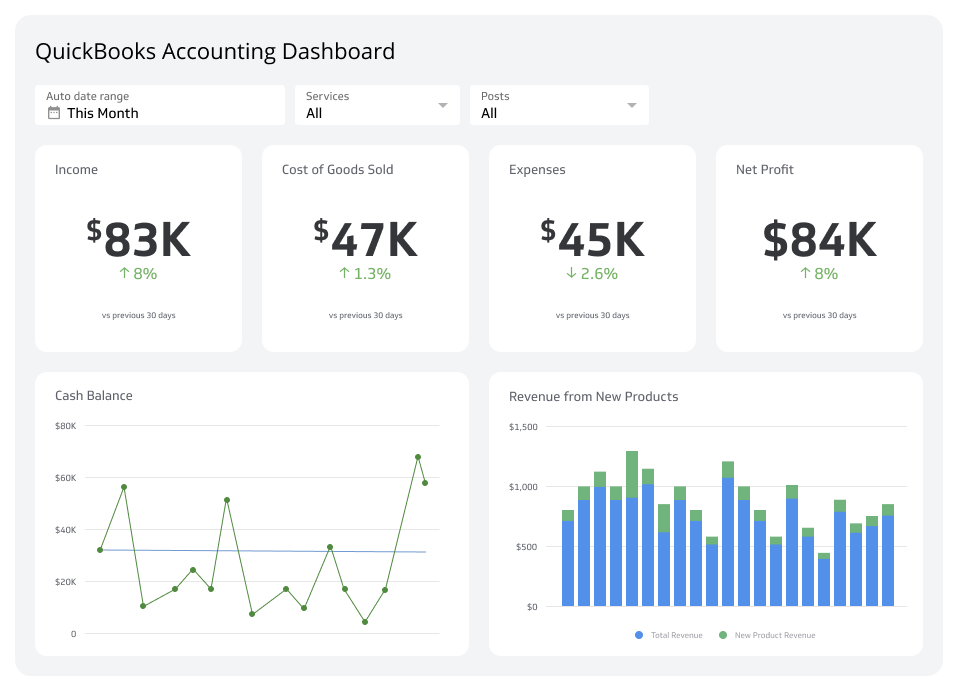
Once you have set targets for Vendor Expenses, such as a maximum DPO or a spending cap by category, a dashboard keeps you informed without requiring you to go looking. The right setup surfaces what matters before you have to ask.
A well-designed vendor expense dashboard should display:
- Total outstanding Vendor Expenses and trend over time
- Expenses by vendor, category, or department
- Days Payable Outstanding and payment due dates
- Top vendors by spend
- Invoice aging (how long invoices have been outstanding)
Dashboards pull this data directly from your accounting system (QuickBooks, Xero, NetSuite, or similar), so your finance team, managers, and ownership group all see the same numbers. Reliable, consistent figures mean you spend less time reconciling and more time acting on what the data tells you.
Learn more about building financial dashboards to track Vendor Expenses alongside other critical accounting metrics.