MRR vs ARR
ARR and MRR are the two core revenue metrics for subscription businesses — ARR measures annual recurring revenue, MRR measures it monthly.
Track all your SaaS KPIs in one place
Sign up for free and start making decisions for your business with confidence.
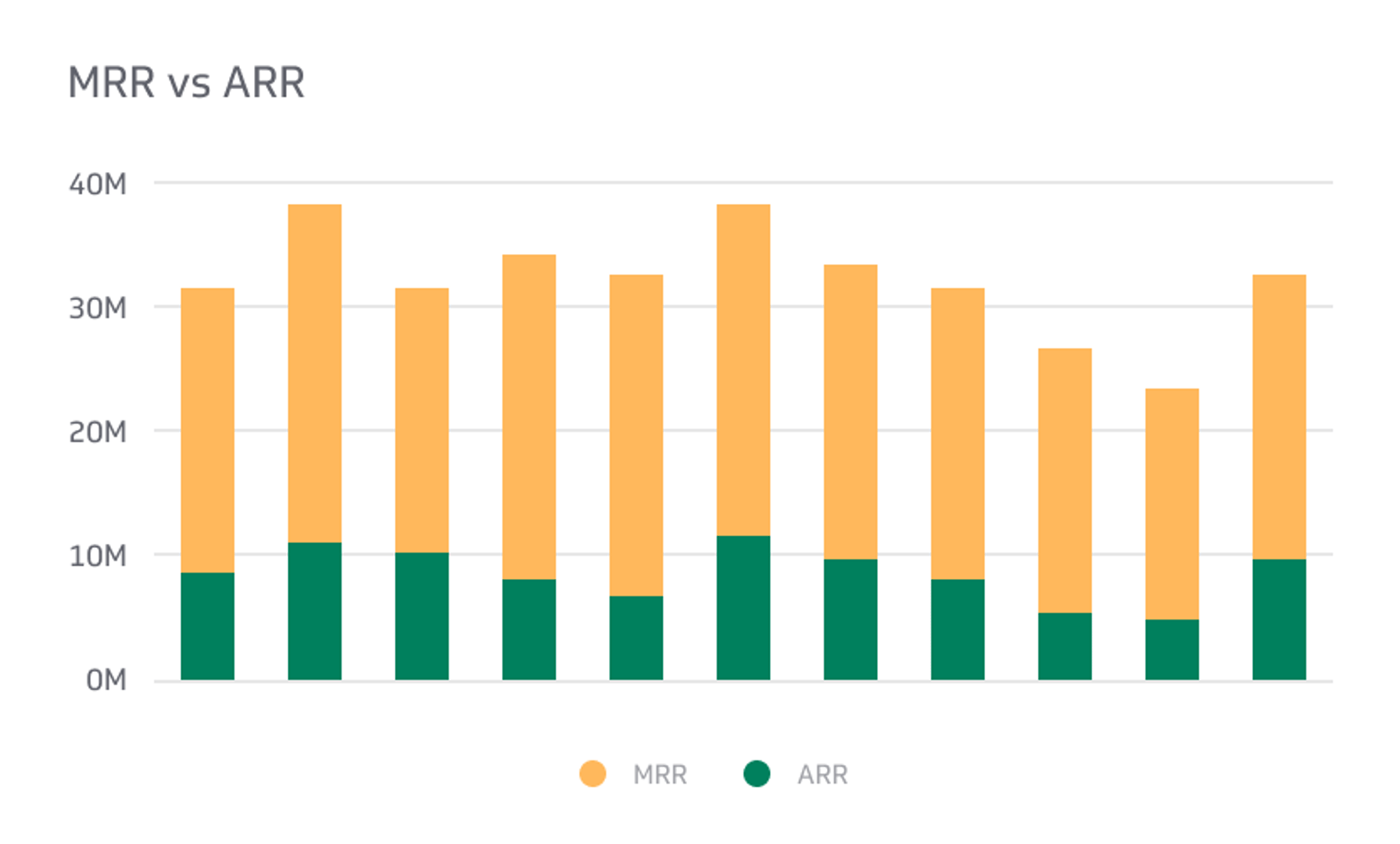
ARR and MRR are the two core revenue metrics for subscription businesses. Both measure recurring revenue — ARR annually, MRR monthly — and together they give you a complete picture of financial health and growth.
What is Annual Recurring Revenue (ARR)?
Annual Recurring Revenue (ARR) is the total recurring revenue a subscription business expects to generate over a 12-month period. It excludes one-time fees and provides a forward-looking view of revenue stability.
ARR is used for financial reporting, investor communication, forecasting, and valuation. Tracking ARR over time reveals your growth trajectory and helps you set realistic targets for resource allocation.
ARR formula
ARR is calculated by summing all annual subscription contracts in effect, regardless of their start or end dates. One-time or non-recurring fees are excluded.
ARR = Annual recurring revenue from existing customers + Annual recurring revenue from new customers
What is Monthly Recurring Revenue (MRR)?
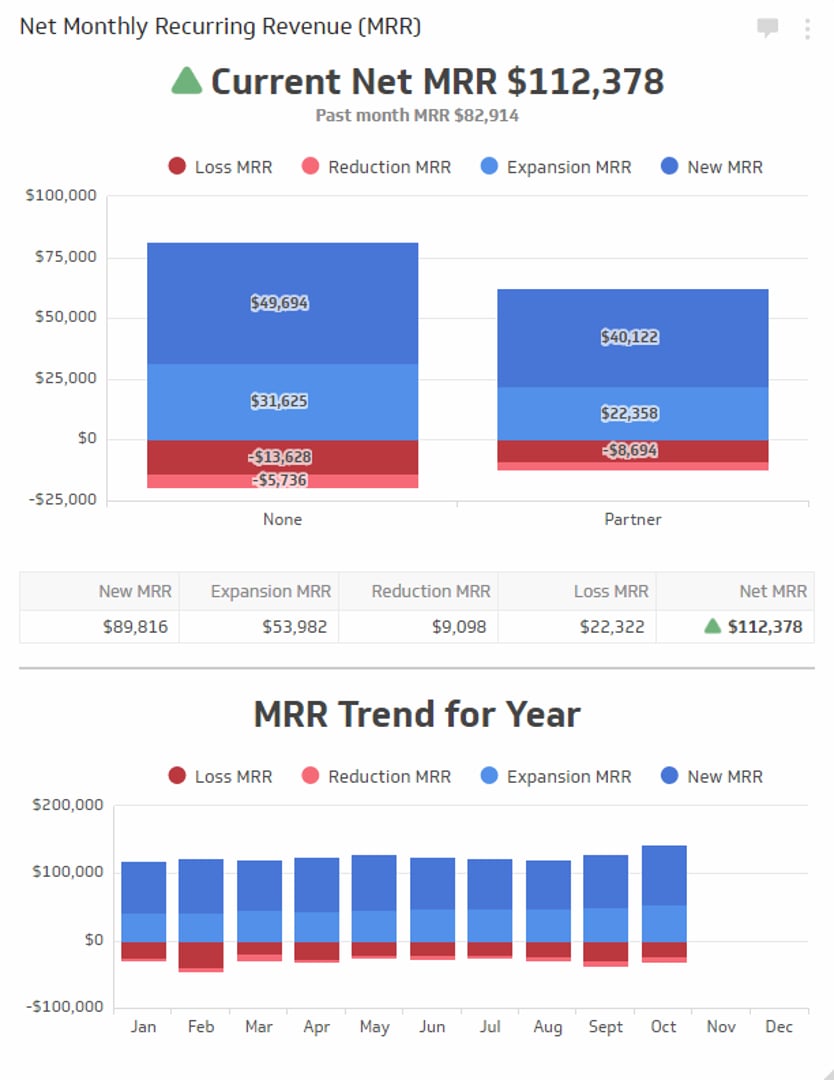
Monthly Recurring Revenue (MRR) is the total recurring revenue generated from active subscriptions within a given month. It excludes one-time fees and changes with every new sign-up, cancellation, upgrade, or downgrade.
MRR is used for operational management, financial reporting, and benchmarking. Because it reflects changes month to month, it's a real-time signal of your subscription business's health.
MRR formula
MRR is calculated by summing the monthly subscription revenue from all active customers during a particular month.
MRR = Monthly recurring revenue from existing customers + Monthly recurring revenue from new customers
Key differences between ARR and MRR
ARR and MRR measure the same underlying revenue stream — just at different time scales. Here's how they compare across the dimensions that matter most:
| Dimension | ARR | MRR |
|---|---|---|
| Timeframe | Annual | Monthly |
| Granularity | High-level, aggregated view | Granular, month-by-month view |
| Responsiveness | Slower to reflect changes | Reflects fluctuations quickly |
| Primary use | Reporting, forecasting, valuation | Operations, day-to-day management |
| Audience | Investors, executives | Finance, growth, and product teams |
Timeframe
ARR looks at the total revenue expected over a full year. MRR looks at the total revenue generated in a single month. Neither is more accurate — they answer different questions.
Granularity
ARR aggregates all subscription revenue into a single annual figure. MRR breaks that revenue down month by month, making it easier to spot short-term trends or seasonal patterns.
Flexibility
MRR responds immediately to changes in your subscriber base. ARR captures those same changes more slowly, which makes it more stable but less useful for real-time decision-making.
Comparability
ARR is the standard for annual financial reporting, investor updates, and company valuation. MRR is better suited to tracking the day-to-day pulse of your subscription business.
ARR and MRR metric types
Both ARR and MRR can be broken down into sub-types that give you a more precise view of where revenue is coming from — and where it's being lost. These are the SaaS metrics you should be tracking:
- Gross ARR/MRR: Total recurring revenue from all active customers before any adjustments for discounts, refunds, or cancellations.
- Net ARR/MRR: Recurring revenue after accounting for discounts, refunds, and cancellations. This is a more accurate picture of revenue you'll actually realize.
- New ARR/MRR: Revenue generated from customers who have newly subscribed. Reflects how effectively your business is acquiring and converting customers.
- Expansion ARR/MRR: Additional revenue from existing customers through upsells, cross-sells, or upgrades. A strong expansion revenue metric signals healthy customer relationships and growing account value.
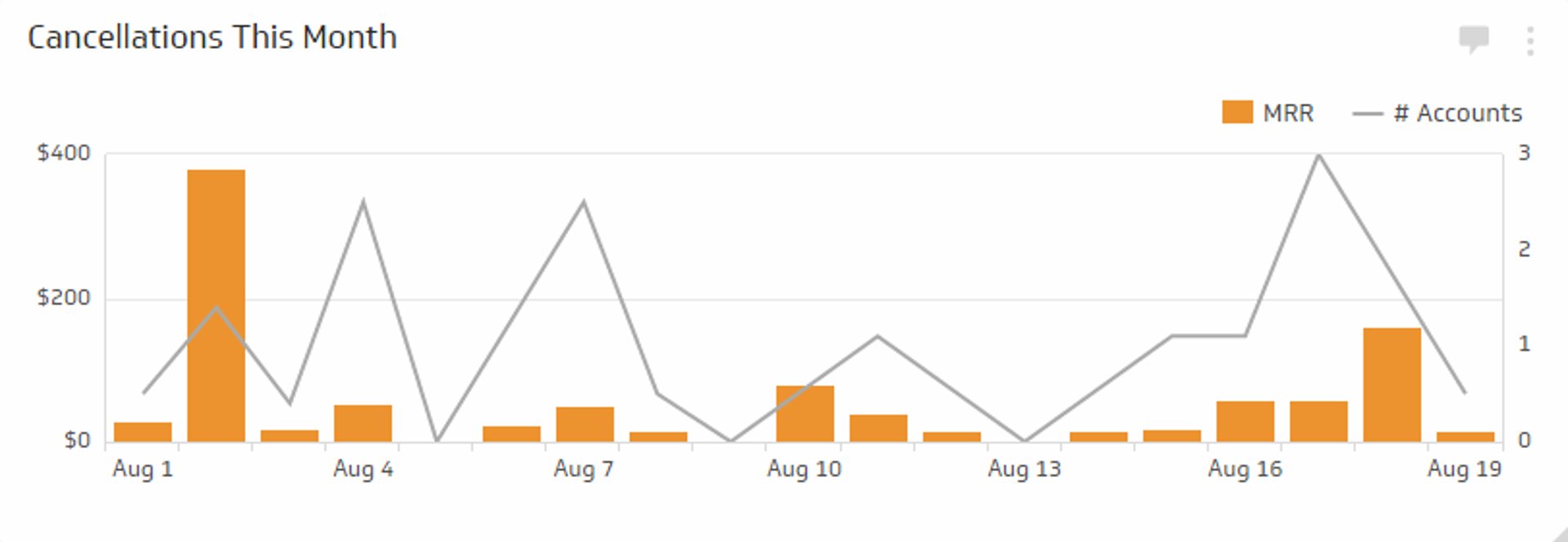
- Churn ARR/MRR: Revenue lost due to cancellations. Tracks the cost of customer attrition to your recurring revenue base.
- Net Revenue Retention (NRR): Net Revenue Retention combines expansion and churn ARR/MRR to show the net change in recurring revenue from your existing customer base. It's one of the most important indicators of long-term revenue health for a subscription business.
Tracking ARR and MRR with a dashboard
Monitoring ARR and MRR in a spreadsheet works at first, but it becomes harder to maintain as your subscriber base grows and your data sources multiply. A dedicated SaaS dashboard pulls your subscription data together automatically, so you can track gross, net, expansion, and churn figures in one place without manual updates.
Klipfolio connects to your billing tools, CRMs, and data sources to keep your ARR and MRR metrics current. You get a real-time view of the numbers that matter, distributed to whoever needs them.
Related Metrics & KPIs