Video Completion Rate (VCR)
Video Completion Rate (VCR) is the percentage of viewers who watch a video ad from start to finish, and one of the clearest signals of whether your video content is actually holding attention.
Video Completion Rate (VCR)
Video Completion Rate (VCR) is the percentage of viewers who watch a video ad from start to finish. It's one of the clearest signals you have for whether your video content is actually holding attention.
A low VCR tells you something is wrong before you waste more budget. A high VCR confirms your message is landing, and gives you a foundation to build on.
What is Video Completion Rate?
Video Completion Rate (VCR) is the percentage of people who watch a video ad to its completion, calculated by dividing view-throughs by total impressions and multiplying by 100.
Advertisers use Video Completion Rate as one of their main digital marketing metrics because it measures genuine engagement, not just exposure. A view counts whether someone watched for two seconds or two minutes. A completion tells you they stayed.
VCR matters beyond paid advertising. YouTube creators, content marketers, and brand teams all use it to understand whether their audience is engaged or dropping off.
How to calculate Video Completion Rate
You need two numbers: view-throughs (the number of people who watched the full video) and impressions (the total number of times the video was loaded or clicked).
Video Completion Rate = (View-throughs / Impressions) × 100
Example: 8,000 viewers watched your video to completion out of 25,000 total impressions.
(8,000 / 25,000) × 100 = 32%
Your Video Completion Rate is 32%.
Most analytics platforms surface both numbers, though they may label them differently depending on the tool. Pull them from the same time period and campaign to keep the calculation consistent.
Why Video Completion Rate matters
VCR tells you whether your content is holding attention long enough to deliver its message. That's the underlying question every video campaign is trying to answer.
If your VCR is low, the problem is usually one of three things: the content isn't relevant to the audience seeing it, the opening seconds aren't compelling enough to earn the next few, or the video is too long for the context it's running in. Each of those has a different fix, and VCR points you toward the right one.
If your VCR is high, you know the format, length, and message are working together. That's useful signal, but it doesn't mean you repeat the same formula indefinitely. Audiences change, and content that performed well six months ago can go stale.
Tracking VCR consistently, alongside other engagement metrics, gives you a reliable read on what your audience actually wants to watch, not just what they clicked on.
Types of video ads and how they affect VCR
Advertisers aim for a high VCR, but the ad format you choose sets a ceiling on what's realistically achievable. Understanding how each format behaves helps you set the right benchmarks.
Non-skippable ads: These guarantee completion because viewers have no choice. VCR will be high, but that number reflects the format, not necessarily the quality of the content. Use other signals like brand recall or downstream conversion to assess real impact.
In-banner ads: Less intrusive, but easier to ignore. Viewers can close or scroll past them, so VCR varies significantly based on placement and the strength of the opening frame.
Out-stream ads: These play before or between content. The first few seconds are critical. A strong hook drives completion; a weak one loses viewers immediately.
In-feed ads: Designed for longer formats and discovery placements like search results, homepages, and recommended content feeds. Completion depends heavily on the thumbnail and description drawing in the right viewer.
It's also worth noting where the ad plays. Connected TV (CTV) consistently produces the highest VCR across formats. Desktop comes second, and mobile tends to be lower, partly because viewing conditions are less controlled and attention is more divided.
Create custom dashboards for you and your team.
Get started with KlipsHow to improve your Video Completion Rate
Match video length to context
There's no universally correct video length. The right length depends on where the video runs and what you're asking the viewer to absorb.
Short-form works well for announcements, teasers, and social feeds where people are moving quickly. Long-form earns its runtime on streaming platforms, connected TV, and in-feed placements where viewers have already committed to sitting down and watching something.
Streaming platforms like Hulu and Netflix support longer ads because the viewing context is lean-back. Blogs, social media, and YouTube feeds reward brevity because the next piece of content is always one scroll away.
Choose your platform focus deliberately
Trying to optimize for every platform at once usually means you're not optimized for any of them. Pick the platform where your audience is most concentrated and build your video strategy around how people actually watch there.
Mobile viewers tend to watch shorter content in fragmented sessions, so short-form with strong visual hooks performs better. Desktop viewers, especially on content-heavy sites, are more likely to engage with in-feed or longer-format placements.
Knowing where your completions are coming from helps you allocate budget toward the placements that are actually working.
Improve placement and page context
If you're running video on your own site, the placement matters as much as the content. Ads that interrupt the reader before they've gotten value from the page tend to get dismissed. Post-roll placements, where the video appears after the main content, often perform better because the viewer has already received something and is more receptive.
In-article placements can also work well when the video is directly relevant to what the reader just consumed. The closer the match between the content and the ad, the higher the likelihood of completion.
Frequently asked questions
Create custom dashboards for you and your team.
Get started with KlipsTracking VCR alongside your other marketing metrics
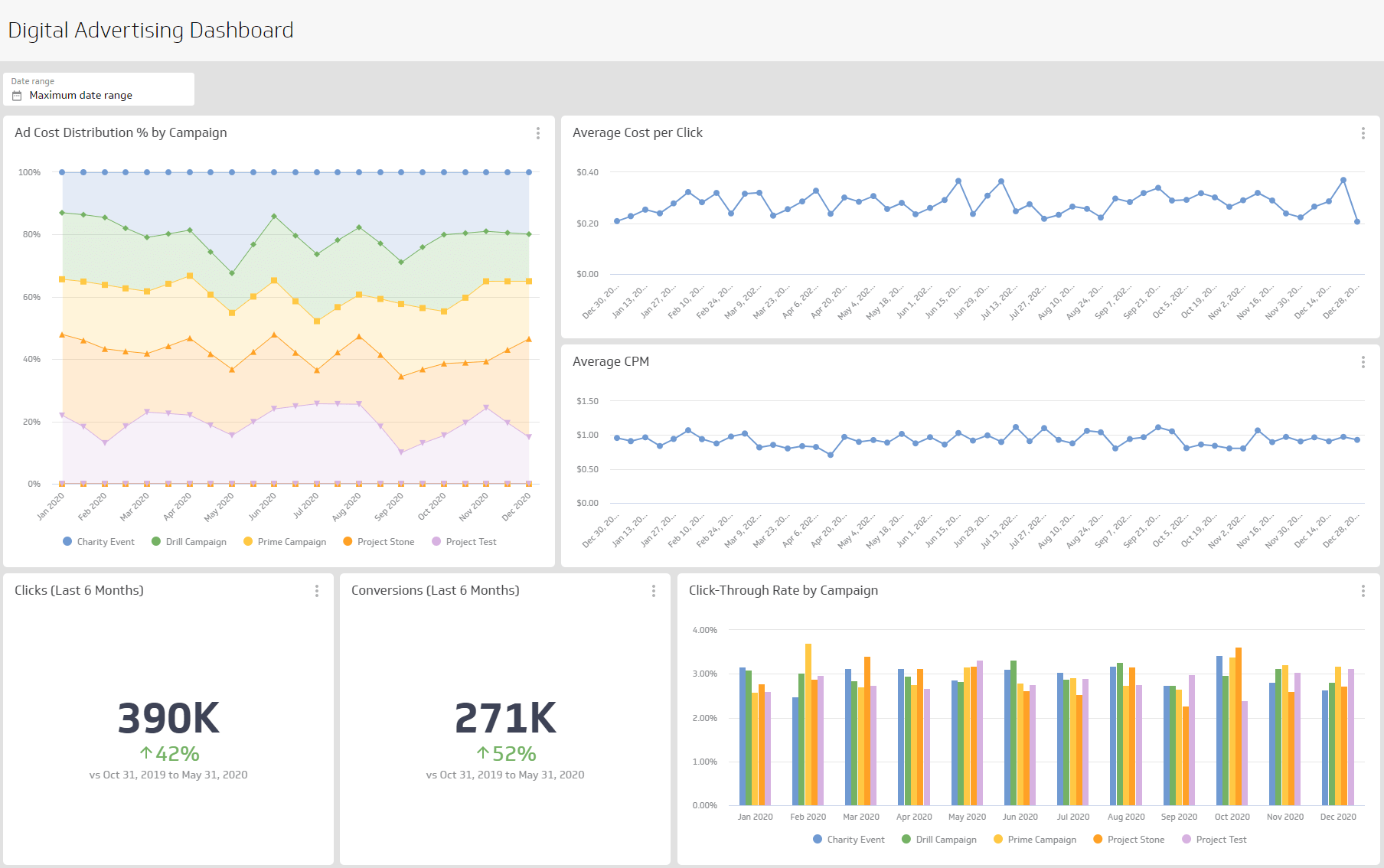
VCR is most useful when it's part of a broader picture. A 70% completion rate means something different if your downstream conversion rate is flat. Pairing VCR with Click-Through Rate, Cost Per Lead, and Return on Ad Spend gives you a complete view of whether your video investment is producing results, not just completions.
Klips pulls your video performance data alongside the rest of your marketing metrics into one dashboard, updated automatically, so you're not piecing together numbers from separate platforms every time you need to make a call. The decision is right there when you need it.