Missed Sales Opportunities
Track and reduce the percentage of qualified leads that go uncontacted, directly protecting your revenue.
Missed Sales Opportunities
What is a Missed Sales Opportunity?
A Missed Sales Opportunity occurs when a qualified lead goes uncontacted within an appropriate timeframe and is subsequently lost to competitors or inaction.
Every lead represents potential revenue. When your team fails to reach a prospect in time, that revenue disappears, often without you knowing it happened. Tracking this metric helps you identify gaps in your sales process, hold your team accountable, and recover revenue you would otherwise leave on the table.
How to calculate Missed Sales Opportunities
Missed Sales Opportunities = (Leads Not Contacted / Total Leads) × 100
Example: If you receive 100 leads in a month but only contact 95:
(5 / 100) × 100 = 5%
A 5% miss rate is a reasonable benchmark, though your target will vary by industry and sales capacity. The lower the number, the healthier your lead management.
Why tracking Missed Sales Opportunities matters
It reveals process breakdowns
Missed opportunities expose weak points in your lead management system. Are leads getting lost in your CRM? Are they not being assigned to reps? Are follow-up tasks being skipped? Tracking this metric forces you to audit your workflow and find out.
It has a direct cost
Every uncontacted lead is lost revenue. If your average deal value is $5,000 and you miss 5% of 100 leads per month, that is $25,000 walking away. Over a year, that is $300,000 in opportunity cost. Seeing it in those terms makes the case for fixing it.
It improves team accountability
When your sales team knows this metric is being tracked, follow-up discipline improves. Visibility drives behaviour change and encourages faster response times without requiring constant management intervention.
It identifies capacity problems
A persistently high miss rate often signals that your team is understaffed or overwhelmed. This data gives you something concrete to bring to a hiring or resourcing conversation.
It sharpens your forecasts
When you know how many leads are slipping through, you can adjust pipeline projections and set revenue targets that reflect reality, not wishful thinking.
Best practices for reducing Missed Sales Opportunities
Automate lead assignment. Use your CRM to route leads to available reps automatically, based on territory, skill, or capacity. Manual assignment creates delays and errors that compound quickly.
Set clear contact SLAs. Define how quickly leads must be contacted (within one hour, same business day) and communicate those expectations clearly. Track compliance as part of your regular reporting.
Use lead scoring. Prioritize high-quality leads so your team focuses on prospects most likely to convert. Lower-scoring leads still deserve contact, but timing can flex.
Implement reminder systems. Set up automated tasks and notifications in your CRM to flag uncontacted leads before they age out of relevance.
Monitor in real time. Track uncontacted leads daily or weekly, not monthly. A live dashboard gives you early visibility so you can course-correct before a small problem becomes a pattern.
Review your lead volume. If you are consistently missing opportunities, you may have a capacity problem. Either grow your team or adjust your lead generation strategy to match what your team can realistically handle.
Who should track this metric
| Role | Why it matters |
|---|---|
| Sales Managers | Measure team discipline and process effectiveness |
| Sales Directors / VPs | Assess capacity, forecast accuracy, and revenue impact |
| Sales Operations | Identify workflow bottlenecks and system gaps |
| Marketing Leaders | Confirm that generated leads are being properly handled |
How to monitor Missed Sales Opportunities
Reporting frequency: Daily or weekly, so you can intervene early.
Target benchmark: 5% or lower, depending on your industry and sales model.
Related metrics to track alongside:
- Lead response time: How quickly leads are contacted after entry.
- Lead-to-opportunity conversion rate: What percentage of contacted leads advance in the pipeline.
- Sales cycle length: How long it takes to close deals. Missed contacts extend this.
- Win rate: Missed opportunities shrink your total opportunities and pull your win rate down with them.
Tools for tracking Missed Sales Opportunities
CRM platforms (HubSpot, Salesforce, Pipedrive) automatically log lead interactions and flag uncontacted leads, so nothing falls through the cracks by accident.
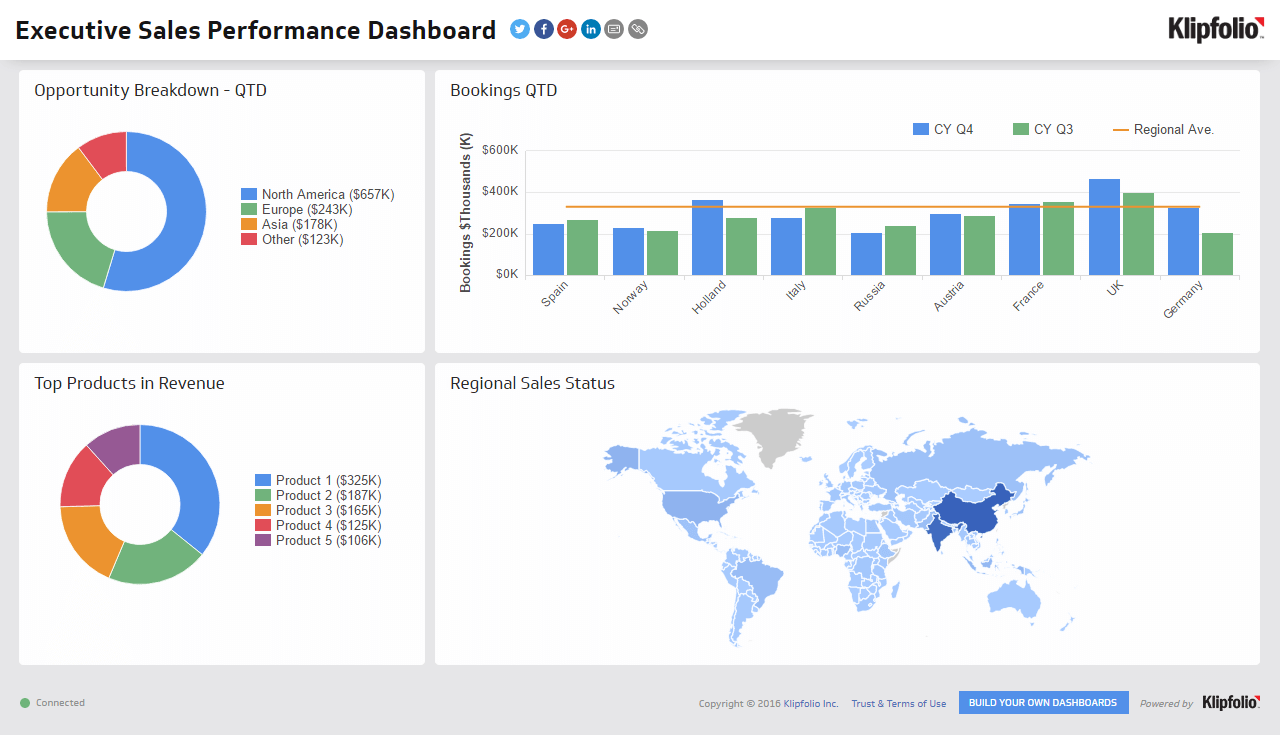
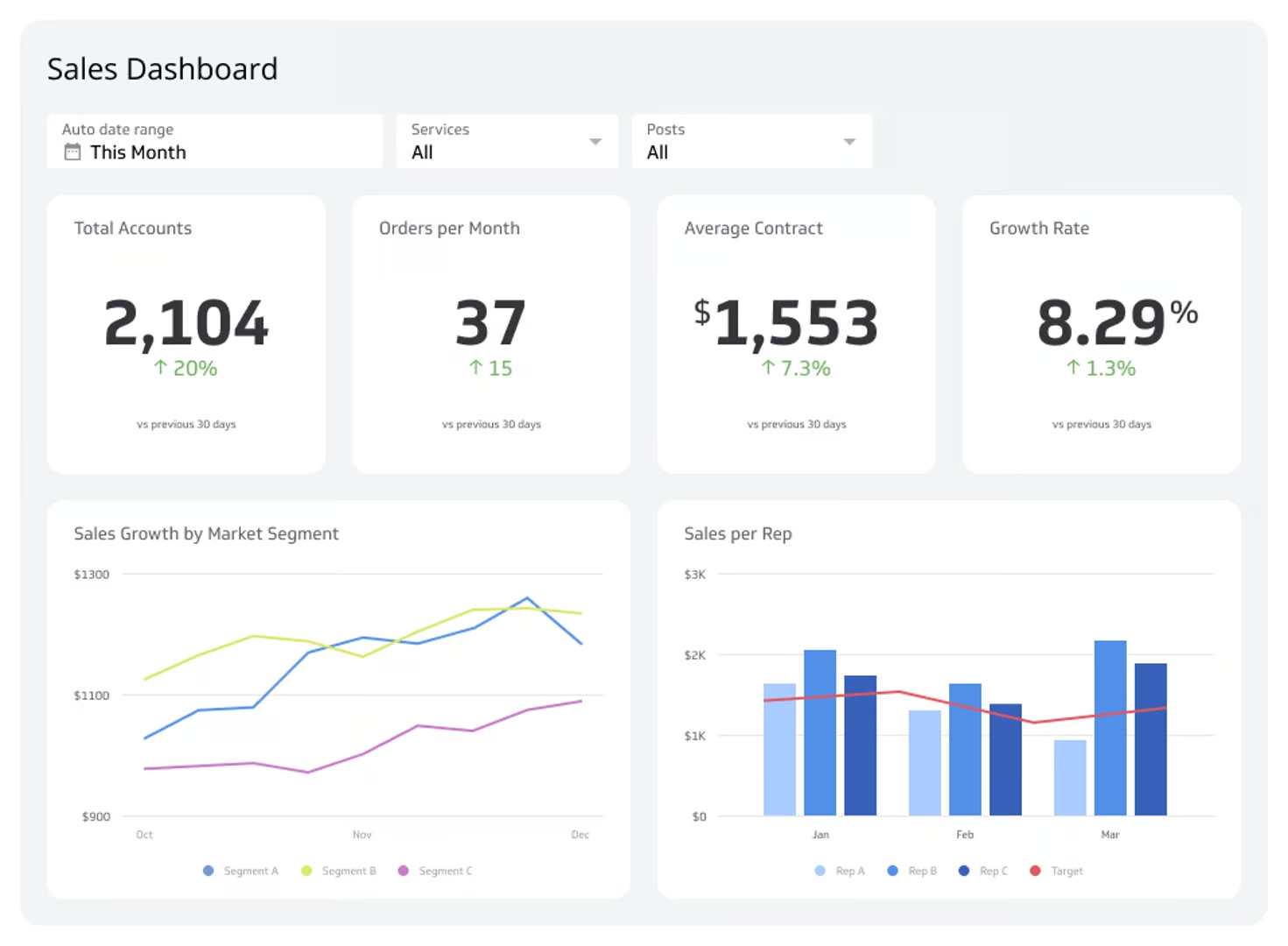
Sales dashboards (like Klips) visualize your Missed Sales Opportunity rate in real time, making it easy to spot trends and act before they become expensive. Rather than waiting for someone to pull a report or piecing together numbers from multiple sources, you get a consistent view that is always current.
Automation tools (Zapier, Make) route leads instantly and send alerts when contact deadlines approach, removing the manual steps that create delays.
One thing worth noting: copying lead data into a general-purpose AI tool and asking it to flag gaps is not a reliable workflow. The AI has no context about your team's capacity, your SLAs, or what changed last week. A dashboard built around your actual data gives you answers you can act on.
Create custom dashboards for you and your team.
Get started with KlipsKey takeaway
Missed Sales Opportunities represent real, quantifiable revenue loss. Tracking this metric weekly, setting clear contact standards, and automating your lead workflow keeps your team responsive and your pipeline healthy. Even a small improvement, dropping from 8% to 5%, can translate to tens of thousands in recovered revenue annually. The number tells you where to look; what you do next is what determines the outcome.