Sales Orders Filled per Unit Time
Measure how many sales orders your team completes within a specific timeframe.
Average Orders Filled per Day
Sales Orders Filled per Unit Time measures how many sales orders your team completes within a specific timeframe, typically per day, week, or month.
This KPI reveals both efficiency and capacity. For leaders running lean operations, it answers a question that matters every week: can your team actually deliver on what sales is promising? When orders start backing up, you want to know before a customer does.
Why this metric matters
Fulfillment speed directly affects whether customers come back. When orders arrive on time, customers trust you. When they don't, they leave reviews, request refunds, and don't reorder. Sales Orders Filled per Unit Time tells you whether your operation is keeping pace with demand before that trust erodes.
It surfaces capacity problems early. If your team is consistently filling fewer orders than expected, that's a signal worth acting on, whether the cause is understaffing, a process bottleneck, or a system gap. Catching it early is far cheaper than managing the fallout.
It makes revenue forecasting more reliable. Knowing your realistic throughput helps you set achievable sales targets and plan inventory with confidence. That prevents overselling and keeps your commitments credible.
It gives your team a clear, shared target. When fulfillment and sales teams can see the same number, accountability follows. There's no ambiguity about what "keeping up with demand" actually means.
How to calculate Sales Orders Filled per Unit Time
The formula is straightforward:
Orders Filled per Unit Time = Total Orders Completed ÷ Time Period
Example: If your fulfillment team completed 156 orders in one week:
156 orders ÷ 7 days = 22.3 orders per day
For monthly tracking:
450 orders ÷ 30 days = 15 orders per day
Or simply report: 450 orders per month
Adjust the time unit (hour, day, week, month) to match your business volume and reporting cadence.
Variations and related metrics
Before choosing a time unit, consider what question you're actually trying to answer. Each variation surfaces different information.
Average orders filled per day: The most common variation. Useful for daily performance monitoring and spotting weekly patterns.
Average orders filled per week: Smooths out daily fluctuations and shows longer-term trends without the noise of single-day spikes or dips.
Average orders filled per hour: For high-volume operations or those running multiple shifts, hourly tracking reveals which periods are most productive and where scheduling may need adjustment.
Orders filled by fulfillment centre: If you operate multiple warehouses or locations, track this metric separately to compare efficiency across sites.
Orders filled on time: Complements throughput by measuring whether orders met their promised delivery dates, not just whether they were completed.
Benchmarks and targets
Realistic targets depend on your industry, order complexity, and team size. These ranges offer a starting point:
| Context | Orders per day (per associate) |
|---|---|
| E-commerce | 20 to 50 (varies by product and packaging) |
| B2B or custom orders | 5 to 15 (typically more complex) |
| High-volume retail | 50 to 100+ |
Start by calculating your current baseline, then set incremental improvement targets. A 10 to 15 percent improvement over three to six months is realistic without sacrificing quality.
How to improve your Sales Orders Filled per Unit Time
The goal isn't just a higher number; it's a team that can deliver confidently and consistently. These changes tend to move the metric in a meaningful way.
Streamline your order picking process. Organize inventory by location and implement zone picking, where team members pick orders in designated areas rather than one person picking an entire order. This reduces travel time and errors.
Invest in automation where it fits. Conveyor systems, barcode scanners, and order management software reduce manual handling and speed up processing without adding headcount.
Optimize your packing workflow. Pre-stage packing materials, use right-sized boxes, and consider assembly-line packing where each person focuses on one task, placing items, adding packing materials, or sealing.
Train and cross-train your team. New team members are slower. Regular training and cross-training reduce errors, build confidence, and mean you're not dependent on a single person knowing how everything works.
Plan for peak periods. Identify your busiest times and staff accordingly. Temporary workers, flexible schedules, or shift adjustments can help you meet demand without burning out your core team.
Use data to find the actual bottleneck. Track where orders slow down: picking, packing, or quality checks. Once you know where the delay lives, you can address it directly rather than guessing.
Reporting frequency
Most teams track Sales Orders Filled per Unit Time monthly, with weekly reviews to catch problems early. High-volume operations may monitor it daily to respond quickly to staffing or process issues.
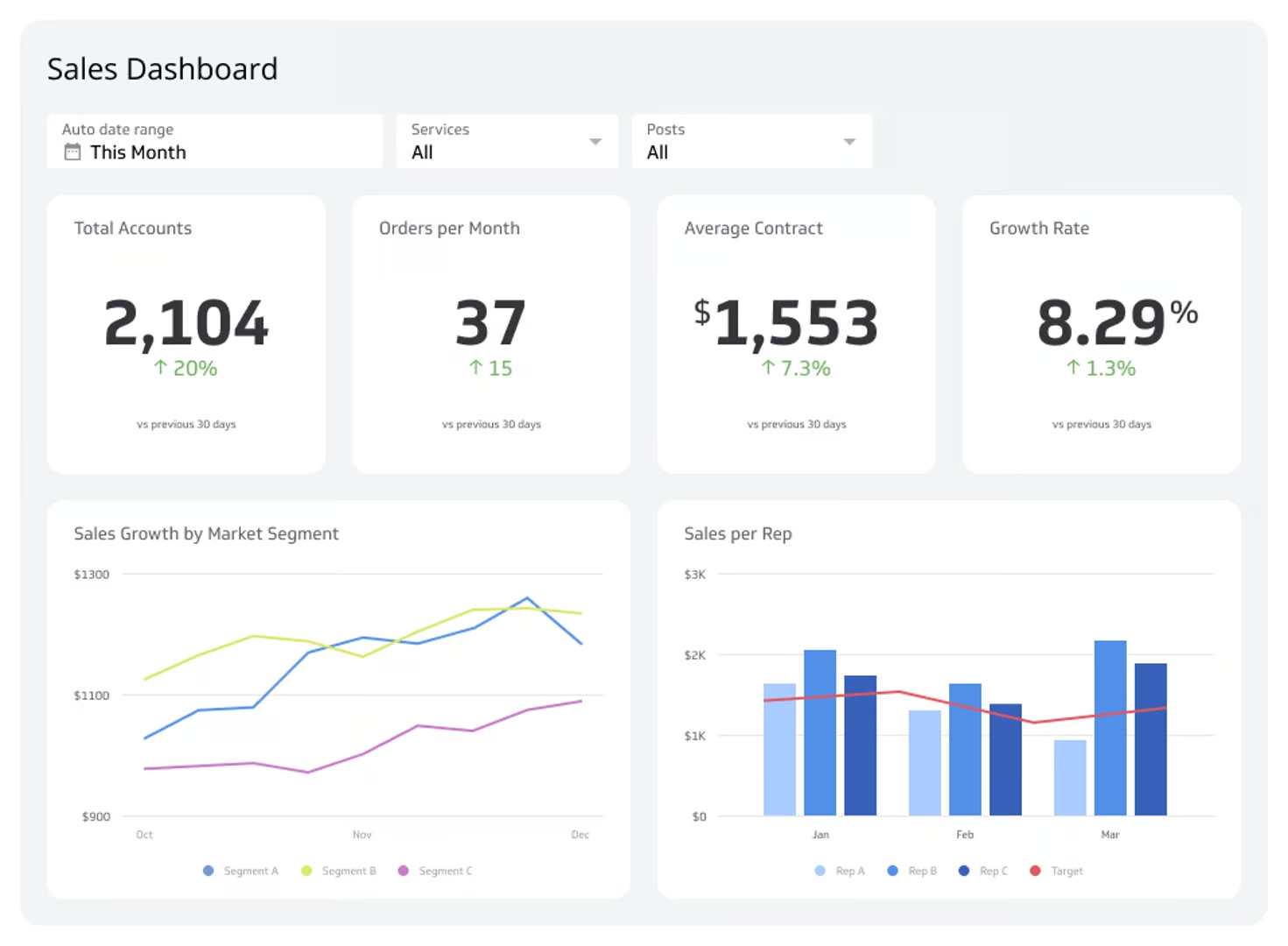
A live dashboard removes the lag between a problem appearing and a manager seeing it. Rather than waiting for someone to pull a report or paste numbers into a spreadsheet, the metric stays current and visible to everyone who needs it.
Create custom dashboards for you and your team.
Get started with KlipsWho uses this metric
Operations and fulfillment managers: Optimize staffing, identify process improvements, and measure team performance.
Sales managers: Monitor fulfillment capacity to set realistic sales targets and manage customer expectations.
Finance: Use fulfillment throughput to forecast cash flow and plan resource allocation.
Sales team: Understand how quickly orders are being processed so customer commitments stay accurate.