Tender Win Rate
Measure the percentage of bids or proposals your business wins out of the total number submitted.
Tender Win Rate
What is Tender Win Rate?
Tender Win Rate is the percentage of bids or proposals your business wins out of the total number submitted. It measures how effectively your firm converts tendering opportunities into contracts.
Why Tender Win Rate matters
Your Tender Win Rate is one of the clearest signals of commercial health. A low rate tells you something is off: weak proposals, poor opportunity qualification, pricing that misses the mark, or a pitch that does not land. A high rate tells you your positioning is working.
For professional services firms, construction companies, and consultancies, tenders are often how revenue gets made. Waiting until a quarter closes to review your win rate means you are already behind. The leaders who track this consistently know, without having to ask, whether their pipeline is converting or quietly bleeding opportunity.
Beyond the headline number, Tender Win Rate helps you:
- Spot trends in which project types, client segments, or service lines you win most often
- Identify weaknesses in your proposal process or pricing before they compound
- Forecast revenue with more confidence, based on actual pipeline conversion data
- Focus resources on the opportunities with the highest probability of closing
- Benchmark progress against your own historical performance
How to calculate Tender Win Rate
Tender Win Rate (%) = (Tenders Won / Total Tenders Submitted) × 100
You can also express the underlying ratio directly:
Successful to Unsuccessful Tenders Ratio = Tenders Won / Tenders Lost
Example: Your firm submits 50 tenders in a quarter and wins 16. Your Tender Win Rate is (16 / 50) × 100 = 32%.
Track the inverse, your loss rate, to understand where opportunities are slipping away and at what stage.
What is a good Tender Win Rate?
A 25 to 35% win rate is typical for professional services and construction firms. But your own baseline matters more than any industry average. If your historical rate is 20% and you move it to 25%, that is meaningful progress, regardless of what a benchmark says.
Set targets based on:
- Your company's historical performance over the past 12 to 24 months
- Competitor benchmarks, where available
- Your growth ambitions and the capacity your team has to pursue and deliver work
- The complexity and average value of tenders you typically pursue
A firm chasing high-value, complex contracts should expect a lower win rate than one pursuing smaller, more straightforward bids. Volume and value need to be read together.
Create custom dashboards for you and your team.
Get started with KlipsKey factors that influence Tender Win Rate
Proposal quality: Tailored proposals that speak directly to the client's situation win more often than generic submissions. Clients can tell the difference.
Pricing strategy: Underpricing wins deals but erodes margins. Overpricing loses them. Reviewing your pricing against wins and losses over time helps you find the range that works.
Demonstrated expertise: Relevant experience, case studies, and specific examples build confidence in your ability to deliver. Generic capability statements do not.
Opportunity qualification: Pursuing only tenders where you have a genuine competitive advantage improves your win rate faster than chasing every opportunity that comes in.
Bid process discipline: Proposals that go out on time, reviewed and polished, reflect better on your firm than rushed submissions.
Market conditions: Economic cycles, seasonal patterns, and competitive intensity all affect win rates in ways outside your control. Factor these in when interpreting trends.
How to improve your Tender Win Rate
Review lost tenders. Ask clients why you did not win. Price, capability, timeline, trust: each answer points to a different fix. This feedback is worth more than most internal reviews.
Strengthen your proposal process. Develop templates, sharpen your messaging, and build in a review step before every submission goes out.
Qualify harder. Fewer bids with higher win probability beats a high submission volume with low conversion. Your team's time is finite; spend it on the right opportunities.
Build and use case studies. Document your wins in detail. Use them to show prospective clients exactly what working with you looks like and what results they can expect.
Segment your win rate. Win rates often vary by project size, service line, or client type. Knowing where you win most helps you double down on strengths and be more selective elsewhere.
Invest in pre-tender relationships. Engaging with prospects before they issue a formal tender gives you context they will not put in the brief, and gives them confidence in you before the evaluation starts.
Reporting frequency and audience
Reporting frequency: Monthly or quarterly, depending on tender volume. Higher-volume operations benefit from monthly reviews; lower-volume firms may find quarterly sufficient.
Key stakeholders: CFO, Sales Manager, Business Development Lead, Practice Manager.
Related metrics: Average tender value, proposal turnaround time, and cost-to-bid ratio give you the full picture of tendering effectiveness. Tender Win Rate tells you how often you win; these tell you whether winning is worth the effort.
Variations of this metric
- Win Rate by service line: Track success separately for each service you offer to see where your firm is strongest
- Win Rate by client type: Compare performance across industries or company sizes to identify where you compete best
- Average time to win: Measure how long the sales cycle typically runs from tender issue to contract signature
- Tender pipeline value: Calculate the total value of active tenders weighted by win probability, for a more realistic revenue forecast
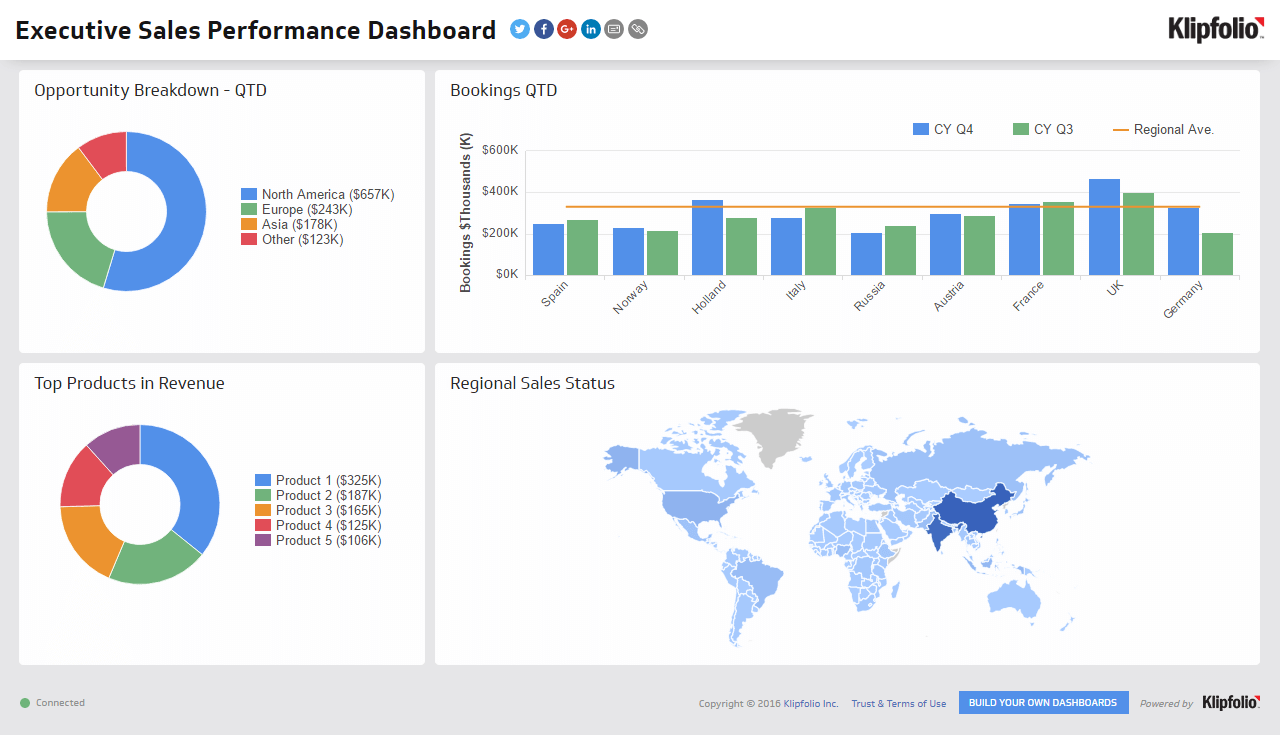
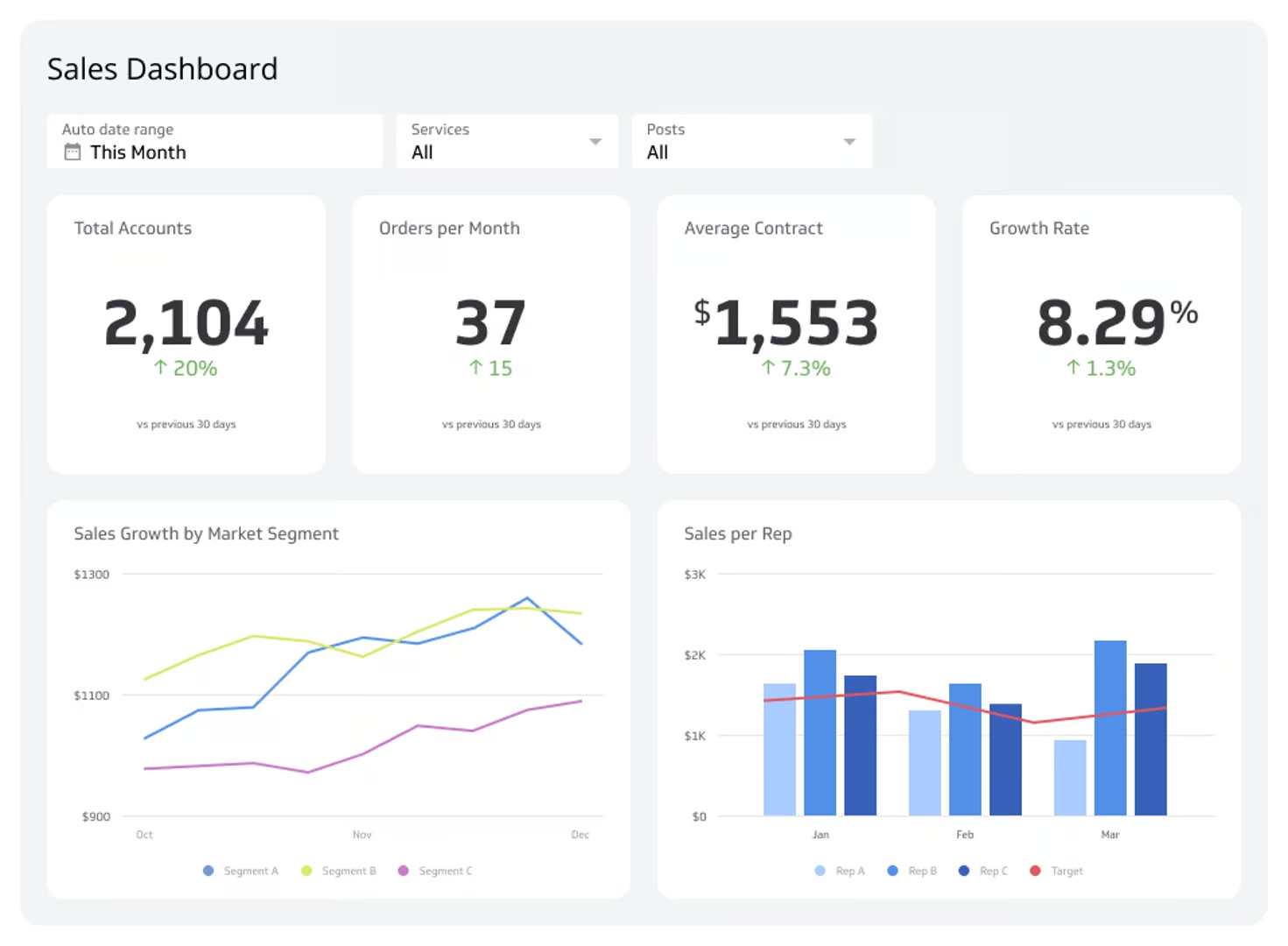
Tracking Tender Win Rate with a dashboard
Manual tracking through spreadsheets, email archives, or disconnected systems makes it easy to miss trends and slow to act on them. By the time you compile the data, the window to intervene has often closed.
A centralized dashboard pulls tender data from your CRM or project management system automatically, giving you a live view of win rate, pipeline health, and performance trends without anyone having to compile a report. Pasting numbers into a general-purpose AI tool and asking it to interpret them is not a reliable substitute: the tool has no context about your targets, your market, or what changed last quarter.
With a dashboard built around your actual data, you can:
- View Tender Win Rate by service line, client type, or business development lead at a glance
- Set targets and track progress toward quarterly or annual goals
- Identify which proposal strategies and client types correlate with wins
- Share performance data with stakeholders in a format that supports decisions, not just reporting
The key is consistency: define what counts as a tender, track outcomes the same way every time, and review the data regularly with the people accountable for results.