Longest Delay in Queue Metric
Measure the longest time a caller was held in the queue before being connected to a call agent.
Track all your Call Center KPIs in one place
Sign up for free and start making decisions for your business with confidence.
Overview
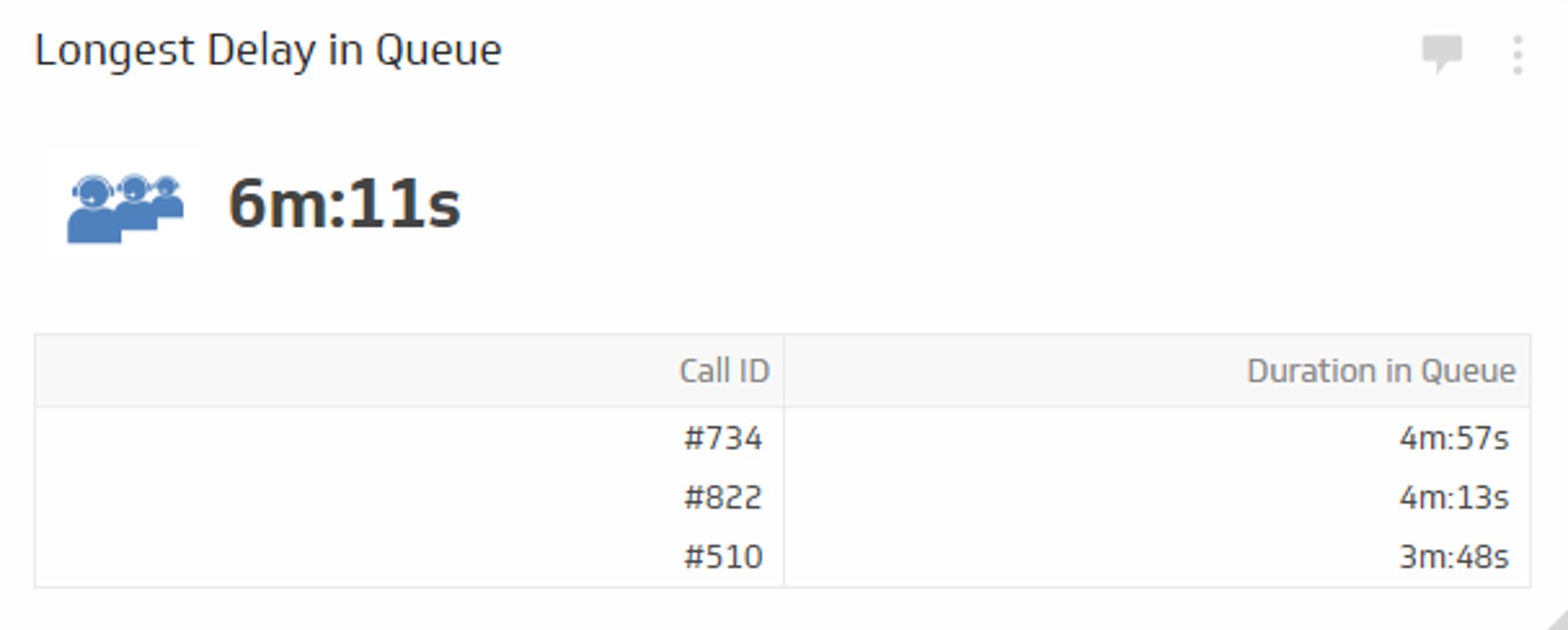
The Longest Delay in Queue metric measures the longest time a customer waited before connecting with an agent. Understanding this KPI helps call center managers identify bottlenecks, empathize with customer frustration, and optimize staffing and queue management strategies.
Why Longest Delay in Queue matters
Long queue times frustrate customers and damage satisfaction scores. Tracking the longest delay reveals peak periods, staffing gaps, and systemic issues that shorter average metrics might miss. A single customer waiting 20 minutes while the average is 3 minutes signals a problem—and that customer is likely to churn.
For call center managers, this metric is essential for:
- Identifying peak periods: Spot when queues back up and plan staffing accordingly.
- Improving customer experience: Reduce abandonment rates and negative sentiment caused by excessive wait times.
- Benchmarking performance: Compare your longest delays against industry standards and internal targets.
- Justifying resources: Use data to support requests for additional agents or technology improvements.
How to calculate Longest Delay in Queue
Formula:
The maximum wait time recorded in your call queue during a specific period (day, week, or month).
Step-by-step:
- Capture the wait time for every incoming call (time from call entry to agent connection).
- Identify the single longest wait time in your dataset.
- Report this value for your chosen reporting period.
Example:
If your call center receives 500 calls in a week and the wait times range from 15 seconds to 18 minutes, your Longest Delay in Queue for that week is 18 minutes.
Benchmark targets and context
Industry benchmarks vary by sector, but here are general guidelines:
- Excellent: Under 1 minute
- Good: 1–3 minutes
- Acceptable: 3–5 minutes
- Needs improvement: Over 5 minutes
Your target depends on your industry, customer expectations, and service level agreements (SLAs). A legal or financial services firm may tolerate longer waits than a retail support line.
Key variations and related metrics
- Longest Stay in Queue (LSQ): Synonymous with Longest Delay in Queue.
- LDQ: Common abbreviation.
- Average Speed of Answer (ASA): The average wait time across all calls (less dramatic than longest delay, but easier to manage).
- Service Level: The percentage of calls answered within a target time (e.g., 80% answered within 20 seconds).
- Abandoned Call Rate: The percentage of callers who hang up before reaching an agent—often correlated with long delays.
How to improve Longest Delay in Queue
- Increase staffing during peak hours: Use historical data to forecast demand and schedule agents accordingly.
- Implement call routing: Direct callers to the most available agent or appropriate queue.
- Offer callback options: Let customers opt for a callback instead of waiting in queue.
- Reduce Average Handle Time: Train agents to resolve issues faster without sacrificing quality.
- Use IVR systems: Automate simple requests to reduce queue volume.
- Monitor real-time: Set alerts when queue times exceed thresholds so you can act immediately.
Reporting frequency and audience
- Reporting frequency: Weekly or daily (depending on call volume and operational needs).
- Primary audience: Call center managers, operations directors, and quality assurance teams.
- Secondary audience: Executive leadership (for SLA reporting and resource planning).
Related Metrics & KPIs