Ad Spend
Ad Spend is the total amount a business invests in advertising across all channels over a given period. Tracking it is the starting point for every meaningful advertising decision.
Ad Spend by Campaign
- Campaign 1$3.2k
- Campaign 2$2.8k
- Campaign 3$4.1k
- Campaign 4$4.9k
Ad spend is the total amount a business invests in advertising across all channels over a given period.
What is Ad Spend?
Ad spend, or advertising spend, is a critical digital marketing metric that tracks how much a business allocates to paid promotion across channels like social media, search engines, display networks, TV, and print. It tells you where your budget is going and gives you the foundation to evaluate whether that budget is working.
Knowing your Ad Spend is the starting point for every meaningful advertising decision. Without it, you're guessing at efficiency, return, and where to cut or invest more.
Why Ad Spend matters
Ad Spend connects your marketing budget to business outcomes. Tracking it makes the difference between reacting to results and making deliberate calls before more money goes out the door.
Revenue clarity: Advertising drives leads and sales. Knowing what you spent, and what came back, tells you whether a campaign earned its place in the budget.
Growth decisions: Expanding into new markets or launching new products requires investment. Ad Spend data shows which channels produce results worth scaling.
Brand visibility: Consistent advertising builds recognition over time. Tracking spend helps you maintain that presence without overspending.
Competitive positioning: In crowded markets, staying visible matters. Monitoring Ad Spend keeps you from going dark when competitors are investing.
The real payoff isn't the number itself. It's the confidence to make the next call: increase, hold, or cut.
How Ad Spend is measured
Ad Spend is measured through several cost-based metrics, each suited to a different campaign type. The right metric depends on your goal and the platform you're using.
CPM (Cost per Thousand Impressions)
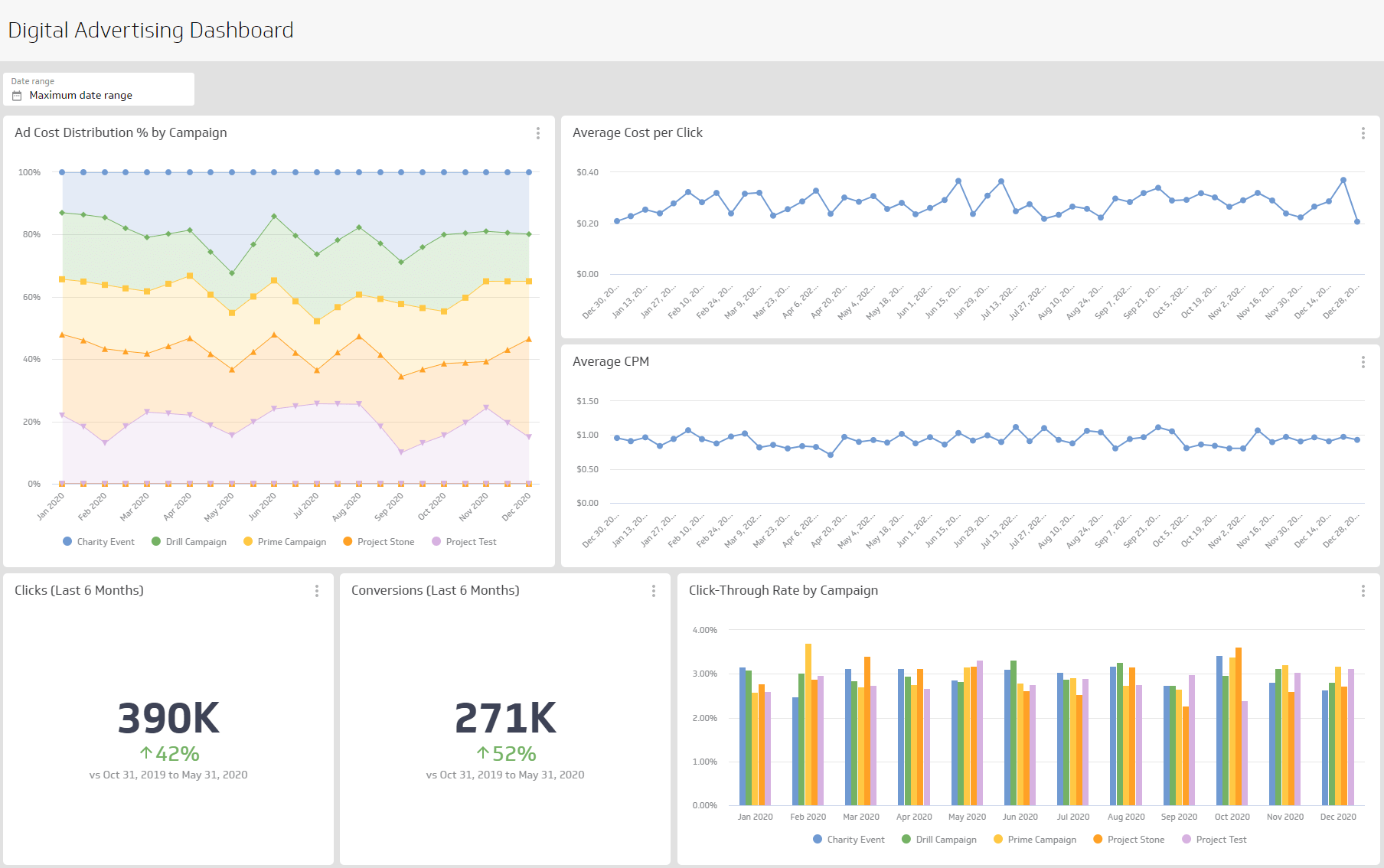
CPM measures the cost of 1,000 ad impressions. It's used in display advertising where you pay for visibility, not interaction. If you pay $10 for 1,000 impressions, your CPM is $10. CPM is best for brand awareness campaigns where reach is the primary goal.
CPC (Cost per Click)
Cost per Click (CPC) is the amount paid each time a user clicks your ad. It's standard in search advertising. If you spend $100 and receive 100 clicks, your CPC is $1. A rising CPC often signals increased competition or a relevance problem worth fixing before costs climb further.
CPL (Cost per Lead)
Cost per Lead measures what you pay for each user who takes a qualifying action, like submitting a form or subscribing to a newsletter. If 50 users submit their contact details and your total spend is $500, your CPL is $10. This metric is essential for lead generation campaigns where volume and quality both matter.
CPA (Cost per Action)
CPA tracks the cost of each specific user action, such as a purchase or app download. It's used in performance-based advertising where you only pay when something valuable happens. If 20 users complete a purchase and your total spend is $100, your CPA is $5.
CPS (Cost per Sale)
Cost per Sale measures advertising cost relative to revenue generated. It's common in e-commerce, where advertisers pay a commission on each sale. If your ad drives $1,000 in sales and you pay a 10% commission, your CPS is $100.
CPI (Cost per Install)
CPI measures the cost of each app install generated by an ad. If 500 users install your app and your total spend is $500, your CPI is $1. This metric is the standard for mobile app advertising campaigns.
Create custom dashboards for you and your team.
Get started with KlipsWhat is a good level of Ad Spend?
There's no universal answer, but there are useful benchmarks. A common starting point is allocating 5% to 10% of revenue to advertising. Highly competitive industries often require more.
The more useful question isn't "how much should I spend?" It's "is what I'm spending working?" That means reviewing performance regularly and adjusting based on results, not habit.
A few principles worth following:
Treat Ad Spend as a variable, not a fixed line item. Campaigns that perform well deserve more budget. Campaigns that don't should be cut or reworked before more money goes in.
Match spend to your stage. A business building brand awareness has different needs than one running direct-response campaigns. Spend levels should reflect the goal.
Watch the return, not just the number. A high Ad Spend with strong Return on Ad Spend (ROAS) is a better position than a low spend with no measurable return.
If you're currently pasting campaign numbers into a spreadsheet or asking a generic AI tool to interpret your results from scratch each week, you're spending time you don't need to. Reliable, consistent data in one place makes these decisions faster and more confident.
Questions to ask before setting your Ad Spend budget
Before committing budget, it helps to pressure-test the plan. These questions focus the decision:
What are my business goals?
Advertising should serve a specific objective: more sales, stronger brand recognition, more website traffic. The goal determines which channels and formats make sense, and how to measure success.
Which regions are most relevant to my audience?
Geography shapes where budget goes. If demand is concentrated in specific markets, targeting those regions first makes spend more efficient.
Does the creative match my audience?
An ad's message has to resonate with the people seeing it. Creative that is relevant to the target audience performs better and makes every dollar work harder.
What's the right campaign pace?
A larger budget can support a concentrated push over a shorter period. A smaller budget often works better distributed over a longer window. Neither is wrong; the right answer depends on your goals and timeline.
Which channels will reach my audience?
Social media, search, display, and other channels each attract different audiences. Spend should follow where your buyers actually are, not where it's easiest to run ads.
What can I realistically afford?
Ambition is useful. Overcommitting budget is not. Ad Spend should fit within the broader financial plan and leave room to adjust when results come in.
Frequently asked questions about Ad Spend
Tracking Ad Spend without the guesswork
Knowing your Ad Spend number is one thing. Knowing what it means, across channels, campaigns, and time periods, is another. When spend data lives in separate platform dashboards, it's easy to miss the full picture.
Klips pulls your advertising data from 130+ connectors into a single dashboard, so you can see total spend, cost metrics, and campaign performance side by side, updated automatically. No manual exports, no copying numbers between tabs. Just the clarity you need to make the next call.