Cost Per Thousand (CPM)
CPM is the cost of serving your ad to 1,000 people — the standard unit for comparing advertising costs across platforms and channels.
Cost Per Thousand (CPM)
Cost Per Thousand (CPM) is the cost of serving your ad to 1,000 people. It's the standard unit for comparing advertising costs across platforms and channels.
If one platform charges a $10 CPM and another charges $5 CPM, reaching the same audience on the second platform costs half as much. That's why CPM is a core input for ad spend planning and allocation across campaigns.
What is Cost Per Thousand (CPM)?
CPM is a pricing model used in digital advertising where you pay for every 1,000 impressions your ad receives, regardless of whether anyone clicks or converts.
The term comes from the Latin mille, meaning thousand. CPM is used across display advertising, social media, video, and programmatic channels. It gives marketers a consistent unit to evaluate the cost of reach.
A higher CPM often signals a more targeted or premium audience. A lower CPM typically means broader reach but may come with lower engagement. Balancing CPM against return on investment helps you spend where it counts.
How to calculate CPM
The CPM formula is straightforward:
CPM = (Total Ad Spend / Total Impressions) × 1,000
Step 1: Count your impressions
Total your ad impressions for the campaign period. This is the number of times your ad was displayed, across all placements.
Step 2: Divide spend by impressions
Divide your total ad spend by the number of impressions. If you spent $500 and received 10,000,000 impressions, your cost per impression is $0.00005.
Step 3: Multiply by 1,000
Multiply the result by 1,000 to get CPM.
($500 / 10,000,000) × 1,000 = $50 CPM
That means you're paying $50 for every 1,000 people who see your ad.
What CPM tells you about your campaigns
CPM gives you a predictable cost structure. You know what reach will cost before you launch, which makes budgeting and forecasting straightforward. But the number itself is only part of the story.
A low CPM feels like a win. It isn't, automatically. If your ad is reaching people who will never buy, a cheap impression is still a wasted one. The useful question isn't just "what did it cost to reach 1,000 people?" It's "did reaching those people move anything?"
That's why CPM works best alongside click-through rate, conversion rate, and return on ad spend. Together, those numbers tell you whether your spend is producing results or just producing impressions.
Key reasons to track CPM:
- Predictable spend: You pay per impression, not per click, so costs don't spike unexpectedly based on user behaviour.
- Cross-channel comparison: CPM creates a common unit for comparing the efficiency of display, social, video, and programmatic campaigns.
- Brand awareness measurement: For campaigns focused on reach and visibility rather than direct response, CPM is the right unit to track.
- Budget control: Impression-based buying lets you cap exposure and manage total spend with precision.
How to improve your CPM campaigns
Lowering CPM, or getting more from the same CPM, comes down to four areas.
Use high-quality ad creative
Ad creative directly affects your relevance score on most platforms. Higher relevance scores lower your CPM. Invest in clear messaging, strong visuals, and copy that speaks directly to your audience's needs. Generic creative drives up costs and reduces impact.
Create custom dashboards for you and your team.
Get started with KlipsExperiment with audience targeting
Targeting is the single most important lever for CPM efficiency. Broad audiences are cheap to reach but often irrelevant. Narrow audiences cost more per thousand but convert better. Test different segments, refine your parameters, and let data guide where you focus budget.
Pasting audience assumptions into a generic AI tool and asking it to suggest targeting isn't a substitute for this work. The platforms reward advertisers who test and iterate with real campaign data, not those who optimize on guesswork.
Test different ad formats
Video, static image, carousel, and interactive formats perform differently across platforms and audiences. What works on one channel may not translate to another. Running format tests helps you identify which combinations drive the best results for your goals.
Monitor metrics and adjust
Tracking CPM alone isn't enough. Pair it with conversion rates and return on ad spend to get a complete picture of campaign performance. If CPM is low but conversions are flat, the targeting or creative needs work. Regular review keeps campaigns from drifting.
Common challenges with CPM campaigns
Reaching the wrong audience: A low CPM means nothing if your ad is served to people who will never buy. Invest time in audience research before launch. Demographics, interests, and online behaviour all inform better targeting.
Ad fatigue: Showing the same creative to the same audience repeatedly drives up CPM over time as engagement drops. Rotate creative and refresh messaging to maintain relevance.
Impression quality: Not all impressions are equal. Viewability rates, ad placement, and bot traffic all affect whether your impressions are actually seen by real potential customers. Use platforms and tools that report on viewability, not just raw impression counts.
CPM vs. other pricing models
| Model | What you pay for | Best used for |
|---|---|---|
| CPM | 1,000 impressions | Brand awareness, reach campaigns |
| CPC | Each click | Traffic, lead generation |
| CPA | Each conversion | Direct response, e-commerce |
| CPL | Each lead | B2B, service businesses |
CPM is the right model when your goal is visibility. If you need measurable actions, such as clicks, sign-ups, or purchases, CPC or CPA models tie spend more directly to outcomes.
Tracking CPM in your marketing dashboard
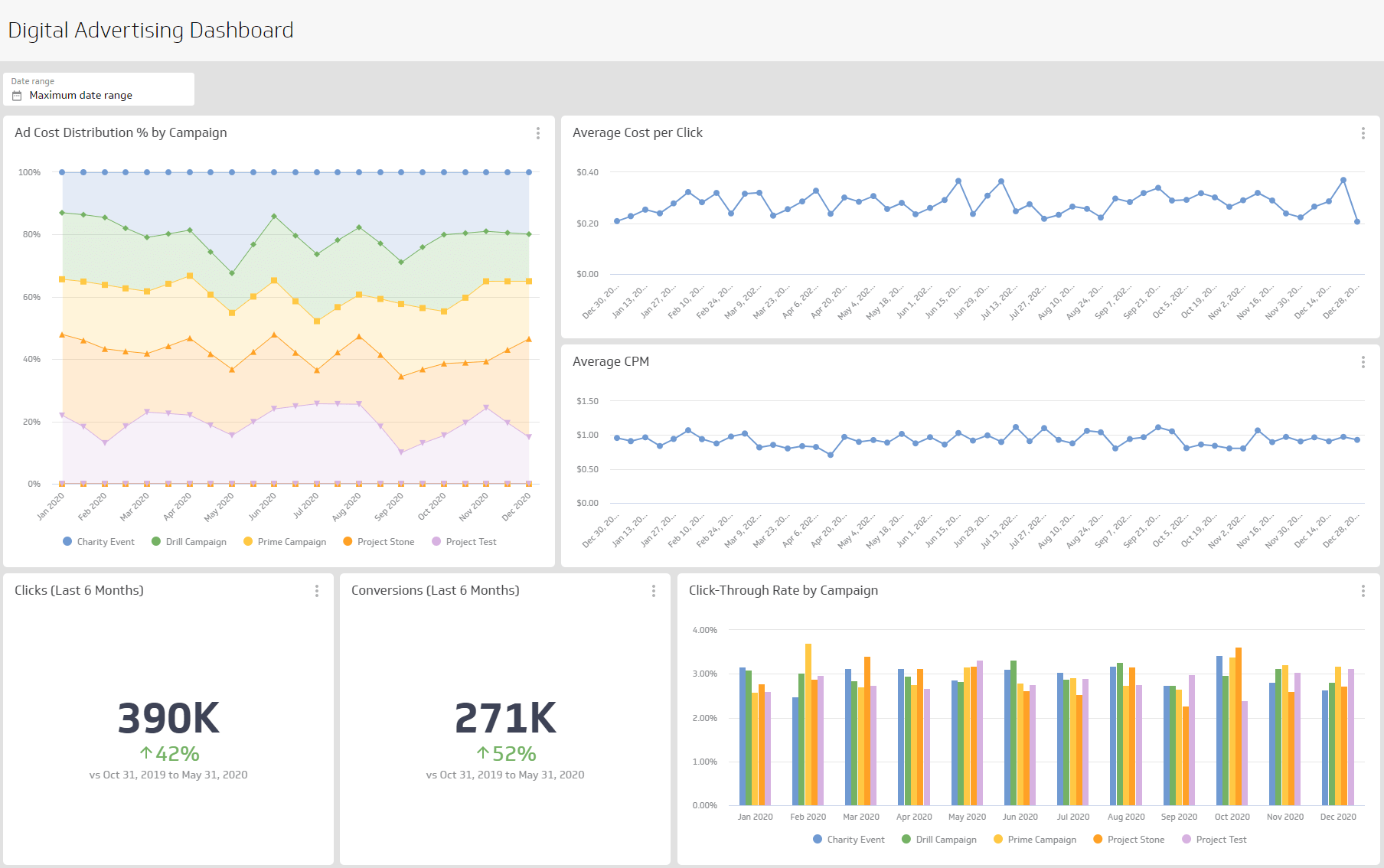
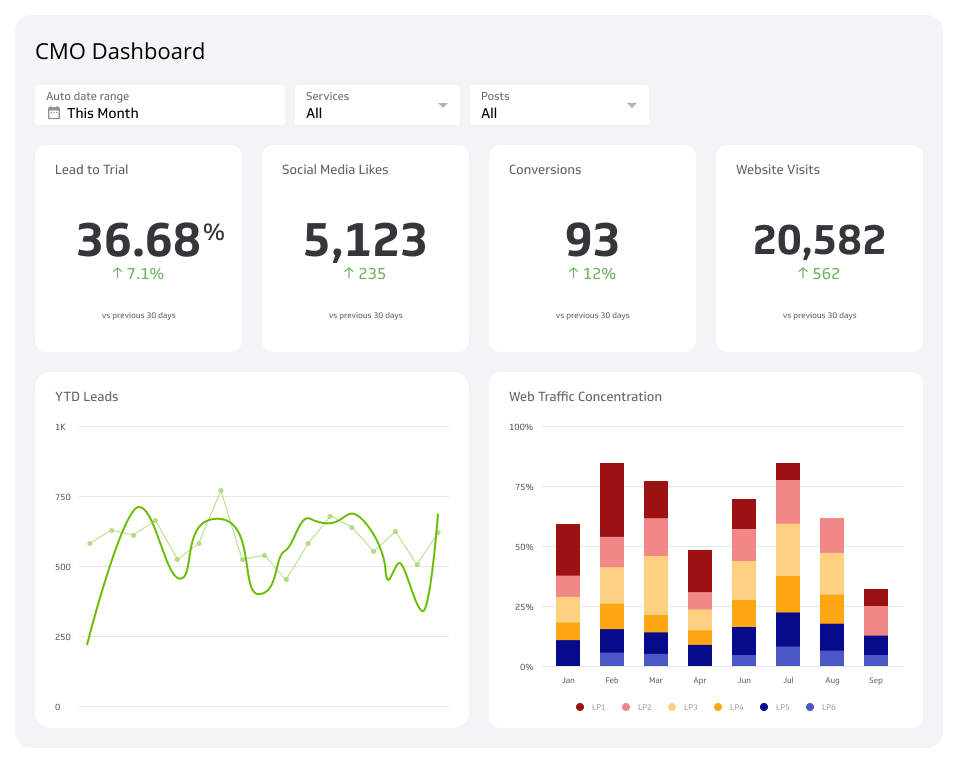
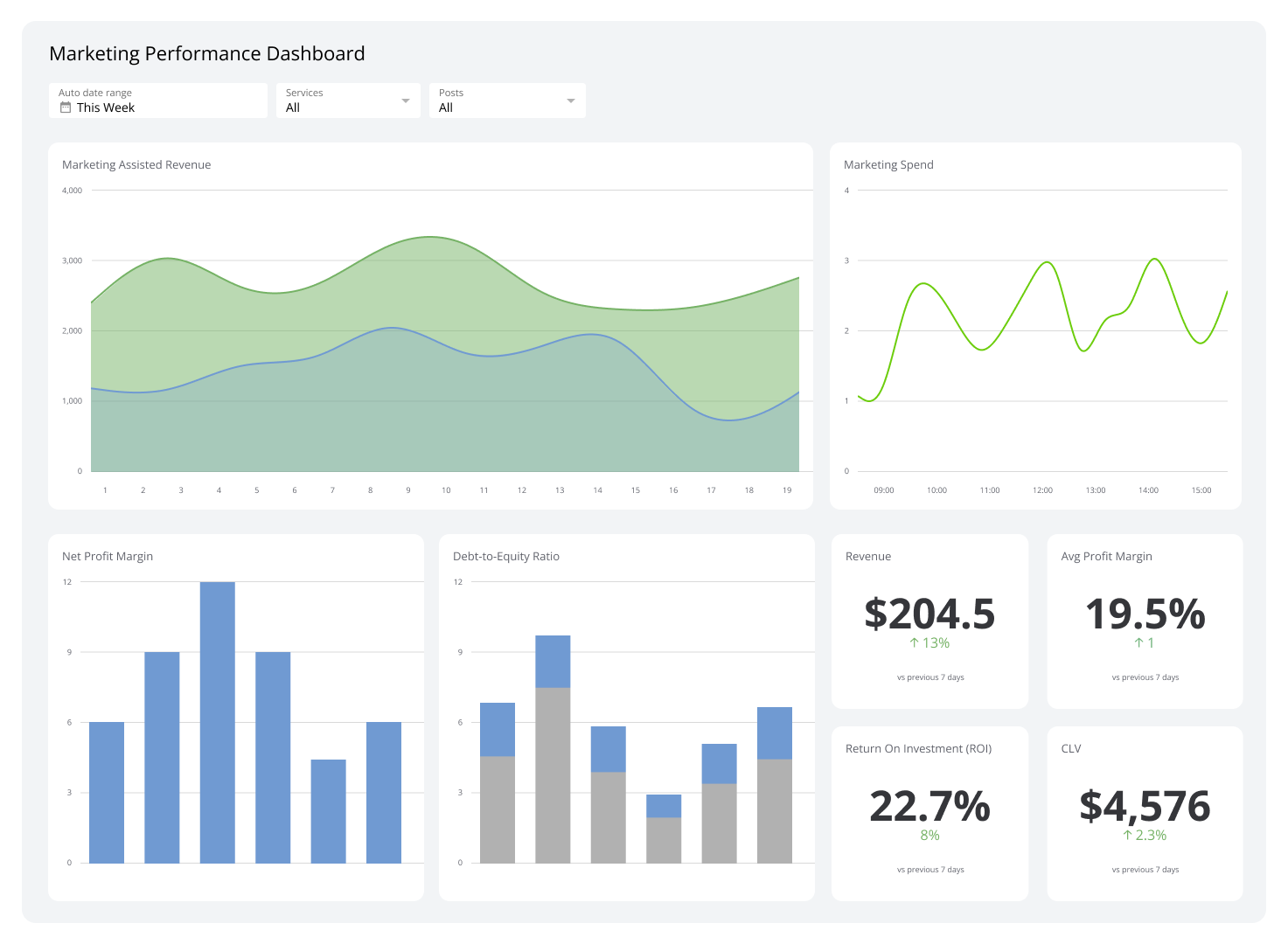
Monitoring CPM alongside related metrics gives you a fuller picture of advertising efficiency. A marketing dashboard that combines CPM, impressions, Click-Through Rate, and conversion data lets you spot inefficiencies quickly and act on them.
The alternative is checking each platform separately, manually pulling numbers, and trying to reconcile figures that were captured at different times. By the time you have a picture, it's already stale.
Klips connects advertising data from platforms like Google Ads, Meta, and LinkedIn into a single view. You can compare CPM across channels, see what's moving, and share a consistent set of numbers with everyone who needs them, without switching between tabs or waiting for someone to pull a report.
CPM is a foundational digital marketing metric. Knowing your CPM is a start. Knowing what it means for your decisions, and having reliable numbers ready when you need them, is what separates efficient ad spend from wasted budget.