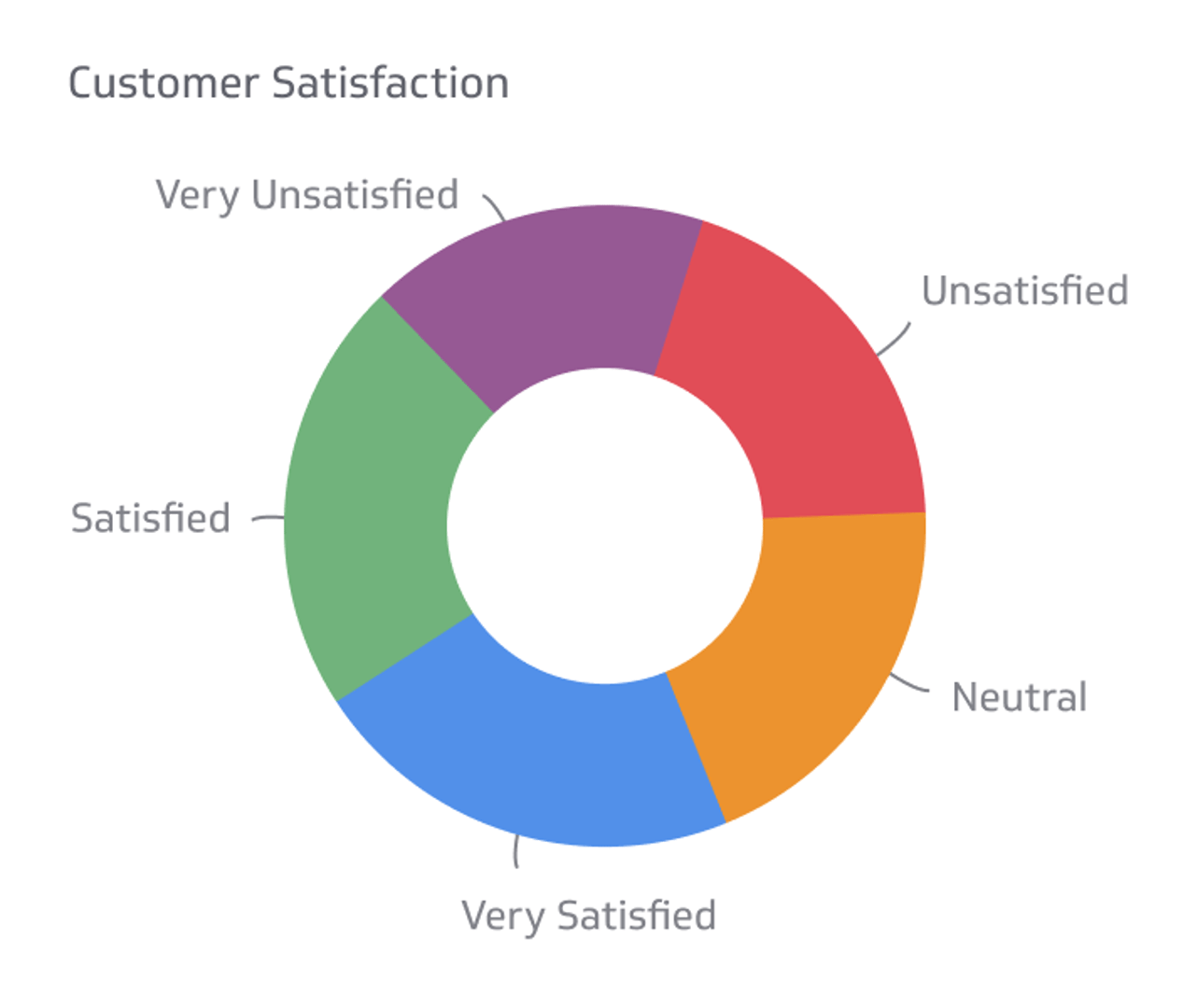
Customer Satisfaction
Measures how satisfied your customers are with the products and services your organization provides.
Customer Satisfaction
Customer Satisfaction (CSAT) measures how satisfied a customer feels after an interaction or experience. It is reported as a percentage of positive responses.
For an insurance business that relies on recurring revenue from existing customers, CSAT is more than a service metric. It is an early signal of retention risk. When customers are unhappy with how a claim is handled or how a question is answered, they start shopping around. Competitors notice, and the cost of losing that customer is almost always higher than the cost of keeping them satisfied in the first place.
What is Customer Satisfaction?
Customer Satisfaction (CSAT) is a measure of how positively a customer responds to a specific interaction or experience, expressed as a percentage of favourable replies out of total survey responses.
Unlike longer satisfaction studies, CSAT is designed to be fast and transactional. You ask one or two questions right after a touchpoint, and the score tells you immediately whether that moment landed well or not.
How to calculate CSAT
The formula is straightforward:
CSAT (%) = (Positive responses / Total responses) × 100
A score of 80% means 8 out of every 10 customers who responded rated their experience positively. Most teams define "positive" as a 4 or 5 on a 5-point scale, or "satisfied" and "very satisfied" on a labelled scale.
A practical example
An insurance team sends a post-claim survey to 200 customers. 162 respond with a positive rating. Their CSAT score is:
(162 / 200) × 100 = 81%
That score can then be tracked over time, broken down by claim type, and compared across support channels.
When to measure CSAT
Timing matters as much as the question itself. Ask too early and scores inflate because the experience is not complete. Ask too late and response rates drop.
The most reliable moments to send a CSAT survey are:
- After a support interaction: Phone, chat, or email resolution are the highest-value moments to capture.
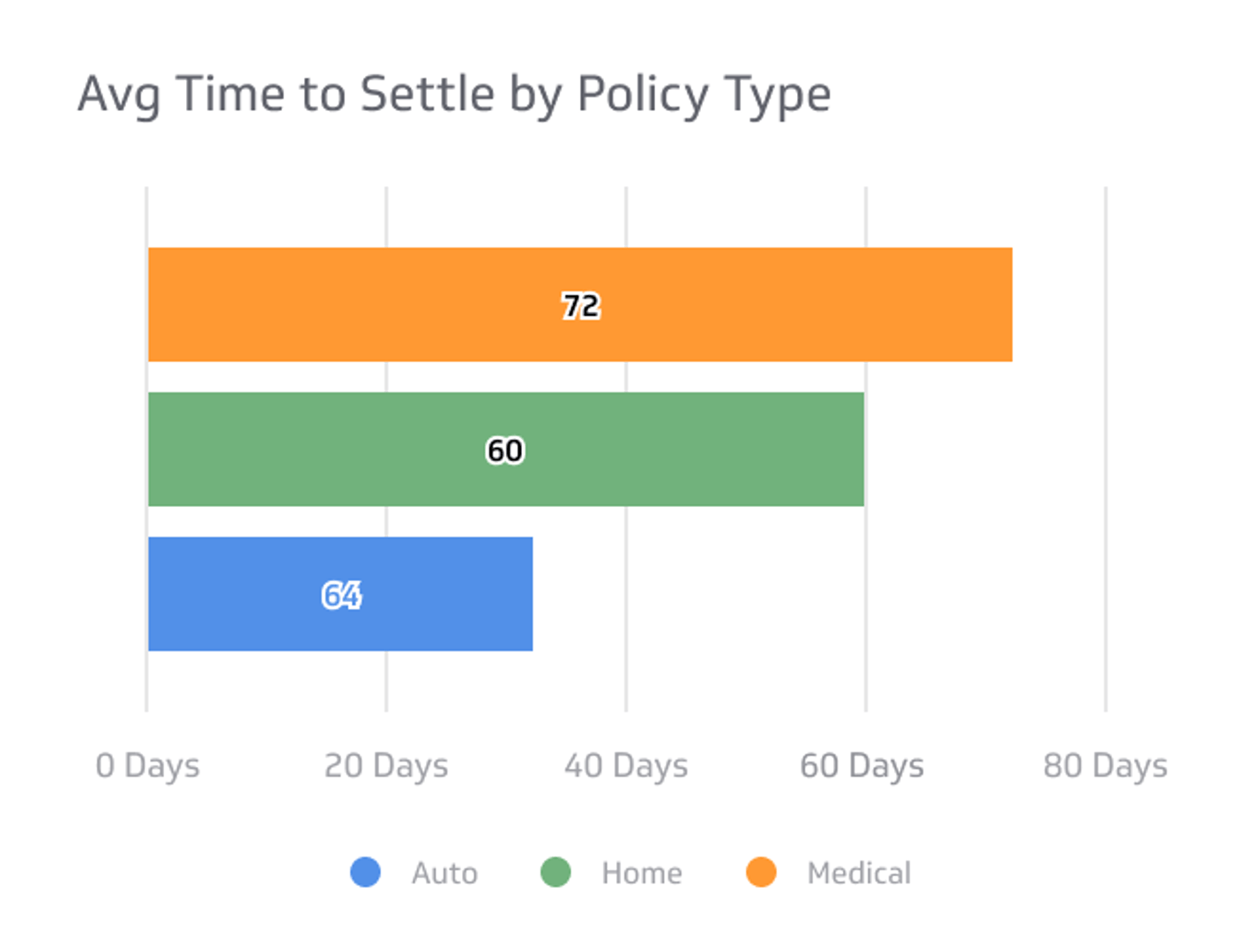
- After a claim is settled: For insurance teams, this is often the most emotionally charged touchpoint in the customer relationship.
- After onboarding or policy setup: Early satisfaction predicts long-term renewal behaviour.
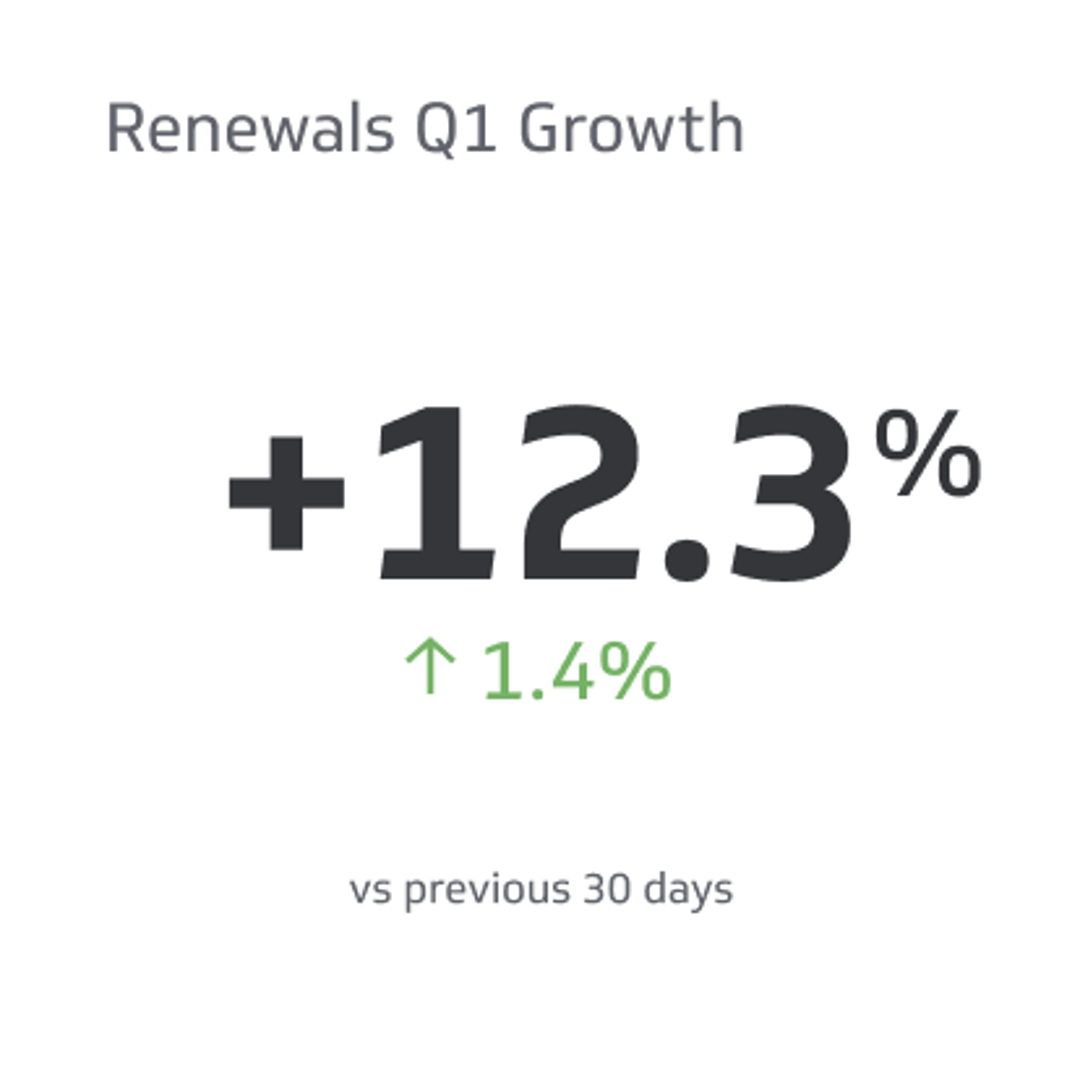
- After a billing or renewal event: Friction here is a common but undertracked driver of churn.
What is a good CSAT score?
CSAT benchmarks vary by industry, but a score above 75% is generally considered healthy. For insurance, where trust and empathy during claims are central to the experience, leading teams often target 80% or higher.
More useful than a single benchmark is tracking your own score consistently over time. A team that moves from 72% to 79% over two quarters has learned something actionable. A team sitting at 85% with no visibility into which channels are dragging the average down is flying blind.
Segment your CSAT scores by:
- Channel: Phone, email, chat, and self-service often produce very different scores.
- Team or agent: Useful for coaching and recognizing strong performers.
- Interaction type: Claims, billing, and policy changes each carry different expectations.
- Time period: Weekly or monthly trends reveal whether changes are working.
How to collect better feedback
A short, well-timed survey outperforms a long, generic one every time. A few principles that make a real difference:
- Keep it short. One to three questions work best. Every additional question reduces completion rates.
- Add an optional comment box. The score tells you what happened. The comment tells you why. The "why" is what drives action.
- Ask at the right moment. Build the survey trigger into your workflow so it fires automatically after the interaction closes, not the next morning.
- Avoid leading questions. "How satisfied were you?" is neutral. "How well did we resolve your issue?" nudges the respondent toward a positive frame.
Common mistakes that distort CSAT scores
CSAT is easy to misread when the data is not structured well. Watch for these:
- Reporting only the average. A single average hides the distribution. A team with 60% of customers rating 5 and 20% rating 1 looks similar to a team with everyone at 3. They are not the same problem.
- Survey fatigue. Sending a survey after every single interaction trains customers to ignore them. Prioritize high-stakes touchpoints.
- No follow-up on low scores. Closing the loop with a customer who left a low score is one of the highest-return actions in customer experience. It signals that feedback is read and acted on, not just collected.
- Treating CSAT in isolation. Pair it with Net Promoter Score (NPS) for loyalty signals and First Contact Resolution (FCR) for operational efficiency. Together they give a much fuller picture.
Create custom dashboards for you and your team.
Get started with KlipsTrack Customer Satisfaction in Klips
Knowing your CSAT score is one thing. Knowing it by channel, by agent, by week, and without having to pull a report yourself is what actually changes how a team operates.
In Klips, you can connect your survey tools and support platforms to bring CSAT data in automatically, then build views that surface what matters without anyone having to go looking.
A practical setup for an insurance support team might include:
- A single-value Klip for overall CSAT, updated on your chosen refresh schedule.
- A bar chart by channel so phone, email, and chat scores are visible side by side.
- A trend line by week or month to track whether changes in process or staffing are moving the score.
- Colour-coded thresholds that flag any channel or agent score that drops below your target, without requiring someone to scan a spreadsheet to find it.
- Scheduled scorecards delivered to support leads and product teams weekly, so the numbers reach the people who can act on them.
When your team sees the same reliable numbers, decisions get faster and more consistent. You spend less time explaining context and more time acting on it.