

Data-Driven Agency Series, Chapter 2: Using data to foster lasting customer relationships
Five practical ways agencies can build partnerships that last, from goal alignment to clear roles, plus how a Klipfolio Klips dashboard keeps everyone on the same page.

Before we break down how to build lasting partnerships, here are a few perspectives on cultivating business relationships.
"Being honest may not get you a lot of friends but it'll always get you the right ones. You and your client will build trust faster if you're open and honest from the start." John Lennon, Oliver Lindberg (via Shopify)
"It's easy to talk about the weather; it's a bit harder to talk about yourself… Regardless of position in a company, we all have things that worry or excite us. To sustain a fulfilling client relationship, get to know them so you can talk beyond small talk." Andrew Howlett, Rain (via forbes.com)
"Our ideal partner helps us do something different in the market. We want partners with complementary specializations and shared values." Mike Walls, National Manager of Portfolio & Professional Services at Revera (via Microsoft)
"Harnessing the strengths and abilities of others across your ecosystem is a strategic way to scale and solve complex challenges." President, PayPal Canada (via The Globe and Mail)
"Brand–agency relationships are no different from any other. Be who you are. If you both find common ground, it's the start of a strong relationship." Randy Hughes, Carmichael Lynch (via forbes.com)
5 ways to build better partnerships
Strong agency-client relationships don't happen by accident. They're built on shared goals, honest communication, and a clear picture of what's working. Here are five practices that make the difference.
1. Get on the same page about success
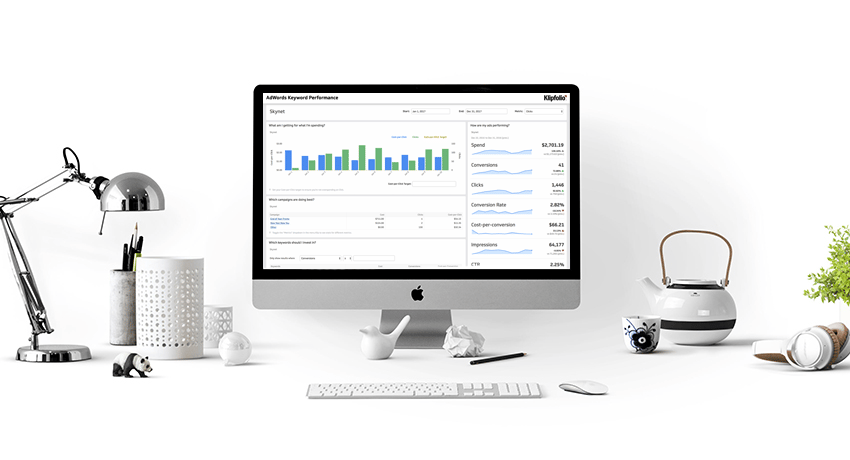
Misalignment on what success looks like sends work in different directions. Agree on outcomes and measures up front so both teams pull toward the same goal. A shared Klipfolio Klips dashboard puts goals, targets, and KPIs in one place, visible to everyone, so there's no ambiguity about whether things are on track.
2. Align your skill sets
Understand each partner's strengths and gaps. Divide the work so each team does what it does best and covers the other's blind spots. You get better output without duplication, and each side stays focused on what it's actually good at.
3. Make it personal, not just professional
Open communication and mutual respect underpin every successful relationship. Disagreements will happen. Stay respectful and open-minded so ideas are evaluated on their merits, not on who raised them. Clients who feel genuinely understood stay longer than clients who feel managed.
4. Communicate consistently, not just when something's wrong
Schedule a short recurring check-in every few weeks. Use it for open dialogue about risks, wins, and next steps. When issues arise, you'll already have the rhythm and trust to work through them together, rather than scrambling to explain a problem after the fact.
Create custom dashboards for you and your team.
Get started with Klips5. Define who does what, before work starts
Clarify roles early to avoid overlap and missed tasks. Roles may evolve, so document owners and due dates and review them regularly. If there's a task nobody wants, name it; your partner may be better placed to handle it. That give and take makes collaboration easier and reduces friction over time.
Continue to Chapter 3: Leveraging the power of agency reporting
Updated 2026-08-30
More in Culture

The 5 ways to make your business partnership last a lifetime

Data-Driven Agency Series, Chapter 4: The essentials of an agency pitch

Data-Driven Agency Series, Chapter 1: Best KPIs for Marketing Agencies

Data-driven agency series, chapter 3: The power of agency reporting
How a digital ad agency automated client ROAS reporting with dashboard software

Cervinodata's 5-year partnership with Klipfolio leads to 1200% growth
Most recent
- SEP 25What SOC 2 taught a small team about trust
- SEP 15The AI race: progress, humanity, and trust
- SEP 9The good advisor
- AUG 11Beyond simple sign-ups: how True Trials and Activation predict growth
- JUL 7Why business leaders miss important trends in their dashboards
- JUN 19The best chart for the job: Visualizing data for non-technical users