Ad Revenue
Ad revenue is income you earn by hosting advertisements for other businesses on your website, platform, or media property.
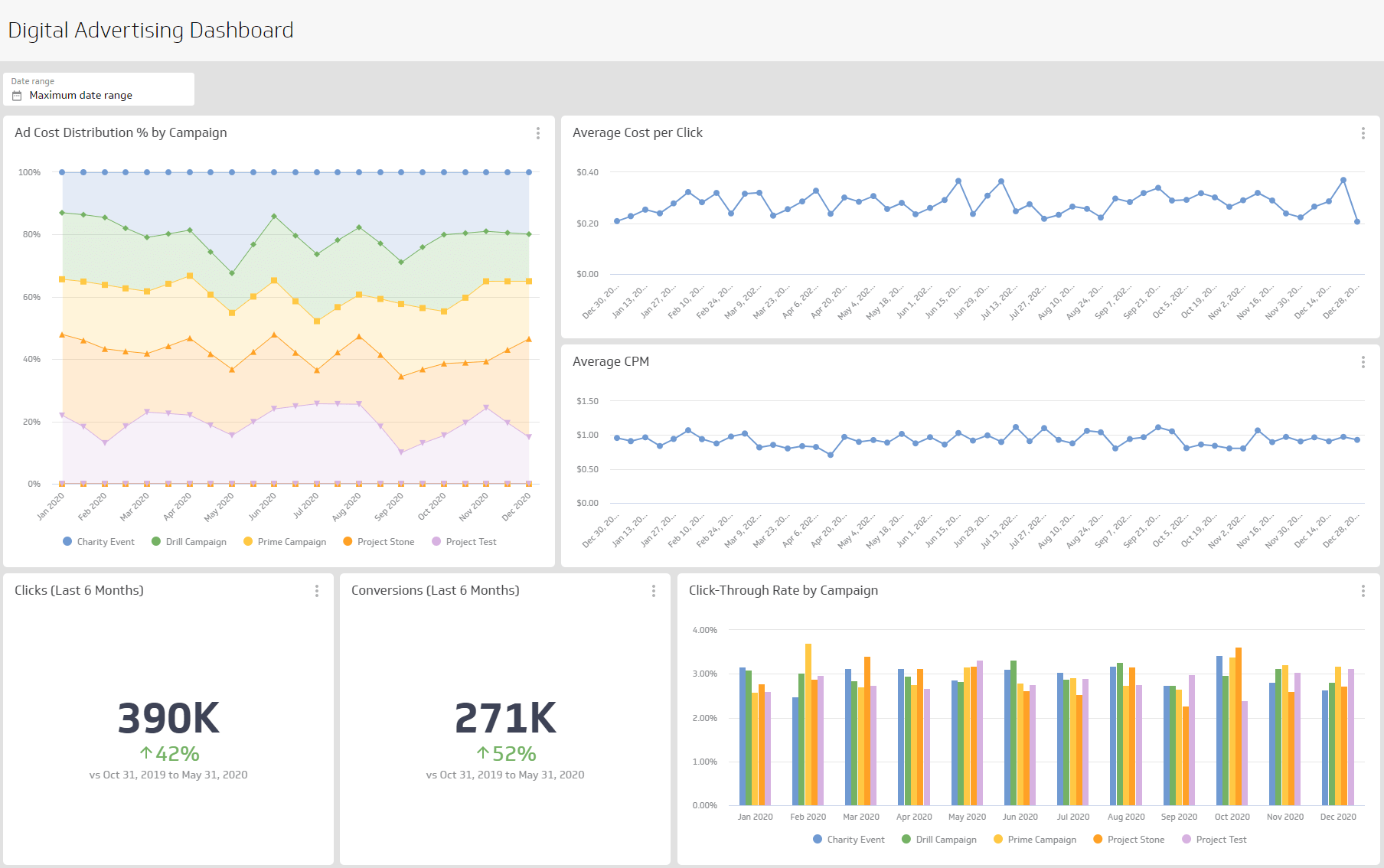
Ad Revenue by Campaign
Ad revenue is income you earn by hosting advertisements for other businesses on your website, platform, or media property.
It sounds simple, but the mechanics, tradeoffs, and growth levers are worth understanding before you commit to an ad-supported model.
What is Ad Revenue?
Ad Revenue is the income a publisher earns by displaying paid advertisements from third parties. It covers digital placements (banner ads, video pre-rolls, in-content units) as well as traditional channels like television and print.
What it does not include: sponsored content you create yourself, affiliate links embedded in blog posts, or your own promotional materials. Those are marketing channels, not ad placements, and they are calculated separately.
Who collects Ad Revenue?
The website or platform hosting the ad collects Ad Revenue, often sharing a portion with the ad network that brokered the placement.
For example, if a soap brand advertises on a cooking blog using Google Ads, both Google and the blog owner earn a cut of the fee. The split depends on the network and the deal structure.
How ad placement works
Ad placement mechanics depend on the network you use. Google's system is the most widely used, but it is not the only option.
Most ad networks provide embed codes that drop banners, sidebars, or in-content units onto your site. You control where the units sit; the network controls which ads fill them. Placement decisions are algorithmic: the network estimates which ad a given visitor is most likely to engage with and serves accordingly. Personalized placement earns more than generic rotation, which is why ad networks invest heavily in audience data.
How much Ad Revenue can a site earn?
There is no single answer. Earnings depend on your traffic volume, niche, audience quality, ad format, and the network you use.
Google AdSense pays publishers between 51% and 68% of ad spend, depending on whether the unit is a search ad or a content ad.
Larger sites generally see more ad clicks and higher total revenue. But a smaller, highly engaged audience can outperform a large, disinterested one on a per-visitor basis. Volume alone is not the right benchmark.
Benefits of Ad Revenue
Here are the main reasons publishers build ad revenue into their model.
Low barrier to entry
Signing up for an ad network takes minutes, and most networks support a wide range of site designs. If your top navigation is too important to interrupt, you can place units inside your content instead. Ad services are flexible because a rigid setup drives publishers away.
Predictable growth path
Ad Revenue scales with traffic. Produce content that attracts and retains visitors, and revenue follows. That alignment encourages publishers to invest in quality rather than volume, which compounds over time. Content quality remains the primary driver of sustainable audience growth.
Works at small scale
Ad Revenue can cover hosting and operating costs for a site that has no intention of becoming a full business. A modest, engaged readership running a few well-placed units can break even without aggressive monetization. Not every site needs to maximize revenue; sometimes staying online is the goal.
Supports flexible pricing models
Many publishers run a free tier supported by ads alongside a paid tier that removes them. This model lets you serve a much larger audience than a paywall alone would allow. Free visitors who would never pay still generate revenue through ad impressions. Those who want an uninterrupted experience pay for it. Both groups contribute to the business.
Diversifies income
A site with multiple revenue streams, ads, sponsored posts, subscriptions, digital products, is more resilient than one that depends on any single source. Ad Revenue fills in the gaps and monetizes the audience segments that other models do not reach. The balance matters: too many ads or too many sponsored posts erodes trust, which undermines every revenue stream.
Create custom dashboards for you and your team.
Get started with KlipsDrawbacks of Ad Revenue
Ad Revenue has real limitations. These are worth weighing before you commit.
Income fluctuates
Ad spend is cyclical. Rates shift with market conditions, seasonality, and advertiser demand, none of which you control. Month-to-month variance can make it difficult to plan or invest with confidence. The practical hedge is to build multiple income streams so that a dip in ad revenue does not destabilize the whole operation.
Ad network terms constrain your content
Most networks have content policies that restrict which topics you can cover while running their ads. The more you try to satisfy those policies, the more you may find yourself avoiding relevant or controversial subjects. That is a real editorial tradeoff. Before signing up, review the terms carefully and decide whether they are compatible with the site you want to run.
Ads can damage your reputation
Ad networks try to match ad content to your site's context, but the match is imperfect. A family-friendly site may occasionally surface adult-oriented ads. A politically neutral site may run partisan ads during election season. You have limited control over what appears, and your audience will associate those ads with you regardless. Monitoring placements and using exclusion controls where available reduces the risk, but does not eliminate it.
How to increase Ad Revenue
These four levers have the most consistent impact.
Improve user experience
A better experience keeps visitors on-site longer and reduces bounce. More time on-site means more ad impressions per visit. Improving user experience is one of the highest-leverage investments a publisher can make because it lifts every revenue metric simultaneously.
Publish consistently
Regular publishing signals to search engines that your site is active and gives returning visitors a reason to come back. A weekly cadence is a reasonable floor for most content sites. Daily publishing raises the ceiling, but only if quality holds. Frequency without quality accelerates churn.
Test ad placements
Default placements are rarely optimal. Use A/B testing to compare unit positions, formats, and sizes. A banner that underperforms in a sidebar may outperform as an in-content unit. Set a testing cadence and revisit placements quarterly.
Invest in original content
Recycled content gives visitors no reason to choose your site over the dozens of others covering the same ground. Original reporting, proprietary data, and distinctive perspectives build an audience that returns and refers others. That compounding traffic is what makes Ad Revenue a viable long-term model.
Tracking Ad Revenue
Knowing your Ad Revenue number is useful. Knowing it by placement, format, and traffic source is what lets you act on it.
A dashboard that pulls your ad network data alongside site traffic and engagement metrics gives you a clear picture of what is working and where you are leaving money on the table. Klipfolio connects to the sources you already use and keeps those numbers current without manual exports or spreadsheet assembly. That means less time chasing data and more time making decisions based on it.
Formula
Ad Revenue = Total Ad Impressions × Average CPM / 1,000
Or, for click-based models:
Ad Revenue = Total Clicks × Average CPC
Where CPM is cost per thousand impressions and CPC is cost per click.