Call Arrival Rate
Track the average number of incoming calls to plan staffing and manage capacity effectively.
Call Arrival Rate
What is Call Arrival Rate?
Call Arrival Rate is the average number of incoming calls received during a specific time period, typically measured per hour or per shift.
It's the foundation of call centre capacity planning. When you know how many calls are coming in, and when, you can staff the right number of agents, avoid unnecessary wait times, and prevent the burnout that comes from being caught short during a surge.
Why Call Arrival Rate matters
Most staffing problems in a call centre trace back to a gap between expected and actual call volume. Too many agents sitting idle costs money. Too few means customers wait, abandon calls, and leave frustrated.
Call Arrival Rate gives you the data to close that gap. Specifically, it helps you:
- Plan staffing levels: Match agent availability to expected call volume so customers reach someone quickly.
- Forecast capacity: Identify peak periods before they arrive and prepare your team in advance.
- Set realistic targets: Use arrival data to establish achievable service level and Average Handle Time goals.
- Reduce costs: Avoid overstaffing during slow periods and prevent understaffing during busy ones.
- Improve customer experience: Adequate staffing means shorter wait times and faster issue resolution.
Call centre managers who track this metric consistently can anticipate demand, reduce abandoned calls, and maintain service quality without guessing.
How to calculate Call Arrival Rate
The formula is straightforward:
Call Arrival Rate = Total Incoming Calls / Time Period
Example calculation
If your call centre receives 500 calls in an 8-hour shift:
- Hourly rate: 500 / 8 = 62.5 calls per hour
- Per-minute rate: 500 / 480 minutes = 1.04 calls per minute
You can measure Call Arrival Rate by hour, day, week, or any interval that helps you plan. Most call centres track it hourly to catch patterns within a shift, not just across days.
Typical targets and benchmarks
Call Arrival Rate targets vary by industry and operation type:
- Inbound customer support: 40 to 80 calls per hour per agent group
- Sales-focused call centres: 20 to 50 calls per hour (longer Average Handle Time)
- Technical support: 30 to 60 calls per hour (depends on call complexity)
Your target depends on your Average Handle Time, service level goals, and staffing budget. A call centre with a 5-minute Average Handle Time can absorb more arrivals per hour than one where calls average 15 minutes. Benchmarks are a starting point; your own historical data is the better guide.
How to track Call Arrival Rate
Tracking this metric well means more than pulling a daily report. A few practices that make the data useful:
- Report frequently: Daily or hourly, depending on your operation's size and variability.
- Break it down: Track by shift, agent group, or department to spot variations that averages hide.
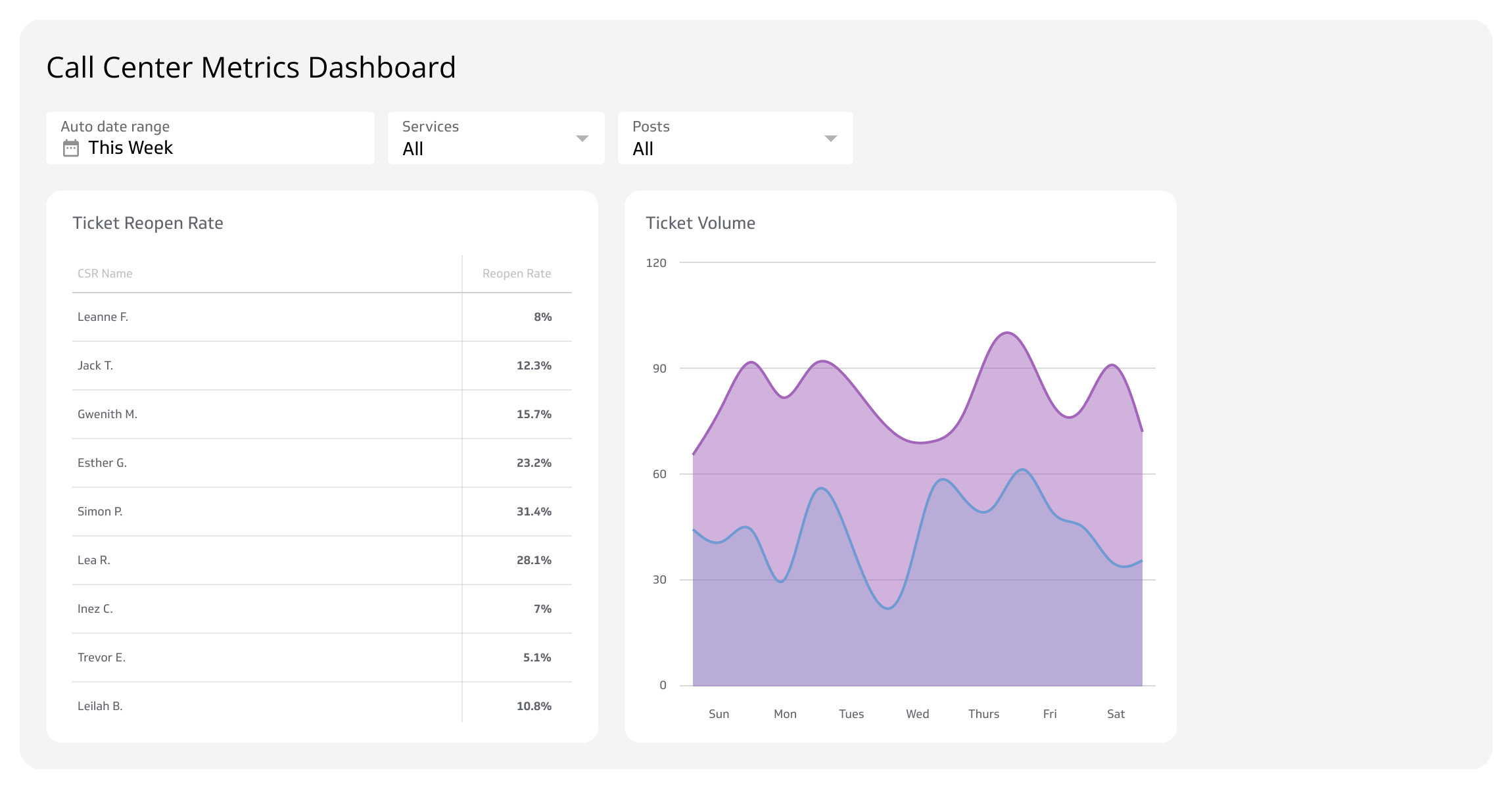
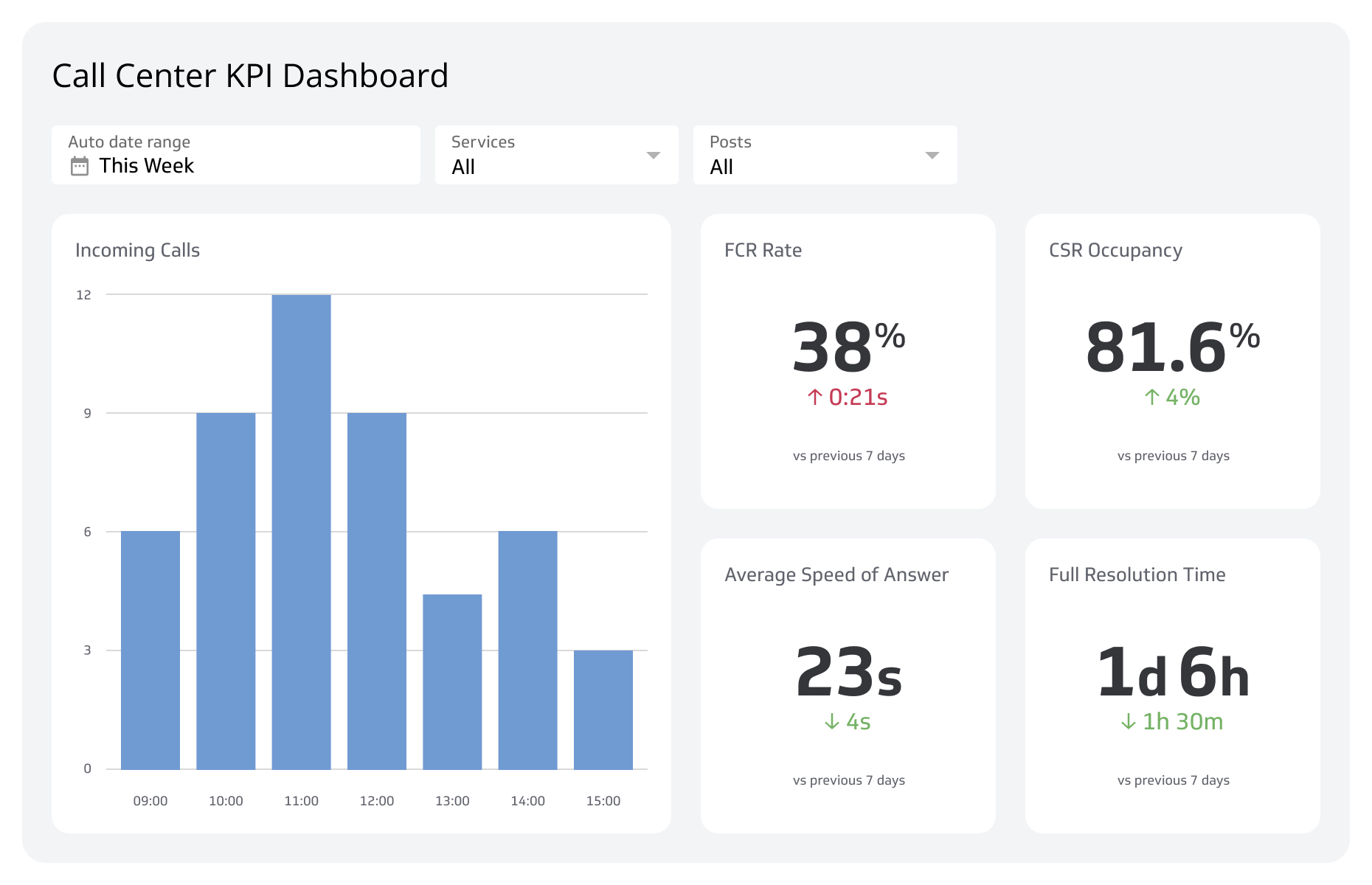
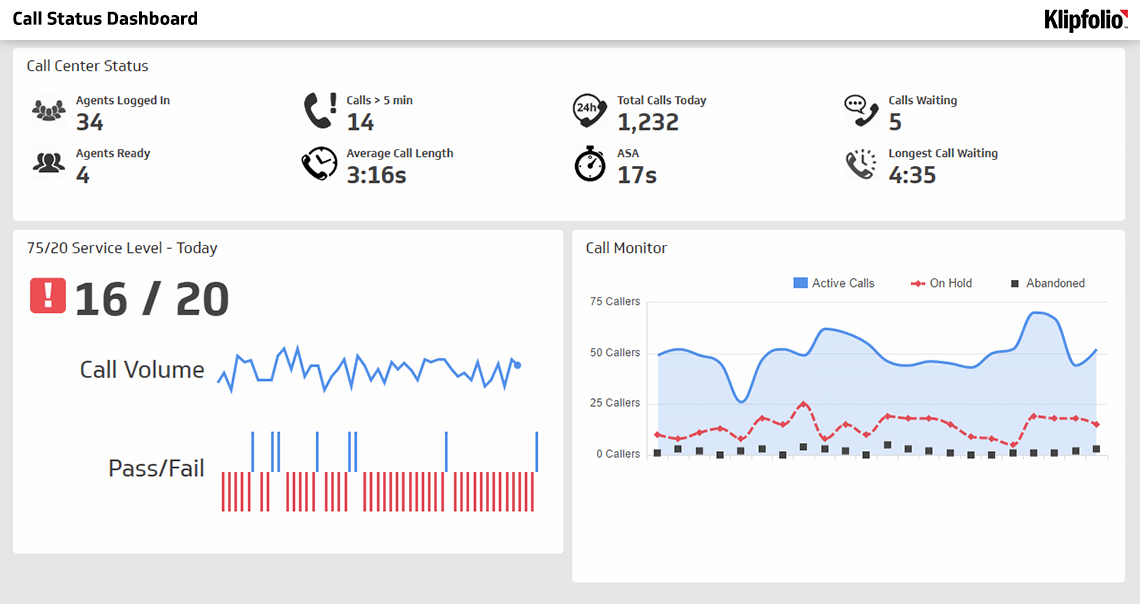
- Visualize it clearly: Line charts show arrival trends over time; heat maps highlight peak hours at a glance.
The goal is to stop waiting for someone to pull a number and start knowing it. A real-time dashboard that automatically captures and displays call volume means your team sees what's happening now, not what happened yesterday. That's the difference between reacting to a surge and being ready for it.
Related metrics to monitor alongside Call Arrival Rate
Call Arrival Rate tells you how much demand is coming in. These metrics tell you how well you're handling it:
- Service Level: The percentage of calls answered within your target time (for example, 80% answered within 20 seconds).
- Average Handle Time (AHT): How long agents spend on each call, including hold time and after-call work.
- Abandoned Call Rate: The percentage of callers who hang up before reaching an agent.
- Agent Occupancy Rate: The percentage of time agents spend on active calls versus available time.
- First Contact Resolution (FCR): The percentage of calls resolved on the first interaction, with no follow-up needed.
Together, these metrics give you a complete picture of whether your staffing and processes are actually meeting customer needs, or just appearing to.
Variations of this metric
Depending on your operation, you may find these breakdowns more useful than a single aggregate number:
- Peak Hour Arrival Rate: The highest call volume recorded during a single hour.
- Average Calls per Agent: Total calls divided by the number of available agents.
- Arrival Rate by Channel: Separate tracking for phone, email, chat, or other contact methods.
- Seasonal Arrival Rate: How call volume shifts by season, holiday, or business cycle.
Create custom dashboards for you and your team.
Get started with KlipsWhat to do with Call Arrival Rate data
Once you're tracking this metric, the data should drive decisions, not just fill a report. Use it to:
- Adjust schedules: Shift more agents into peak hours based on consistent arrival patterns.
- Cross-train staff: Build backup capacity from other departments for predictable surges.
- Implement call queuing: Use callback features during high-volume periods to reduce abandonment.
- Refine forecasting: Apply historical arrival data to predict future demand and plan ahead.
- Benchmark performance: Compare your arrival rates to industry standards and your own trends over time.
The teams that get the most from this metric are the ones who treat it as an input to decisions, not just a number on a report.