On-Time Delivery
Measure the timeliness of your deliveries.
On-Time Delivery rate
On-Time Delivery is the percentage of orders that arrive by the promised date or within the promised delivery window.
This e-commerce metric matters because late deliveries cost more than the reship. They erode trust, trigger negative reviews, and push customers toward a competitor who will make good on their promise. When your On-Time Delivery rate is high and consistent, customers come back. When it slips, they don't.
Formula
(Items delivered on time / Total number of deliveries) x 100
Reporting frequency
Weekly
Example of KPI target
100% delivered on time
Audience
Store Owner, Warehouse Manager, Delivery Supervisor
Variations
Accuracy of delivery estimations
Received as agreed
On-time delivery of the product to the customer
Why On-Time Delivery matters
Fast shipping is table stakes. Reliable shipping wins loyalty.
A missed delivery window doesn't just create a support ticket. It creates doubt. Customers who doubt you don't reorder, don't leave good reviews, and don't recommend you. On-Time Delivery is one of the clearest signals of whether your fulfilment operation is working the way you promised it would.
It also protects your margins. Every late shipment is a potential reship, refund, or support contact. At scale, even a small drop in your on-time rate compounds into real cost.
How to calculate On-Time Delivery
Before you run the numbers, align on what "on time" means for your business. Delivered by the promised date? Within the promised window? Consistency here matters more than perfection.
Define on-time. Delivered by the promised date or within the promised delivery window.
Use shipment-level data. Count packages or orders, then flag each as on-time or late.
Compute the share. Divide on-time shipments by total shipments for the period, then multiply by 100.
Data you need
Ship date, promised date, and delivered date
Carrier and service level
Order ID and destination region
Exception codes for delays
How to improve On-Time Delivery
If your rate is slipping, start with the controllable causes before blaming the carrier.
Set honest promises. Tune your promise logic by region and service level. Pad peak periods rather than overpromise and underdeliver.
Clean up your pick-pack workflow. Slot fast movers near packing stations, use scan checks, and measure pick time to find where orders slow down.
Review carrier performance by lane. Not all carriers perform equally across all routes. Shift volume toward the most reliable ones for each lane.
Communicate delays early. When a shipment is running late, a proactive message with a clear new ETA and an easy path to a refund does less damage than silence.
What a good On-Time Delivery rate tells you
A consistently high On-Time Delivery rate is more than an operational win. It's a signal that your business is doing what it said it would. That reliability translates directly into repeat purchases, stronger reviews, and a customer base that doesn't need to be won back after every hiccup.
A slipping rate tells you something is broken before your customers tell you in reviews. Catching it early, before it compounds, is the difference between a fixable process problem and a trust problem.
Track On-Time Delivery in Klips
You shouldn't have to go hunting for this number every time you need it. A well-built dashboard puts On-Time Delivery in front of the right people automatically, without anyone pulling a report or pasting numbers into a spreadsheet to figure out where things stand.
Connect your systems. Bring in data from your OMS, WMS, and carrier tracking feeds through Klips' 130+ connectors.
Create your calculations. Compute on-time flags, late reasons, and average days late using Excel-like formulas.
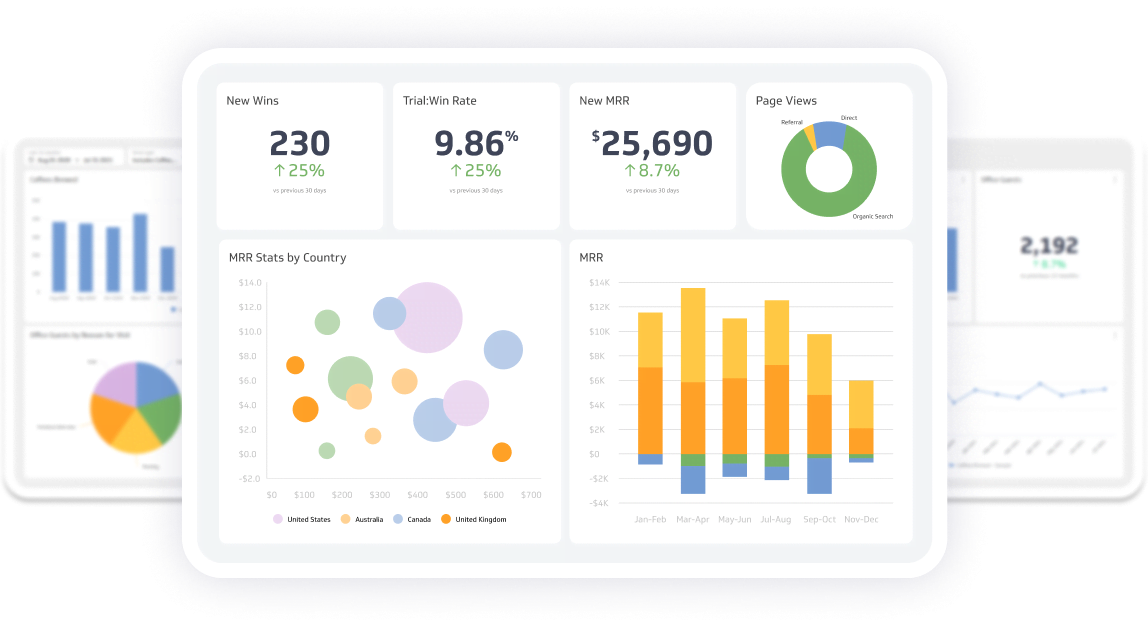
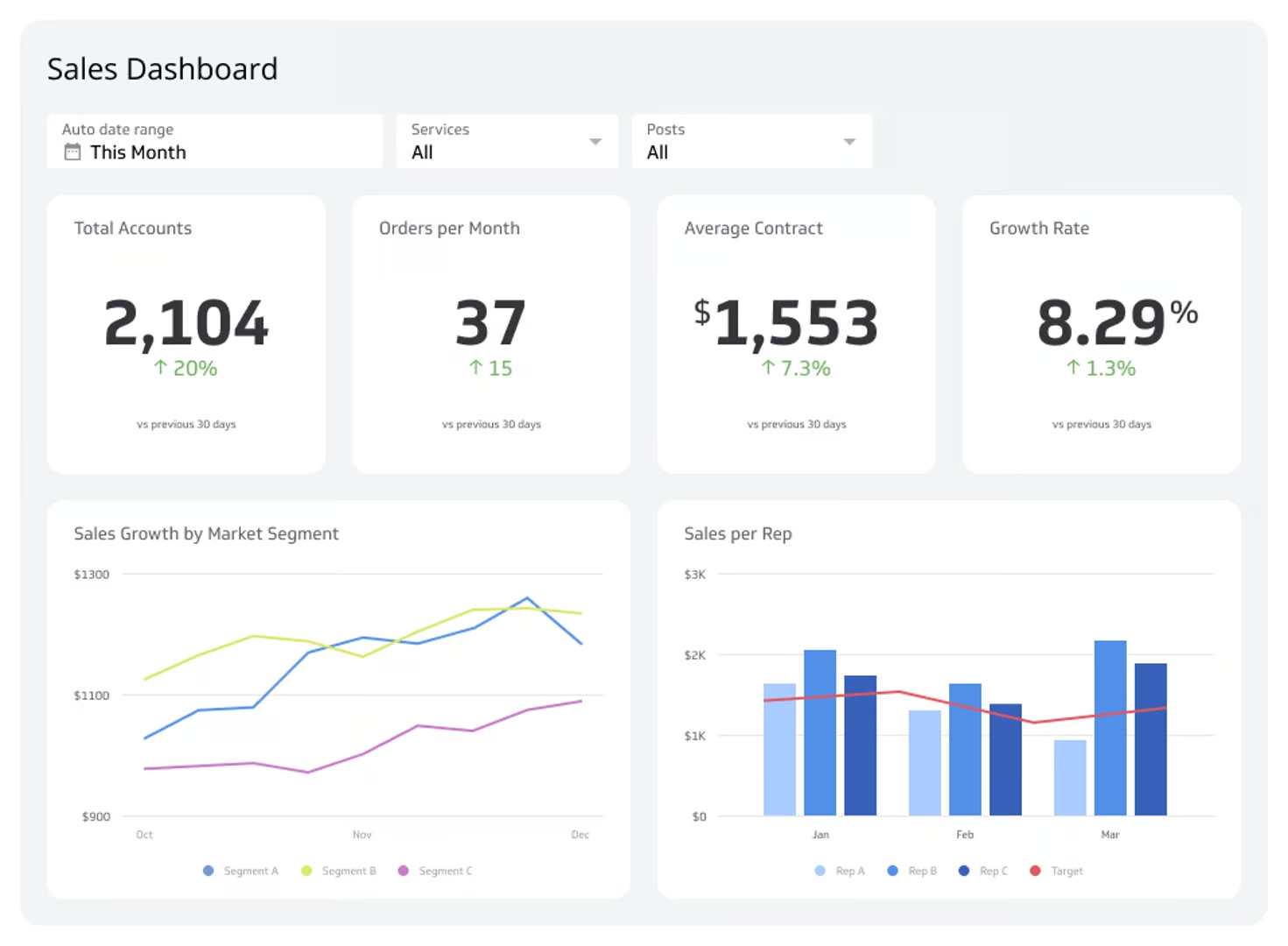
Visualize what matters. A gauge for your current on-time rate, a heatmap by region, and a weekly trend line give operations leaders a fast read.
Set thresholds. Colour rules flag underperforming lanes automatically. Add notes for weather events or peak periods.
Share without asking. Send a daily snapshot to operations and support managers so they know without having to check.
Create custom dashboards for you and your team.
Get started with KlipsCommon pitfalls
Over-promising at checkout. Conversion goes up in the short term; reviews go down after. Tune your promises to match your true performance.
Not separating controllable from uncontrollable delays. Track both, but fix what you control first. Weather and carrier failures need a different response than warehouse inefficiency.
Ignoring partial shipments. Split shipments can mask lateness. Measure at the line or package level, not just the order level.