Incremental Sales
Demonstrate how your marketing campaigns are resulting in increased sales revenue.
Incremental Sales by Channel
What is Incremental Sales?
Incremental Sales is the additional revenue generated by a marketing or promotional activity beyond what would have occurred without it.
If you want to know whether a campaign actually moved the needle, Incremental Sales gives you the answer. It separates the revenue your marketing created from the revenue that would have come in anyway.
A report by Think with Google highlighted that rather than showing how many products your target audience bought, the Incremental Sales metric shows how many more products they bought because of the particular change in media spend you're testing.
Key terms
Baseline Sales: What you expect to sell in a given period without any marketing activity.
Lead: An individual who has expressed interest in your product or service by completing a goal.
Wins: New customers generated by a marketing campaign.
Campaign: A marketing communication on a dedicated channel, directed at a business's target audience.
Incremental Sales formula
Incremental Sales = Total Sales (with promotion) - Baseline Sales (without promotion)
Subtract what you would have sold anyway from what you actually sold. The difference is the revenue your campaign created.
Incremental Sales example
A retailer expects to sell $24,000 worth of water bottles in a typical month without advertising. In May, while running a Mobile Ad Banner Campaign that cost $1,500, the store sold $30,000 worth of water bottles.
Incremental Sales = $30,000 - $24,000 = $6,000
The campaign generated $6,000 in Incremental Sales against a $1,500 spend. That's the number that tells you whether the campaign was worth running.
Signs a campaign is working
Incremental Sales exceed the marketing investment. The campaign paid for itself and then some.
Indirect sales lift is attributable to the campaign. Even conversions that didn't come through a direct click can be traced back to campaign exposure.
Why Incremental Sales matters
Incremental Sales is one of the most direct ways to measure return on marketing investment. It connects spending to revenue, not just to impressions or clicks.
For a leader accountable for a marketing budget, that connection matters. You're not trying to build a reporting model; you're trying to know whether the money you spent came back. Incremental Sales answers that question in a single number.
It also cuts through the noise that generic AI summaries and pasted-together spreadsheets can't resolve. When your numbers live in one place and update automatically, you know the answer without having to ask someone to pull it.
Incremental Sales challenges
Attribution is the hard part. Campaigns often generate sales indirectly. A banner ad with high impressions, for example, may prompt someone to visit your site in a separate browser tab and complete a purchase without ever clicking the ad. That's called a view-through conversion. The sale happened because of the campaign, but the path doesn't show it.
This matters because if you only count direct-click conversions, you're likely undervaluing your campaigns. And if you overclaim credit for every sale that happened during a campaign window, you're overvaluing them. Getting Incremental Sales right requires a controlled measurement approach.
Incremental Sales best practices
Set a clear baseline before you launch. Know what you expect to sell without the campaign. Historical data, seasonal patterns, and comparable periods all help you build a reliable baseline.
Run controlled experiments. Test one channel or change at a time. Exposing one audience segment to a campaign while holding another back gives you a clean read on what the campaign actually produced.
Match your measurement method to your goal. If you're trying to connect online ads to in-store purchases, your measurement approach needs to bridge that gap. Location-based mobile ads with in-store promotions, for example, are designed to make that connection traceable.
Account for indirect conversions. View-through conversions are real revenue. Build them into your analysis so your Incremental Sales number reflects the full picture.
How to track Incremental Sales
Once you have a baseline and a measurement approach, the next step is making sure the number stays visible. Checking a report after a campaign ends tells you what happened. Watching the number as a campaign runs tells you what to do next.
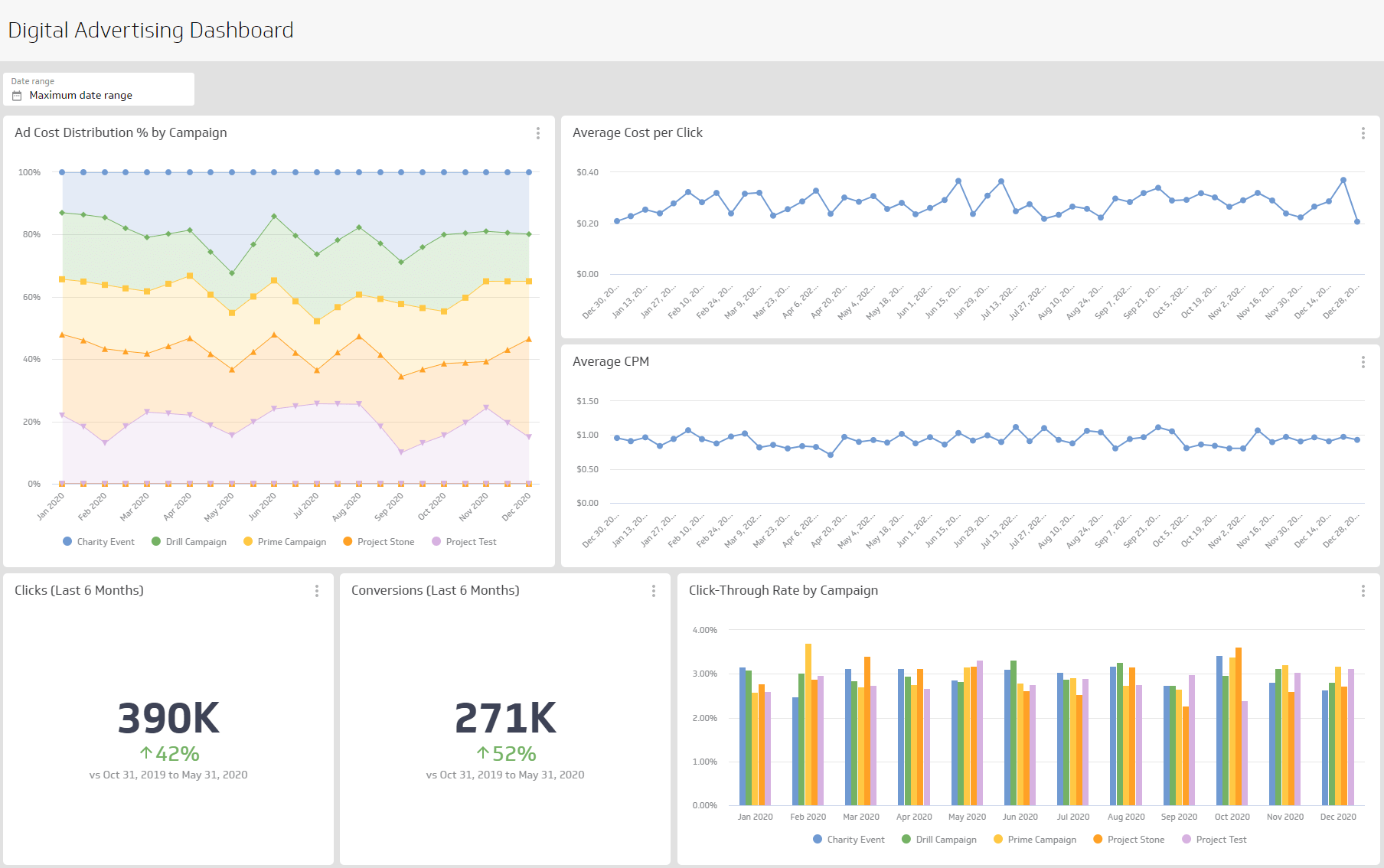
A Digital Marketing Dashboard keeps Incremental Sales and related metrics current and accessible, without requiring anyone to pull the data manually. When the number updates on its own and sits alongside your other marketing KPIs, it's easier to act on.
Create custom dashboards for you and your team.
Get started with KlipsTop resources
Getting the Most Out of Advertising and Promotion, Magid Abraham
How to Measure Incremental Sales from Marketing Campaigns, Tim Young
What is an Incremental Sale?, Performance Marketing Association
Proving Marketing Impact: 3 Keys to Doing it Right, Think with Google