Organic Search
Organic search is unpaid traffic that comes to your website through search engine results pages (SERPs), driven by relevance rather than advertising spend.
Track all your SEO KPIs in one place
Sign up for free and start making decisions for your business with confidence.
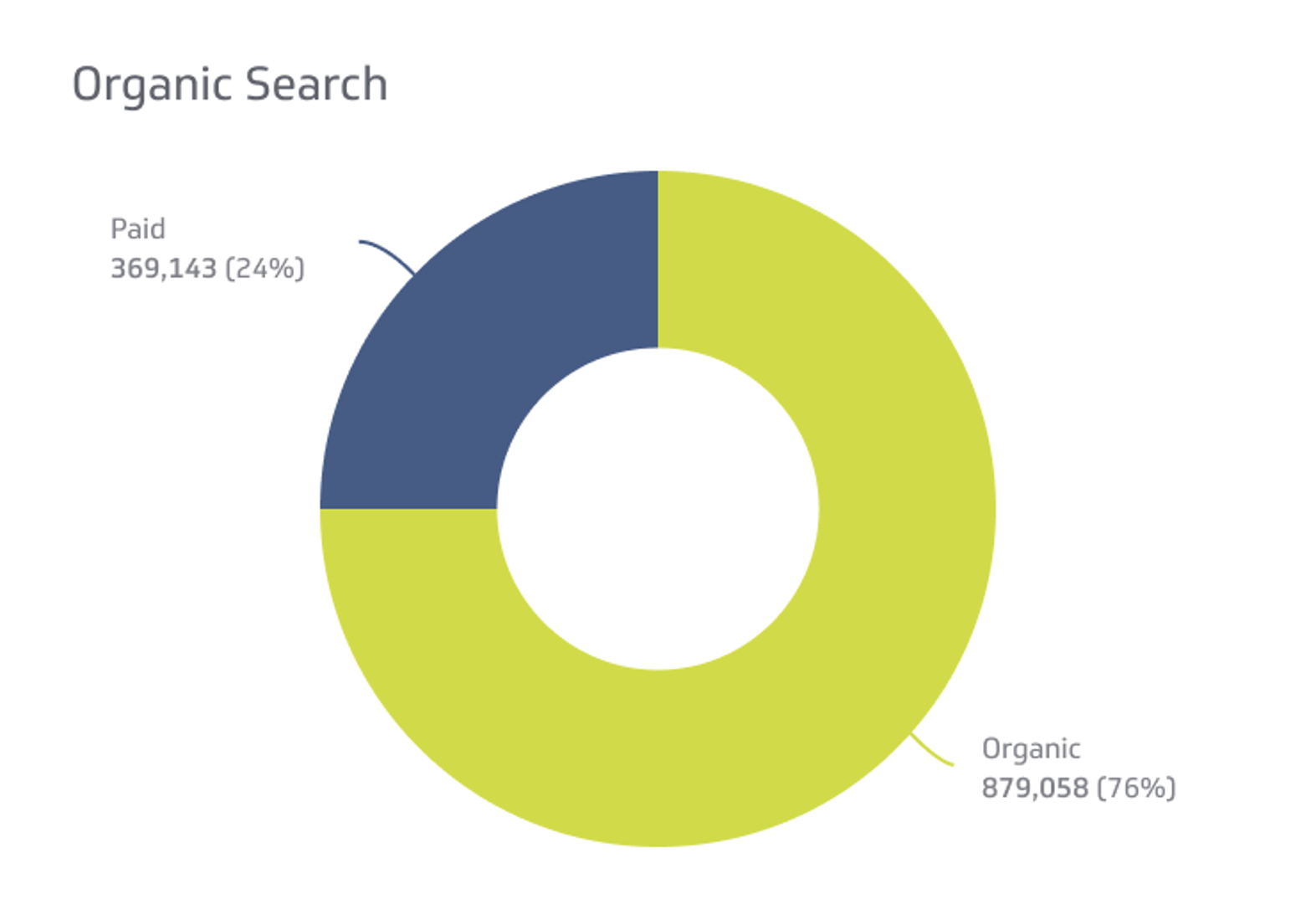
Organic search is unpaid traffic that comes to your website through search engine results pages (SERPs), driven by relevance rather than advertising spend.
What is organic search?
Organic search is the process of attracting website visitors through unpaid search engine results. When someone types a query into Google, Bing, or another search engine, the results that appear based on relevance and quality, not payment, are organic results.
Ranking well in organic search requires optimizing your website's content, structure, and authority so search engines surface it for relevant queries.
How does organic search work?
Search engines follow a three-step process to deliver organic results.
- Crawling and indexing: Search engine bots follow links across the web, discovering pages and storing their content in a searchable index.
- Ranking: Algorithms evaluate indexed pages against hundreds of signals, including content quality, relevance to the query, backlink authority, page speed, and user experience, to determine order.
- Displaying results: When a user searches, the engine returns results ranked by relevance and quality. The top positions earn the most clicks.
The goal of organic search optimization is to appear on the first page of results, where the vast majority of clicks occur.
Why organic search matters
Organic search is one of the highest-value traffic channels available. Here's why it deserves attention.
Long-term traffic
Unlike paid advertising, organic rankings can generate traffic for months or years after the initial work is done. BrightEdge reports that organic search drives 53.3% of all website traffic, making it the single largest source.
Cost efficiency
Organic search does not require ongoing ad spend. Once a page ranks, traffic comes in without a per-click cost. HubSpot data shows organic search leads close at a 14.6% rate, compared to 1.7% for outbound channels like cold outreach.
High-quality visitors
Users trust organic results more than paid listings. Research from Moz found that 70–80% of users skip paid ads entirely and focus on organic results. That trust translates into more engaged visitors.
Credibility and authority
High rankings signal authority. Studies by Advanced Web Rankings show that websites on Google's first page capture 91.5% of total organic traffic. Appearing there builds credibility with your audience.
Strategies for improving organic search rankings
Improving your organic visibility takes a combination of content, technical, and off-page work.
Keyword research and optimization
Identify the terms your target audience uses to find products or services like yours. Use those keywords in your page titles, headings, body content, meta descriptions, and URLs. Targeting the right keywords improves relevance and connects your content to the queries that matter.
On-page optimization
Ensure every page has a clear title tag, meta description, and logical heading structure. These elements help search engines understand your content and improve click-through rates from the SERP.
Technical optimization
A technically sound website is a prerequisite for strong rankings. Prioritize fast load times, mobile responsiveness, clean URL structures, and crawlability. Google's research shows that pages loading in under three seconds see lower bounce rates and higher engagement.
Content marketing
Create content that addresses the real questions and challenges your audience faces. A strong content marketing strategy earns backlinks, encourages sharing, and builds topical authority over time. Businesses that prioritize content marketing consistently see stronger organic traffic growth than those that don't.
Link building
Backlink analysis from authoritative, relevant websites signals trust to search engines. Moz research confirms that pages with strong backlink profiles tend to rank higher. Focus on earning links through genuinely useful content, guest contributions, and relationship building with relevant publishers.
Local SEO
If your business serves a specific geographic area, optimize for local SEO. Claim and complete your Google Business Profile, use location-specific keywords, and keep your contact information consistent across directories.
Social media
Sharing content on platforms like LinkedIn, Facebook, and X (platform) amplifies reach and can drive backlinks and branded search volume. While social signals are not a direct ranking factor, they support organic search indirectly by increasing content visibility and engagement.
Common mistakes in organic search
Avoiding these errors will protect your rankings and your site's reputation.
- Keyword stuffing: Overloading pages with keywords triggers search engine penalties and degrades the reader experience.
- Thin or duplicate content: Low-quality, repetitive, or copied content signals poor authority and drags rankings down.
- Ignoring technical health: Slow load times, broken links, and poor mobile experience hurt both users and search engines.
- Neglecting social distribution: Failing to promote content through social channels limits its reach and reduces link-earning opportunities.
Future trends in organic search
The organic search landscape continues to shift. These trends are shaping what effective optimization looks like.
Voice search
The growth of voice-activated devices like Google Home and Amazon Alexa has increased demand for conversational, long-tail queries. Optimizing for natural language and question-based phrasing positions your content well for voice results.
Artificial intelligence
AI now plays a central role in how search engines interpret queries and rank content. Engines use AI to understand intent, not just keywords. Creating content that clearly and thoroughly answers user questions, rather than simply matching keyword strings, is increasingly important.
Featured snippets
Featured snippets appear above organic results and answer a query directly on the SERP. Structuring your content with clear definitions, numbered steps, and concise answers increases your chances of earning a snippet and capturing high-visibility placement.
Frequently asked questions
How soon can you expect results from organic search optimization?
Results vary based on competition, keyword difficulty, and content quality. Most sites begin to see ranking improvements within three to six months of consistent optimization. Organic search is an ongoing investment, not a one-time effort.
What is the difference between organic search and paid search?
Organic search results are determined by a search engine's algorithm based on relevance and quality. They are not paid for. Paid search results are sponsored listings that advertisers pay to display for specific keywords, typically appearing above organic results.
How do search engines determine which websites rank highest?
Search engine algorithms evaluate hundreds of signals, including content relevance, backlink quality, site structure, page speed, and user experience, to rank pages for a given query.
Can social media presence affect organic search rankings?
Social media does not directly influence rankings, but it supports organic search by amplifying content reach, driving backlinks, and increasing branded search volume, all of which contribute to stronger rankings over time.
How does local SEO affect organic search results?
Local SEO helps businesses appear in geographically relevant searches. Optimizing your Google Business Profile and using location-specific content improves visibility in local pack results and drives higher-intent traffic from nearby customers.
How do I track the effectiveness of my organic search efforts?
Track performance using the most important SEO metrics including keyword rankings, organic traffic, bounce rate, click-through rate, and conversion rate. Google Search Console is the essential starting point, and tools like GA4, Ahrefs, and SEMrush provide deeper insight into what's working and where to improve.
Measuring organic search performance
Organic search rewards consistent effort. Tracking the right metrics, from keyword rankings tracking and organic traffic to conversions and click-through rate, helps you understand where your strategy is working and where to focus next.
Building a dashboard that surfaces these metrics in one place makes it easier to act on the data and share progress with your team.
Related Metrics & KPIs