

How digital marketing agencies can use business dashboards
Clients expect more from their agencies than a monthly PDF. Business dashboards give agencies a way to show performance in real time, build client trust, and make themselves indispensable. This article covers five practical ways digital marketing agencies are using dashboards to differentiate, stay organised, improve productivity, increase transparency, and communicate more clearly.

The digital marketing agency landscape has never been more crowded. Agencies are multiplying, specializing, and competing for the same clients, and the ones pulling ahead aren't just doing better work. They're showing it better.
Business dashboards are one of the clearest ways agencies are separating themselves right now. Not because dashboards look impressive in a pitch deck, but because they give clients the one thing they actually want: confidence that their money is working.
Here's how agencies are using them, and why it matters more now than it did a few years ago.
What are business dashboards?
Business dashboards are information management tools used to monitor the key performance indicators relevant to a business, department, or specific process. They pull data from multiple sources, visualize it in one place, and update automatically so everyone is working from the same numbers.
For a marketing agency, that means one view of campaign performance across every client, every channel, and every tool, without opening twelve tabs or waiting for someone to pull a report.
Why agencies are turning to dashboards now
A few years ago, a well-formatted monthly PDF was enough. Clients accepted the lag. They trusted the summary.
That's changed. Clients today expect to see what's happening, not hear about it after the fact. They're also more likely to paste a few numbers into a general-purpose AI tool and ask it whether their agency is doing a good job. If the numbers are scattered across platforms, buried in spreadsheets, or only available on request, that conversation doesn't go well for anyone.
Dashboards solve this by making performance visible, consistent, and always current. The client doesn't have to ask. The agency doesn't have to scramble.
5 ways agencies use business dashboards
Agencies that have adopted dashboards tend to see the same benefits play out across five areas:
- Differentiation
- Organisation
- Productivity
- Transparency
- Communication
Here's how each one works in practice.
1. Differentiation
Agencies that show up to a client meeting with a live dashboard, branded with the client's logo, displaying real-time performance across every channel, make an immediate impression. It signals competence before a word is spoken.
Most agencies still deliver results through slide decks assembled the night before the meeting. A dashboard that updates itself, shares via a link, and reflects the client's actual KPIs defined by their organisation is a different category of service. Clients notice, and they remember it when renewal conversations come around.
2. Organisation
Agencies managing multiple clients know how quickly data becomes unmanageable. Screenshots in Google Drive, spreadsheet tabs for every platform, logins to eight different tools just to answer one question.
A dashboard replaces that with a single view. The right data, for the right client, in two clicks. You can mix and match data sets, surface what matters most, and stop spending time hunting for numbers that should already be in front of you.
3. Productivity
Organisation alone saves time. But dashboards do something more useful: they surface problems early.
When a campaign starts drifting off course, a dashboard shows it in real time. That means a small correction now instead of a post-mortem next month. For lean agency teams managing complex, ongoing campaigns, that's the difference between staying ahead and constantly catching up.
It also means less time in tools and more time on decisions. One screen, one view, one clear picture of what's working.
4. Transparency
Clients want to see the data, not just be told about it. A digital agency that sends a live dashboard link instead of a monthly report is giving the client something they can check any time, without waiting.
That kind of access builds trust. When a client can see performance moving in real time, they're less likely to wonder what's happening behind the scenes. Fewer anxious emails. Fewer "can you just pull the numbers for last week" requests. Stronger relationships, longer retainers.
Internally, it works the same way. When everyone on the team is looking at the same numbers, there's less room for misalignment.
5. Communication
This is the benefit agencies underestimate most.
When data is centralised and visible, agency leaders can delegate clearly. Who owns which client, which channel, which metric. No one has to learn another specialist's platform to understand what's happening. An SEO lead can glance at a dashboard and see what's coming in through the CRM, without asking the CRM specialist to explain it or pull a custom export.
That clarity reduces scope creep, shortens internal meetings, and keeps everyone focused on outcomes rather than administration.
Create custom dashboards for you and your team.
Get started with KlipsThe bigger picture
Clients are getting more sophisticated about what they expect from their agencies. They're comparing notes, asking harder questions, and increasingly reaching for their own tools to make sense of performance data.
Agencies that hand clients a clear, reliable, always-current view of what's working aren't just being transparent. They're making themselves indispensable. That's the real value of a business dashboard: not the chart, but the confidence it creates.
Updated 2026-09-09
More in Agency Analytics

Data-driven agency series, chapter 3: The power of agency reporting

Pauw Agency brings transparency to the music industry with Cervinodata
5 common dashboards among over 800 digital agencies

The most important marketing agency KPIs

Five high-impact analytics opportunities for growing firms in 2026
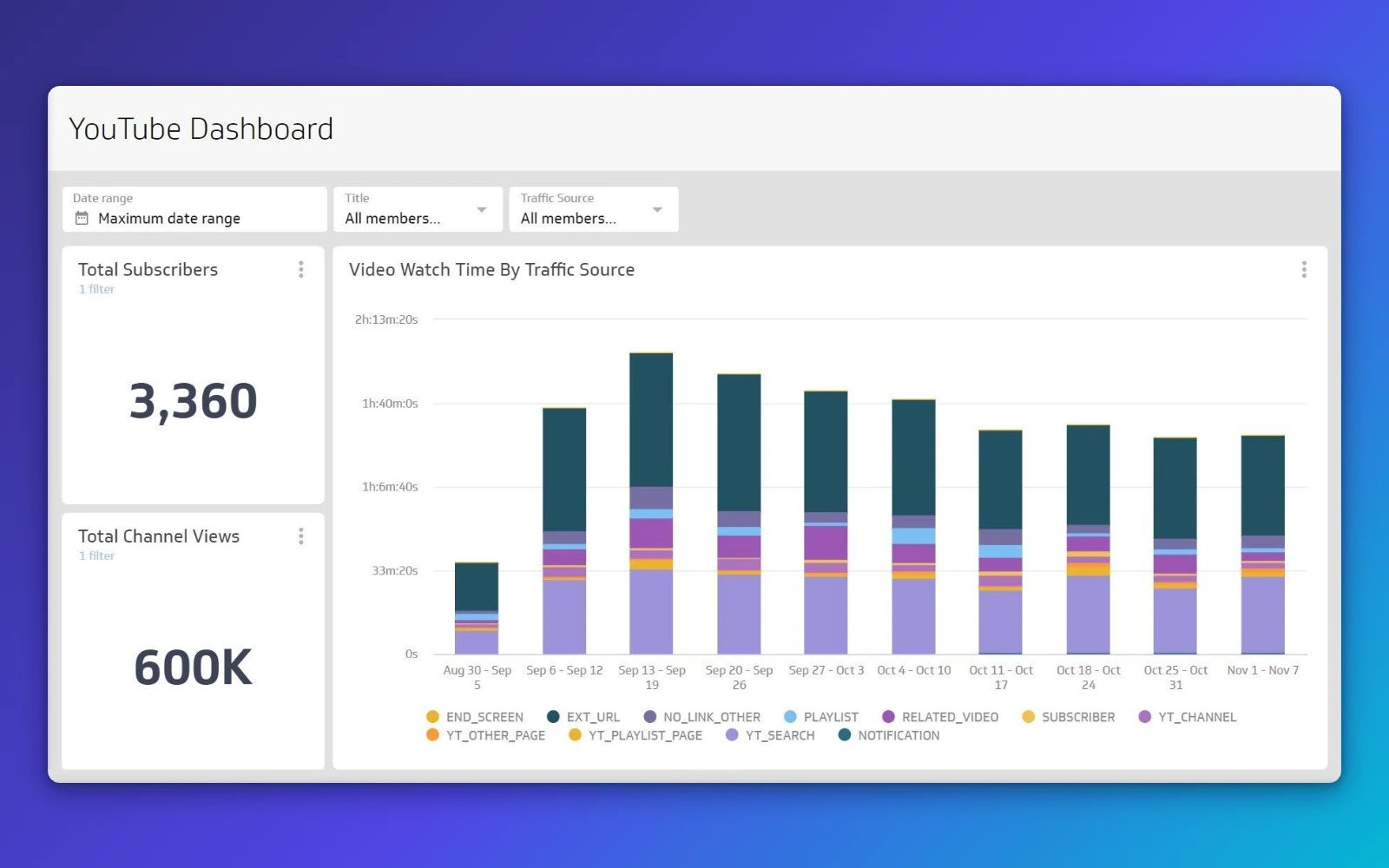
The top 12 metrics for social media managers
Most recent
- SEP 25What SOC 2 taught a small team about trust
- SEP 15The AI race: progress, humanity, and trust
- SEP 9The good advisor
- AUG 11Beyond simple sign-ups: how True Trials and Activation predict growth
- JUL 7Why business leaders miss important trends in their dashboards
- JUN 19The best chart for the job: Visualizing data for non-technical users