Customer Retention Rate
Measures the percentage of customers a business keeps over a specific period, and why it matters for subscription-based revenue growth.
Customer Retention Rate
What is Customer Retention Rate?
Customer Retention Rate is the percentage of customers a business keeps over a specific period, expressed as a number between 0% and 100%.
A high Customer Retention Rate means customers are staying, renewing, and continuing to pay. For subscription-based businesses, that directly determines whether revenue grows or erodes. Research shows that a modest 5% increase in customer retention can increase profits anywhere from 25% to 95% (source: The Economics of E-Loyalty). Keeping an existing customer is also considerably less expensive than acquiring a new one.
Customer Retention Rate is one of the most important KPIs for subscription businesses because it touches recurring revenue, customer satisfaction, account expansions, and referrals all at once. If you also want to track the revenue side of retention, Gross Revenue Retention Rate shows you how stable your revenue base actually is.
How to calculate Customer Retention Rate
The standard formula is:
Customer Retention Rate = ((Customers at End of Period - New Customers Acquired) / Customers at Start of Period) × 100
For example, if you start the quarter with 500 customers, acquire 60 new ones, and end with 520, your retention rate is:
((520 - 60) / 500) × 100 = 92%
The targets associated with Customer Retention Rate vary by business model. A SaaS company running on subscription licensing typically needs a retention rate above 98% to sustain growth. An automobile dealership can grow with a lower rate that would signal serious trouble for a SaaS startup.
Why Customer Retention Rate matters
Retention is a leading indicator of business health, not a lagging one. When your Customer Retention Rate is high, you know customers are getting consistent value. When it drops, something has changed: the product, the experience, the competition, or the fit.
For leaders running lean teams, this number removes the guesswork. You do not need to dig through spreadsheets or paste figures into a chatbot to understand whether your business is holding its customers. A reliable, current retention figure tells you what to act on and when.
Beyond the headline number, Customer Retention Rate connects directly to:
Revenue stability: Retained customers generate predictable recurring revenue without additional acquisition spend.
Expansion potential: Satisfied customers are far more likely to upgrade, add seats, or refer others.
Profitability: Lower churn means your Customer Acquisition Cost is spread across a longer customer lifetime, improving unit economics.
Strategies to improve Customer Retention Rate
Improving retention is not a single initiative. It is a set of consistent practices that compound over time. The following areas have the most direct impact.
Prioritize customer satisfaction:
Collect feedback regularly to surface friction before it becomes a cancellation reason.
Resolve issues quickly and close the loop with customers so they know their input led to something.
Deliver exceptional customer service:
Train your team to provide knowledgeable, efficient support tailored to each customer's context.
Offer multiple support channels (phone, email, live chat) so customers can reach you on their terms.
Engage and communicate proactively:
Keep customers informed about new features, promotions, and relevant updates before they have to ask.
Personalize communication so customers feel recognized, not mass-marketed to.
Build a loyalty program:
Offer rewards and incentives that reinforce repeat use and long-term commitment.
Design the program around your customers' actual preferences, not a generic points model.
Use data to personalize the experience:
Deliver targeted recommendations based on each customer's behaviour and history.
Customize the product experience to match how different customer segments use your product.
Monitor retention metrics consistently:
Track Customer Retention Rate alongside churn and expansion metrics to see the full picture.
Surface trends early so you can intervene before a cohort of customers disengages.
Customer Retention Rate in retail and eCommerce
In retail and eCommerce, Customer Retention Rate measures your ability to turn one-time buyers into repeat customers. The economics are the same: retained customers cost less to serve, spend more over time, and refer others.
Successful retention strategies in retail go beyond discounts. They focus on exceeding expectations at every touchpoint so customers become advocates, not just repeat buyers. In an environment where a single review on Google or Yelp can shift perception, brand sentiment is a meaningful signal. Consider connecting your Customer Retention Rate to social media measurements to understand how customer experience is translating into public perception.
Key terms
Retention rate: The proportion of customers who continue to make purchases from your organization over a defined period.
Attrition rate: The proportion of customers who stop purchasing from your organization over the same period.
Success indicators
A high or consistently increasing Customer Retention Rate.
Positive brand sentiment across social media platforms.
Create custom dashboards for you and your team.
Get started with KlipsTracking Customer Retention Rate on a dashboard
Knowing your retention rate is useful. Knowing it in real time, without having to pull a report or wait for someone to run the numbers, is what lets you act on it.
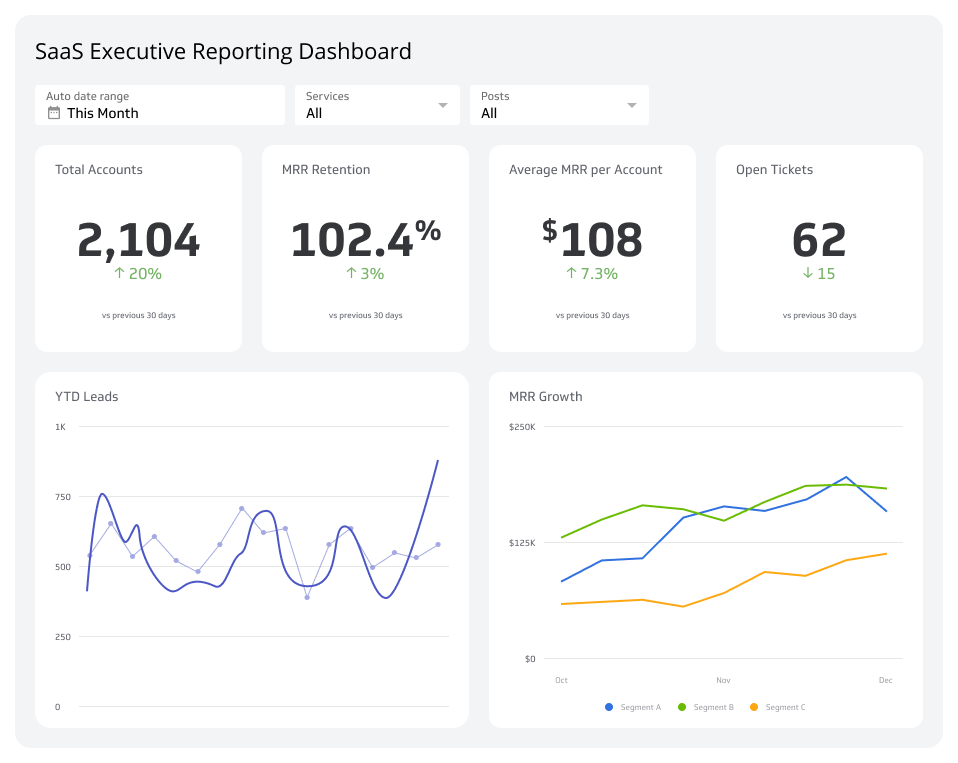
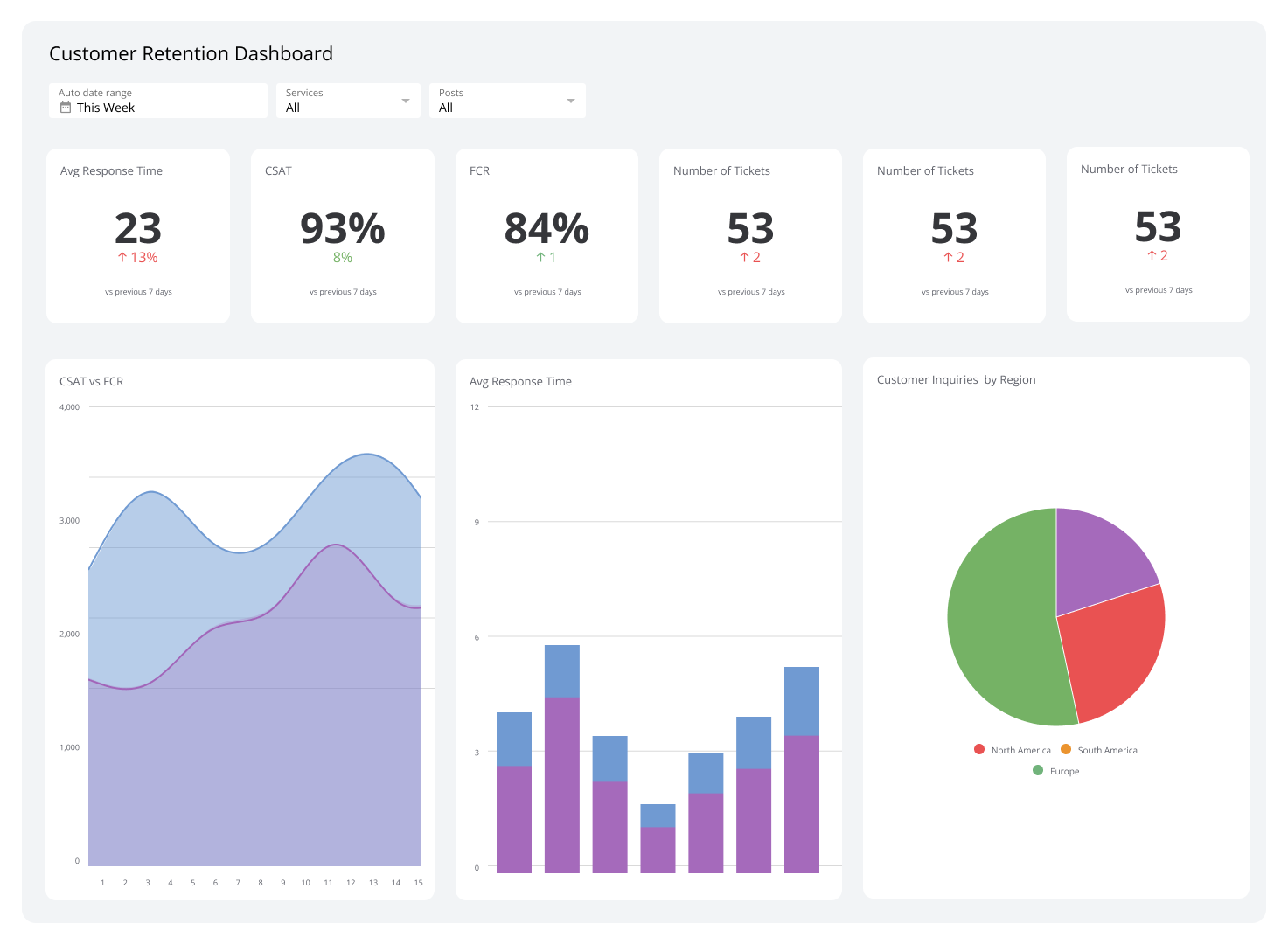
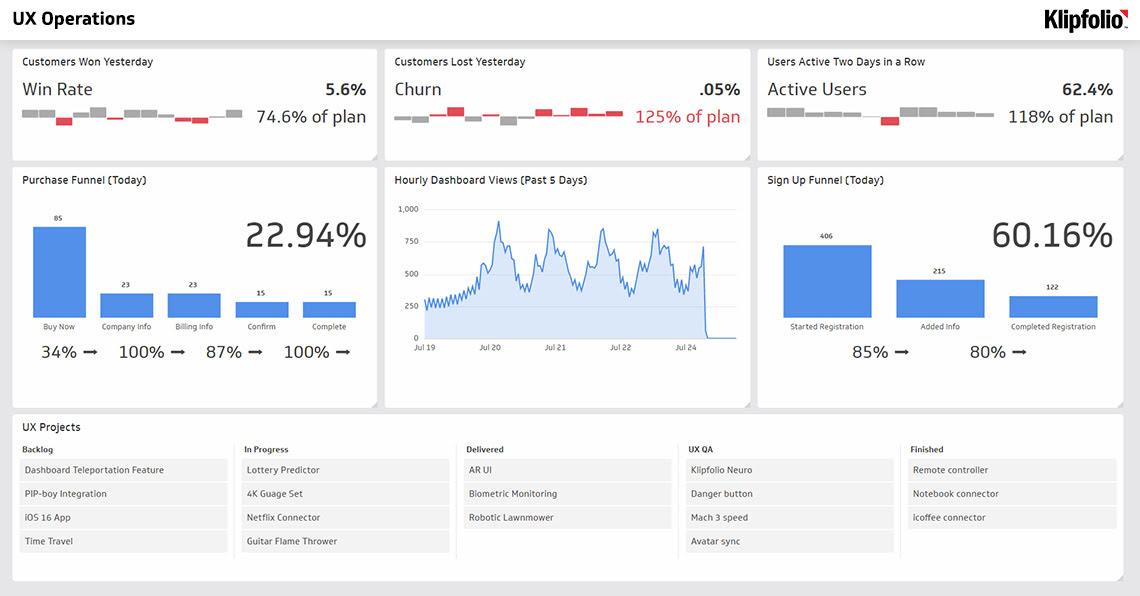
A SaaS Dashboard built in Klips connects directly to your data sources and keeps your retention metrics current automatically. Instead of figuring it out yourself each month, your team sees the same reliable number, updated on a schedule you set, distributed to whoever needs it.
That consistency matters. When everyone is looking at the same Customer Retention Rate, decisions about support investment, product priorities, and expansion campaigns start from a shared understanding rather than conflicting spreadsheets.
Explore more SaaS KPIs to build out a complete picture of subscription business health, or browse Sales KPIs to connect retention to your revenue growth story.