

Why speaking with customers still matters more than ever
One of the things I've learned over and over again building product companies is that there is no substitute for actually talking with your customers. Analytics, dashboards, and surveys all matter, but the real insights come from direct conversation. This post shares why customer conversations remain essential, how patterns across those conversations inform better decisions, and why listening consistently builds trust and stronger products.
That might sound obvious. But in practice, it's surprisingly easy to drift away from real customer conversations. We invest in analytics, dashboards, surveys, and feedback tools (all of which matter), yet many companies rarely sit down with the people who actually use their product.
At Klipfolio, we try hard not to let that happen.
We're fortunate to have an excellent customer success and support team. They're on the front lines every day, helping customers succeed and capturing valuable feedback. But that doesn't remove the responsibility from founders, product leaders, and executives to spend real time with customers themselves.
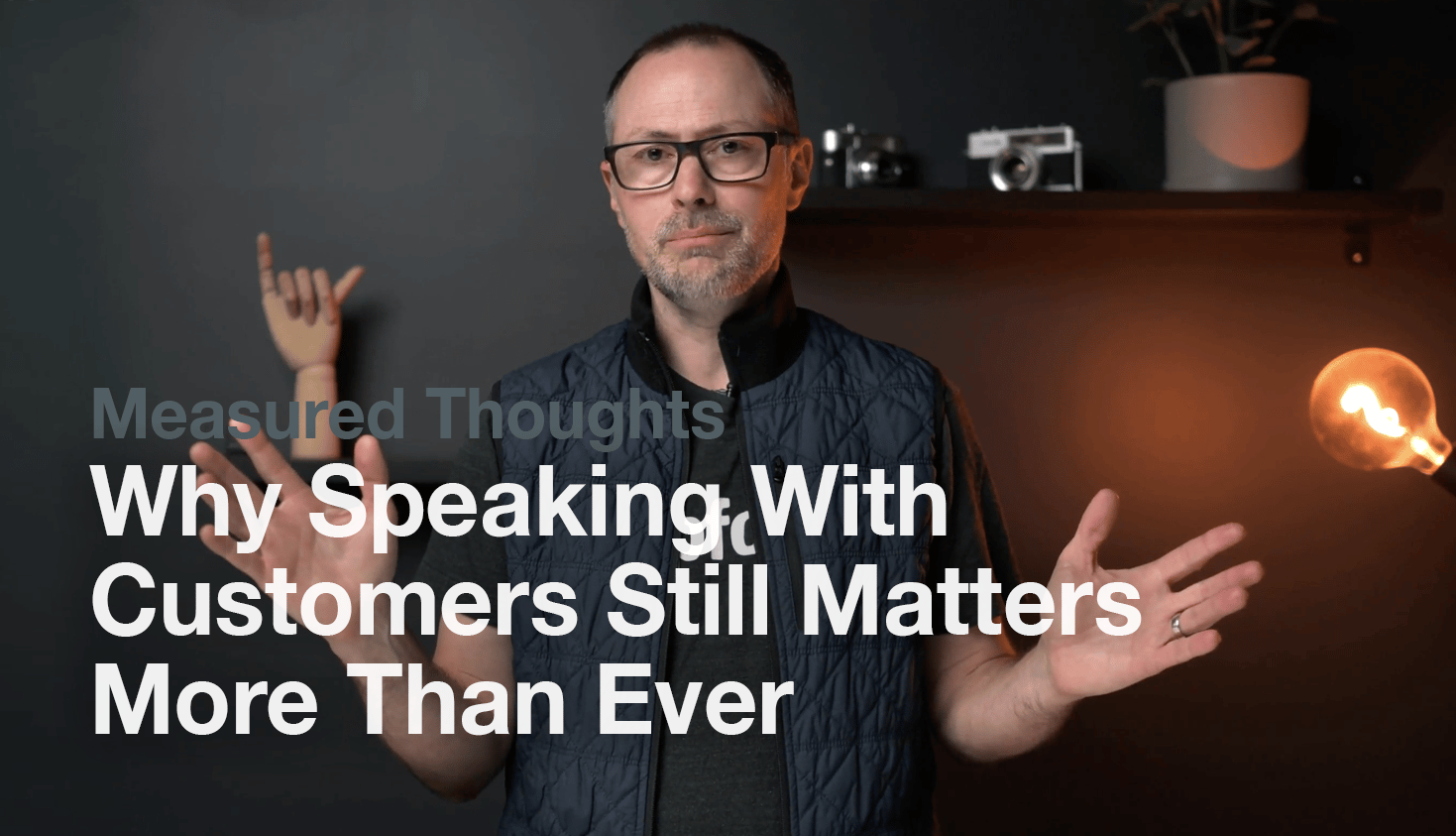
That one-on-one time, listening, watching, asking, and learning, is where some of the most important insights come from. Check out my YouTube video to hear my take.
What you actually learn from a conversation
When we speak directly with customers, we're not just asking what features they like or don't like. We're trying to understand how they're actually using the product, what outcomes they care about, and what expectations they brought with them in the first place.
Those conversations surface things that never show up in a ticket, a survey response, or a usage report. Tone, hesitation, enthusiasm: those human signals are hard to quantify, but they're incredibly informative. No dashboard captures the pause before someone says "it mostly works."
My co-founder Peter and I regularly join customer conversations. We ask open, non-leading questions and stay genuinely curious. Questions like: If this product weren't here anymore, how would you feel? What's missing today? If you had a magic wand, what would you change? These aren't trick questions. They're designed to get at what really matters to the person running their business on our software.
Patterns matter more than individual answers
Individual answers aren't the point. Patterns are. It's our job as a company to listen carefully, identify common themes, and then test those ideas back in the market.
Customer feedback doesn't automatically become a roadmap, but it absolutely informs better decisions. When the same frustration comes up in five separate conversations, that's a signal worth acting on. When five different people describe the same workaround, that's a product gap hiding in plain sight.
There's a version of this that AI tools can't replicate. You can paste a support log into a chatbot and get a summary. You can't paste in the moment a customer's voice changes when they describe a problem they've been living with for months.
Bringing the customer voice inside
We believe strongly in sharing the voice of the customer across the entire company. One practice we've really valued is inviting customers to our all-hands meetings. Customers get to share how they use Klipfolio Klips or PowerMetrics, what's working, and where we can do better, directly with the entire team. Employees hear real stories and real context behind the work they're doing every day.
The impact goes both ways. Employees gain clarity and motivation. Customers feel heard, valued, and genuinely included. It reinforces that we're not building software in isolation. We're building it with and for the people who rely on it.
Listening builds trust
There's something else that happens when you listen consistently. Trust builds. Relationships deepen. Customers become more willing to share not just what's broken, but what they're trying to achieve next.
That kind of dialogue is hard to fake, and it's hard to replicate with a survey or a usage heatmap. It's also increasingly rare. In a world where many companies default to automated touchpoints and AI-generated responses, simply showing up and listening is becoming a genuine differentiator.
The leaders who stay close to their customers make better calls. They catch problems earlier. They spend less time building things nobody asked for. And they build companies people actually want to stick with.
Create custom dashboards for you and your team.
Get started with KlipsAn open invitation
If you're a Klipfolio customer and you have ideas, aspirations, frustrations, or things you think we could do better, I genuinely want to hear from you. Reach out. Start the conversation. We'll listen, and we'll take it seriously.
Building great products starts with understanding the people who use them. That hasn't changed, and it won't.
Updated 2026-08-30
More in Customer feedback
The death (and rebirth) of the salesman

Inside the mind of a successful data-driven startup founder
Beyond vanity metrics: Share of Influence vs. Share of Voice
What the fastest-growing SaaS companies actually track

Seven tips for maximizing the benefits of KPIs

How to use psychographic data in your marketing strategy
Most recent
- SEP 25What SOC 2 taught a small team about trust
- SEP 15The AI race: progress, humanity, and trust
- SEP 9The good advisor
- AUG 11Beyond simple sign-ups: how True Trials and Activation predict growth
- JUL 7Why business leaders miss important trends in their dashboards
- JUN 19The best chart for the job: Visualizing data for non-technical users