Net Operating Profit After Tax (NOPAT)
NOPAT shows how profitable a company's core operations are, after taxes, with debt-related tax advantages removed so you can compare businesses on equal footing.
Net Operating Profit After Tax
Net Operating Profit After Tax (NOPAT) tells you how profitable a company's core operations are, after taxes, with debt-related tax advantages removed from the picture.
What is Net Operating Profit After Tax?
This financial metric strips away the distortions that come from different tax structures and financing decisions. What you're left with is a clean view of operating profitability, one that lets you compare companies on equal footing.
NOPAT assumes the business receives no tax benefits from carrying debt. The IRS allows businesses to deduct bad debts from gross income, which lowers taxable income and reduces taxes owed. NOPAT excludes that adjustment, focusing only on operating profit and the applicable tax rate.
That makes it especially useful when you're evaluating whether a business is genuinely efficient, not just well-financed.
How to calculate NOPAT
The formula is straightforward:
NOPAT = Operating Income × (1 - Tax Rate)
Operating income is your revenue from core business activities minus operating expenses. Think of it as gross profit minus the costs of running the business day to day.
To find the tax rate, divide total taxes paid by total revenue. This gives you the company's effective tax rate, the actual percentage of income going to taxes, not just the statutory rate.
Example: Your business has operating income of $200,000 and an effective tax rate of 30%.
NOPAT = $200,000 × (1 - 0.30) = $200,000 × 0.70 = $140,000
That $140,000 represents what the business earns from operations, after taxes, without any debt-related adjustments clouding the number.
One important limitation: NOPAT excludes one-time expenses or losses, since those don't reflect ongoing earning potential. It also excludes financial effects from mergers or acquisitions. Those items show up in annual reports, but they don't belong in a metric meant to reflect recurring operational performance.
Create custom dashboards for you and your team.
Get started with KlipsWhy NOPAT matters for decision-making
Revenue tells you how much a business sells. Net income tells you what's left after expenses, but it still includes tax savings from debt. NOPAT cuts through both and shows you what the operations actually produce.
That clarity matters most when you're comparing companies. Different businesses carry different debt loads and face different tax rates. A company might look highly profitable until you realize a large portion of that apparent profit comes from tax advantages tied to leverage, not from the business itself performing well.
NOPAT removes that noise. It puts every company on the same basis so you can ask a simpler question: how efficiently does this business generate profit from what it actually does?
A few practical reasons to use NOPAT:
- Comparing across companies: Tax rates vary by industry, jurisdiction, and capital structure. NOPAT neutralizes those differences so comparisons reflect operational performance, not financing choices.
- Evaluating investment opportunities: Investors and analysts use NOPAT to assess historical earnings and gauge whether a business is structurally profitable, not just temporarily advantaged.
- Spotting efficiency problems: A business can generate strong revenue and still destroy value if operating costs consume too much of it. NOPAT makes that visible.
NOPAT is not a complete picture on its own. You'll still want to look at other financial records to understand what a company spends on operations, headcount, and infrastructure relative to what it earns. But as a starting point for comparison, it's one of the more reliable numbers available.
NOPAT vs. Unlevered Free Cash Flow
Many analysts use NOPAT alongside Unlevered Free Cash Flow (UFCF) to build a fuller picture of financial performance.
UFCF measures how much cash a business generates from its activities before accounting for debt obligations. Like NOPAT, it excludes tax benefits tied to debt. Unlike NOPAT, it also factors in working capital changes and capital expenditures, the money spent on property and equipment.
You calculate UFCF by subtracting capital expenditures from operating cash flow. The result is a dollar amount that reflects the business's raw cash-generating ability, independent of how it's financed.
NOPAT, by contrast, includes non-operating expenses like amortization and depreciation but does not account for changes in working capital or capital spending. That makes NOPAT better suited to measuring operating profitability, while UFCF is better suited to assessing long-term cash generation potential.
Analysts often combine the two. Subtracting changes in working capital from NOPAT gets you closer to economic free cash flow. Working capital components that matter here include:
- Accounts payable: What the business owes to suppliers
- Accounts receivable: What customers owe the business
- Inventory: Goods held for sale
- Depreciation: The reduction in value of physical assets over time
- Amortization: The reduction in value of intangible assets over time
Cash flow yield, calculated by dividing cash flow by enterprise value, is another metric analysts derive from this analysis. Enterprise value is the market value of equity, plus debt, minus cash on hand.
Using NOPAT and UFCF together gives you both a profitability view and a cash generation view, which is a more complete basis for decisions than either metric alone.
Tracking NOPAT over time
A single NOPAT figure tells you where a business stands today. Tracking it over time tells you whether operational efficiency is improving, holding steady, or eroding.
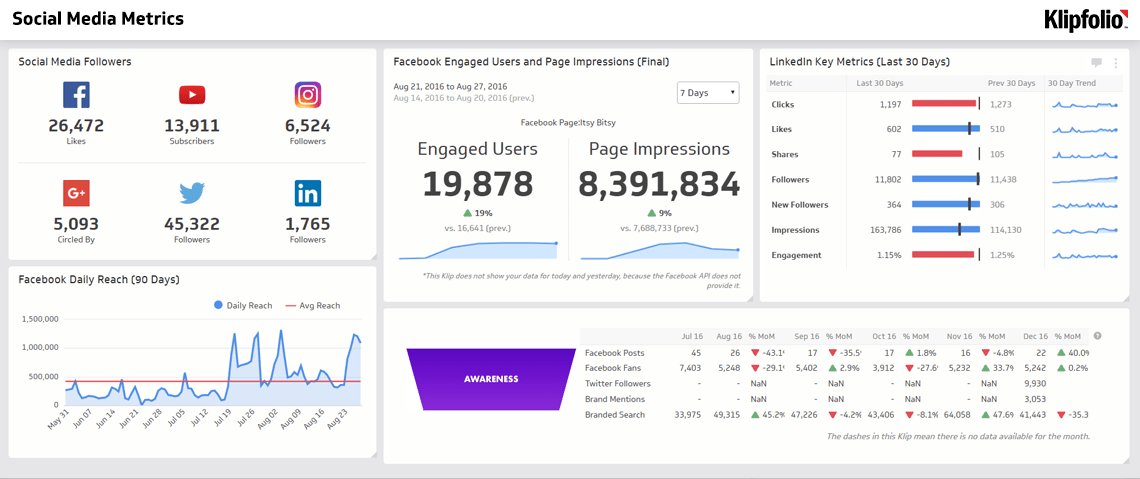
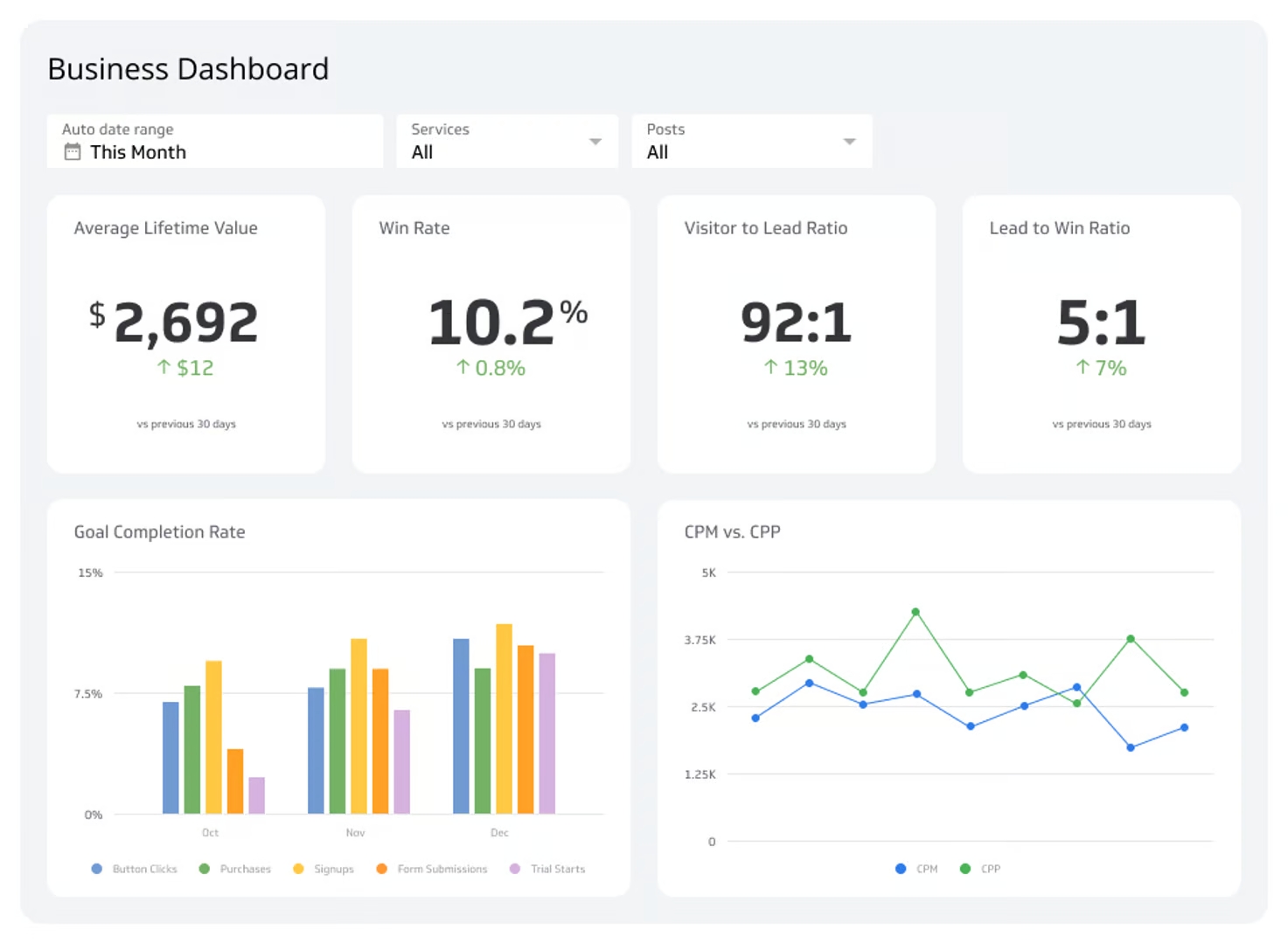
That's where a dashboard becomes useful. Rather than pulling the number manually each period, you can connect your financial data sources and monitor NOPAT alongside related metrics like gross profit, operating expenses, and net income. When something shifts, you see it without having to go looking.
Klips makes that kind of monitoring straightforward, with connections to 130+ data sources and the flexibility to build the view that fits your business.
Create custom dashboards for you and your team.
Get started with KlipsKey takeaways
NOPAT is a reliable metric for evaluating operational profitability on a level playing field. It removes debt-related tax advantages, making it easier to compare companies with different financing structures.
Its limitations are worth keeping in mind: it excludes one-time events, capital expenditures, and working capital changes. Pair it with UFCF and other financial metrics for a complete picture.
For ongoing decisions, the most valuable version of NOPAT is one you track consistently, not one you calculate once and set aside.