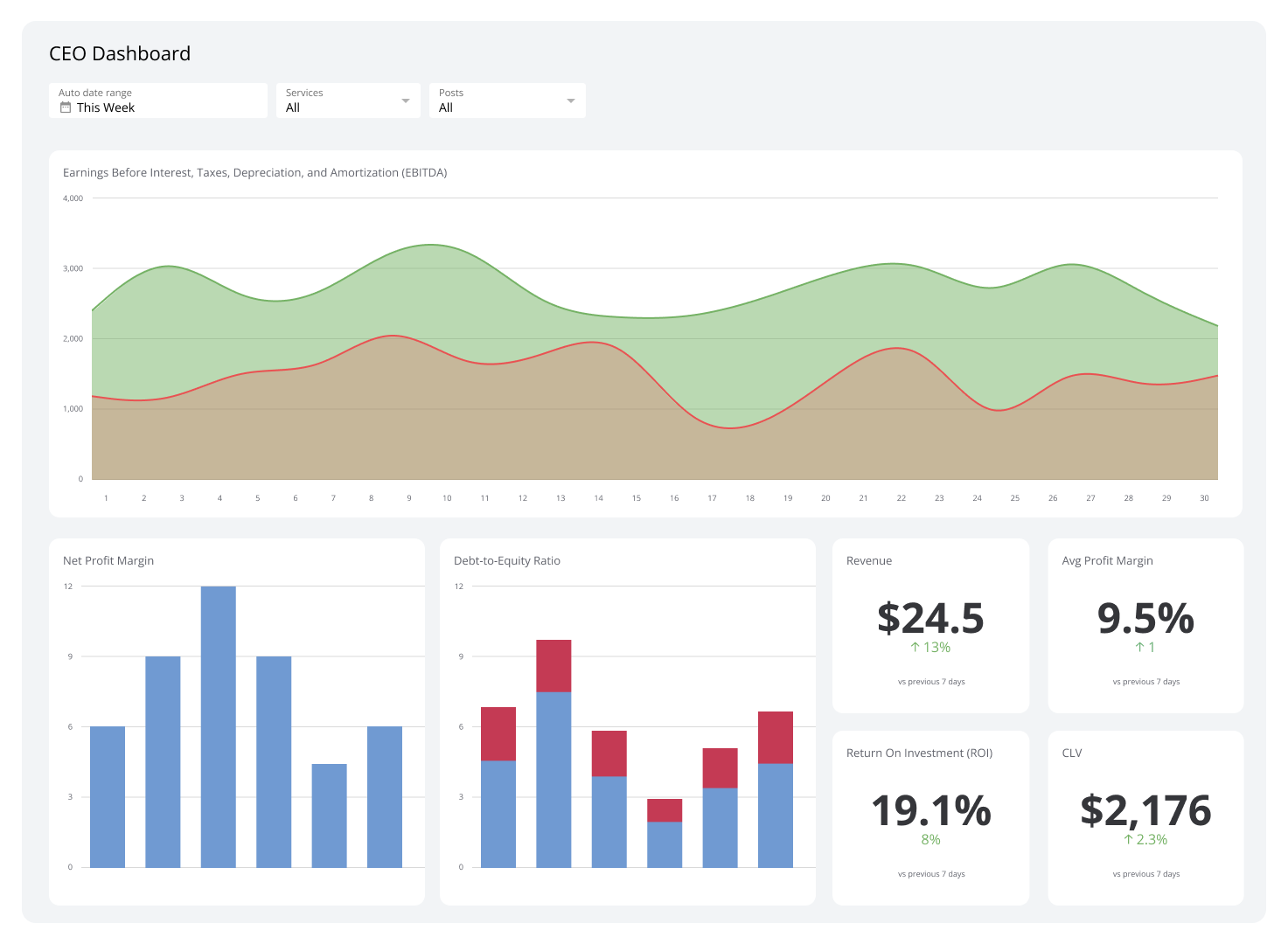
EBITDA vs. Net Income
EBITDA and Net Income both measure profitability, but they answer different questions. Knowing which one to use, and when, changes the conclusions you draw about a company's financial health.
EBITDA vs. Net Income
When you're evaluating a company's financial health, two numbers come up constantly: EBITDA and Net Income. They measure different things, and knowing which one to trust, and when, can change the conclusions you draw.
What is EBITDA?
EBITDA, an acronym for earnings before interest, taxes, depreciation, and amortization, is a financial metric that shows how much cash a company generates from its core operations, before financing costs and accounting adjustments are applied.
Instead of relying solely on Net Income, which includes non-cash expenses like depreciation and amortization, EBITDA strips those items out to give a clearer view of operating performance. That makes it easier to compare companies across different capital structures or tax environments.
Despite not being recognized under GAAP, some publicly traded corporations include adjusted EBITDA figures in their quarterly reports as a supplemental measure of performance.
How to calculate EBITDA
EBITDA is a frequently used financial metric for assessing a company's profitability and operating efficiency. There are two ways to calculate it, depending on your starting point:
EBITDA = Operating Income + Depreciation & Amortization
or
EBITDA = Net Income + Taxes + Interest Expense + Depreciation & Amortization
Both formulas produce the same result. The second is useful when Net Income is the only figure readily available.
Example of EBITDA
Consider a company that generates $100 million in revenue, spends $20 million on overhead, and $40 million on product costs. After $10 million in depreciation and amortization, operating profit is $30 million. With $5 million in interest expense, pre-tax income is $25 million. Applying a 20% tax rate leaves a Net Income of $21 million.
Working back up: add taxes ($4 million), interest ($5 million), and depreciation and amortization ($10 million) to Net Income, and EBITDA is $40 million.
That $40 million figure tells you what the business generates from operations, before the cost of how it's financed or how assets are accounted for. It's a useful number for understanding whether the core business is healthy, not whether every obligation has been met.
What is amortization in EBITDA?
Amortization is the gradual reduction in the book value of a company's intangible assets over time. Patents, trademarks, and goodwill are common examples. Because amortization is a non-cash charge, it reduces reported income without affecting actual cash flow. EBITDA adds it back to give a cleaner picture of cash-generating ability.
Disadvantages of EBITDA
EBITDA is widely used, but it has real limitations worth understanding before relying on it.
No uniform calculation method: Because there is no standardized GAAP definition, different companies calculate EBITDA differently. That makes cross-company comparisons unreliable without digging into the methodology.
Asset costs are ignored: Unlike free cash flow, EBITDA does not account for capital expenditures. A company spending heavily on equipment or infrastructure can look more profitable than it actually is.
Susceptible to earnings manipulation: EBITDA starts with an earnings figure that can itself be shaped by accounting choices. Revenue recognition and expense timing both affect the starting point, which means distortions carry through to EBITDA even after the standard add-backs.
Treat EBITDA as one input, not a final verdict. It's most reliable when used alongside other financial indicators.
What is Net Income?
Net Income is the profit remaining after all expenses, taxes, interest, depreciation, and amortization have been deducted from total revenue. It is the bottom line on an income statement and the most complete measure of what a company actually earned in a given period.
Net Income is used to calculate earnings per share, assess dividend capacity, and evaluate whether a business is sustainably profitable, not just operationally efficient. It's the number that tells you whether growth is translating into real returns.
Create custom dashboards for you and your team.
Get started with KlipsHow to calculate Net Income
Net Income = Total Revenue - Total Expenses (including taxes, interest, depreciation, and amortization)
Start with total revenue, subtract operating expenses and cost of goods sold to reach earnings before taxes, then subtract taxes to arrive at Net Income.
One caution: Net Income can be influenced by accounting choices such as revenue recognition timing or how expenses are classified. Cross-reference the income statement with cash flow data to verify the underlying quality of the number.
Example of Net Income
Coca-Cola's Q1 2021 financial report illustrates how Net Income works in practice. The company posted $9.02 billion in revenue, supplemented by $417 million from equity and other income and $66 million in interest income. After deducting cost of goods sold, general and administrative fees, other operating costs, interest payments, and taxes, Net Income came to $2.255 billion.
That figure reflects what Coca-Cola actually earned, after every obligation was met. It flows to shareholders and forms the basis for earnings-per-share calculations. It's the number that answers: did this business actually make money?
EBITDA vs. Net Income: what's the difference?
Both metrics measure profitability, but they answer different questions. Use this table to see where they diverge:
| Factor | EBITDA | Net Income |
|---|---|---|
| What it measures | Operating cash-generating ability | Total profit after all expenses |
| Includes interest? | No | Yes |
| Includes taxes? | No | Yes |
| Includes depreciation and amortization? | No | Yes |
| GAAP recognized? | No | Yes |
| Best used for | Comparing operating performance across companies | Assessing true bottom-line profitability |
| Common users | Investors, acquirers, capital-intensive industries | Shareholders, regulators, established businesses |
The core distinction: EBITDA removes financing and accounting variables to isolate operational performance. Net Income includes everything, making it the definitive measure of what a company kept.
A useful way to think about it: EBITDA tells you how the engine is running; Net Income tells you how much fuel is left after all the costs of the trip.
When EBITDA is the right lens
EBITDA is most useful when comparing companies in capital-intensive industries, such as manufacturing, energy, or telecom, where depreciation and amortization charges vary significantly based on asset age and financing structure. It is also the standard metric in mergers and acquisitions, where buyers want to assess operational performance independent of how the target company is capitalized.
If you're evaluating whether a business can service debt or generate cash from operations, EBITDA gives you a faster read than Net Income. It's also the number investors reach for when they want to cut through accounting differences and compare apples to apples.
When Net Income is the right lens
Net Income is the right metric when you need a complete picture of profitability, particularly for dividend decisions, earnings-per-share reporting, or confirming whether a company is genuinely profitable after all obligations are met.
For businesses with low capital expenditures, Net Income and EBITDA will be close to each other, and Net Income becomes the cleaner, more straightforward indicator. When the two numbers diverge sharply, that gap is worth investigating.
Which metric should you track?
The answer depends on what decision you're making.
Track EBITDA when you need to:
Compare companies across different capital structures or tax jurisdictions
Evaluate acquisition targets and assess operational efficiency
Analyse industries with heavy depreciation loads, such as manufacturing or infrastructure
Track Net Income when you need to:
Report to shareholders or calculate earnings per share
Assess dividend capacity or retained earnings
Confirm true profitability after all costs, not just operating performance
Most finance teams track both. EBITDA surfaces operational trends; Net Income confirms whether those trends translate into real profit. Watching one without the other leaves gaps in the picture.
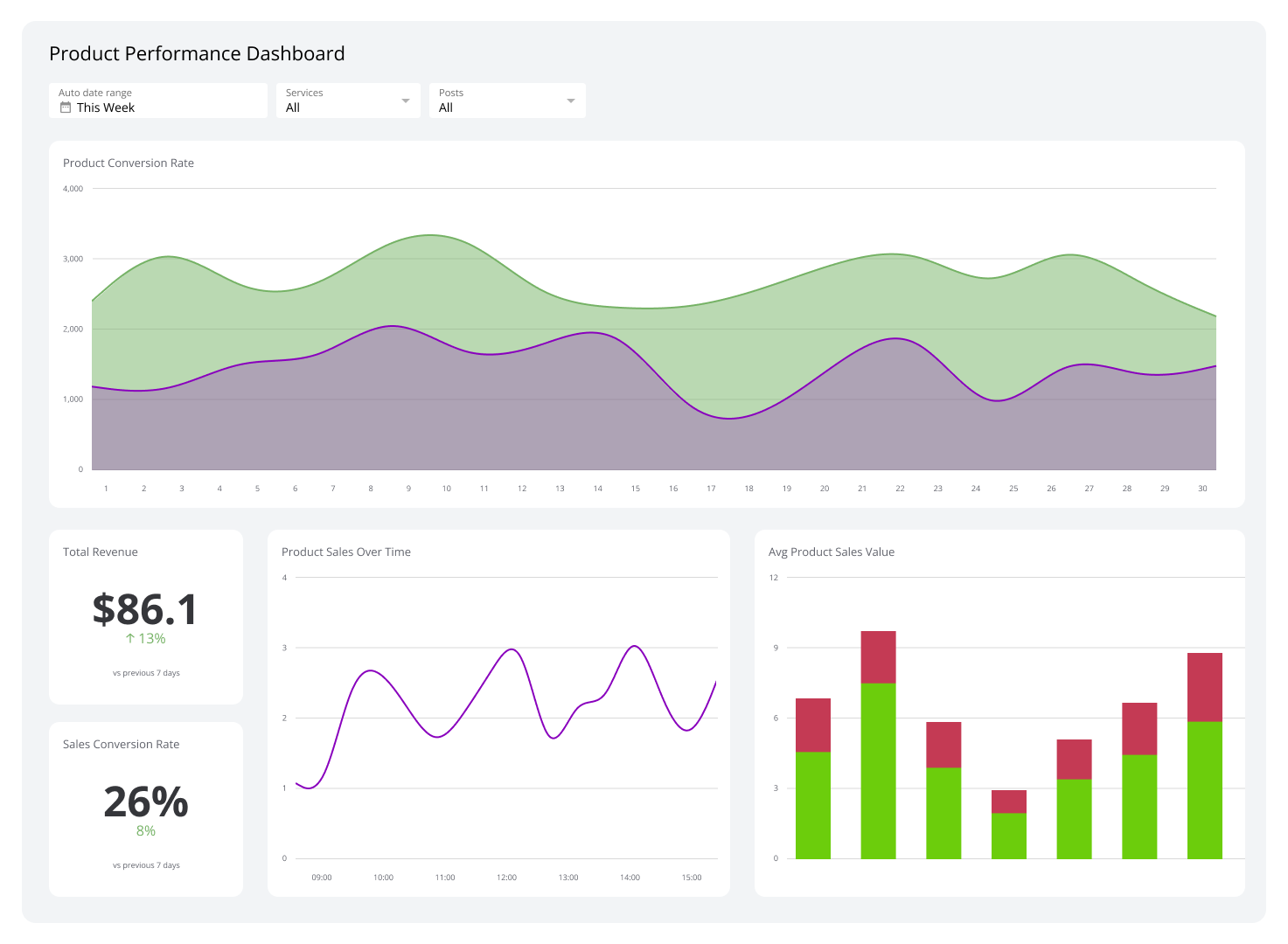
A dashboard that surfaces both metrics in real time, broken down by period and business unit, means you're not waiting for a report or pasting numbers into a spreadsheet to get an answer. You know where you stand, and you can act on it.