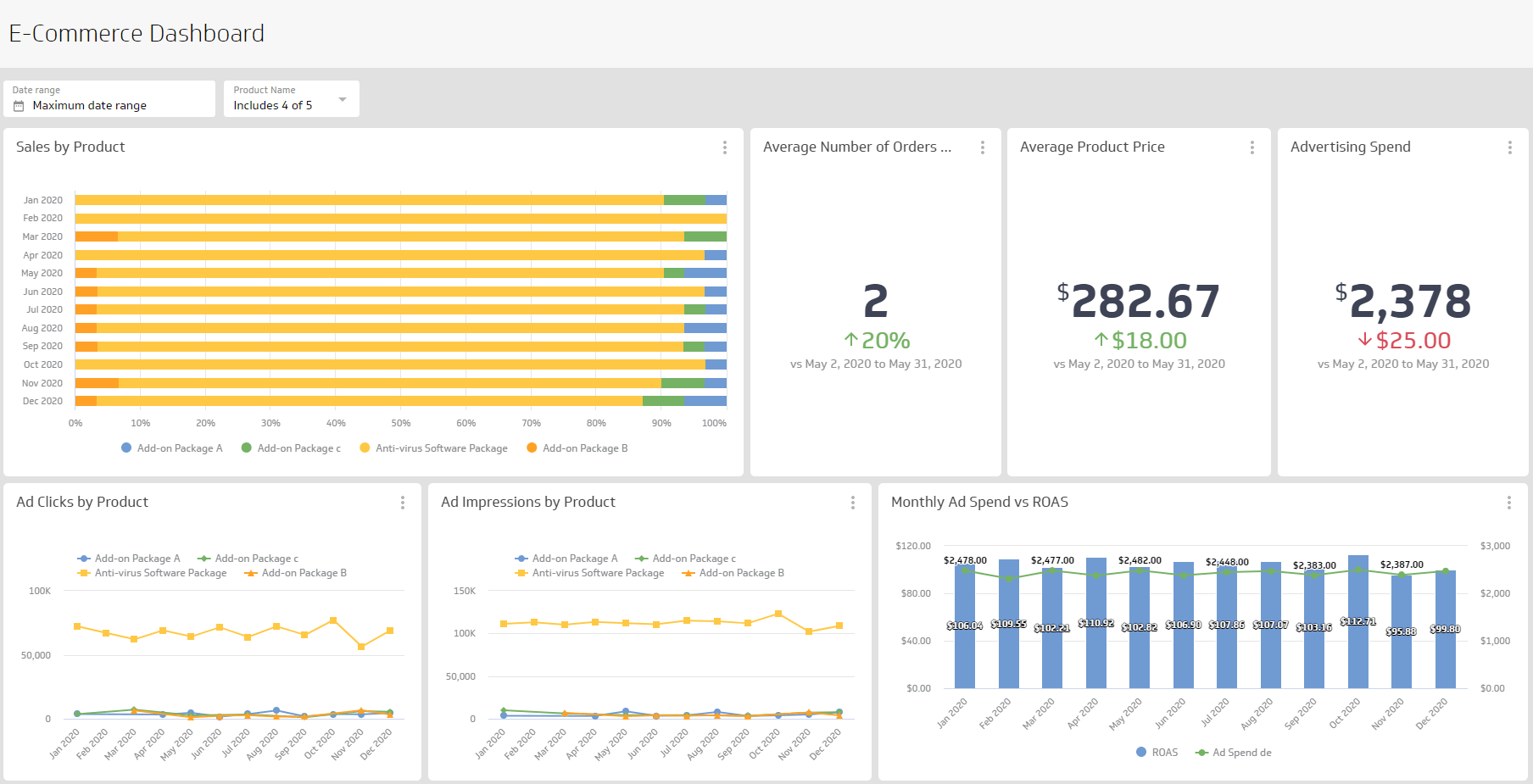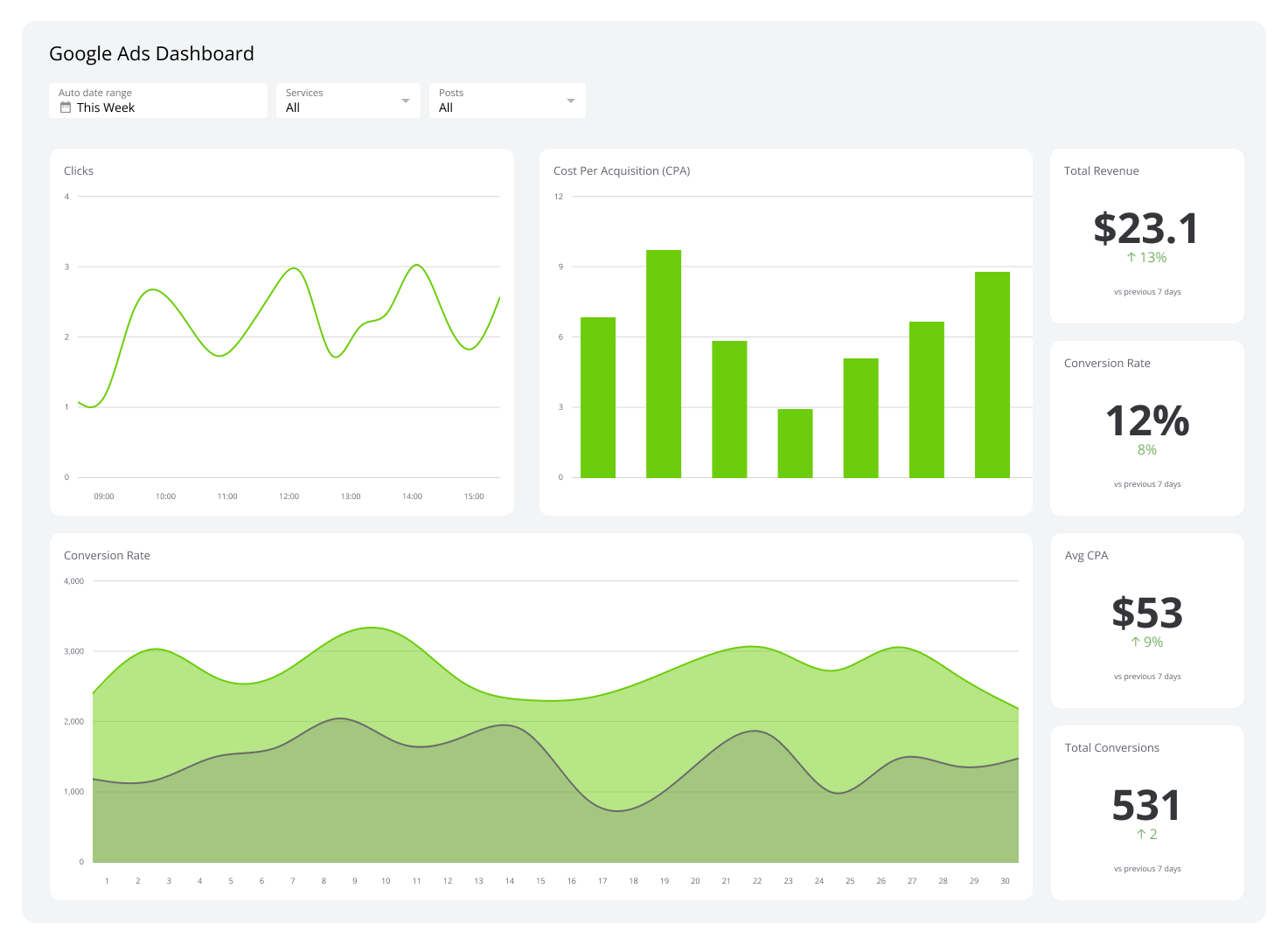
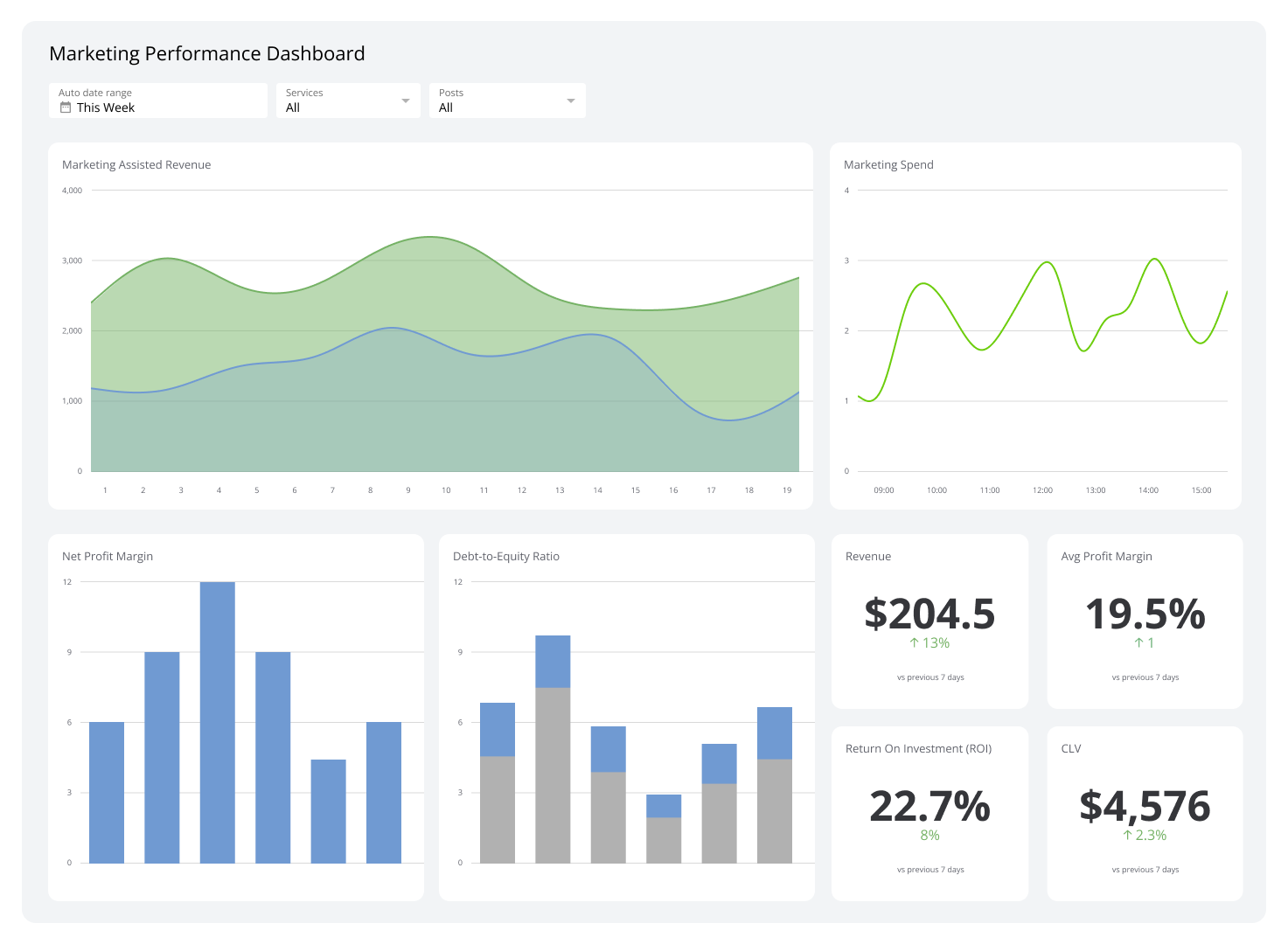
Marketing Performance Dashboard
Your marketing ROI, in real-time.
What is a marketing performance dashboard?
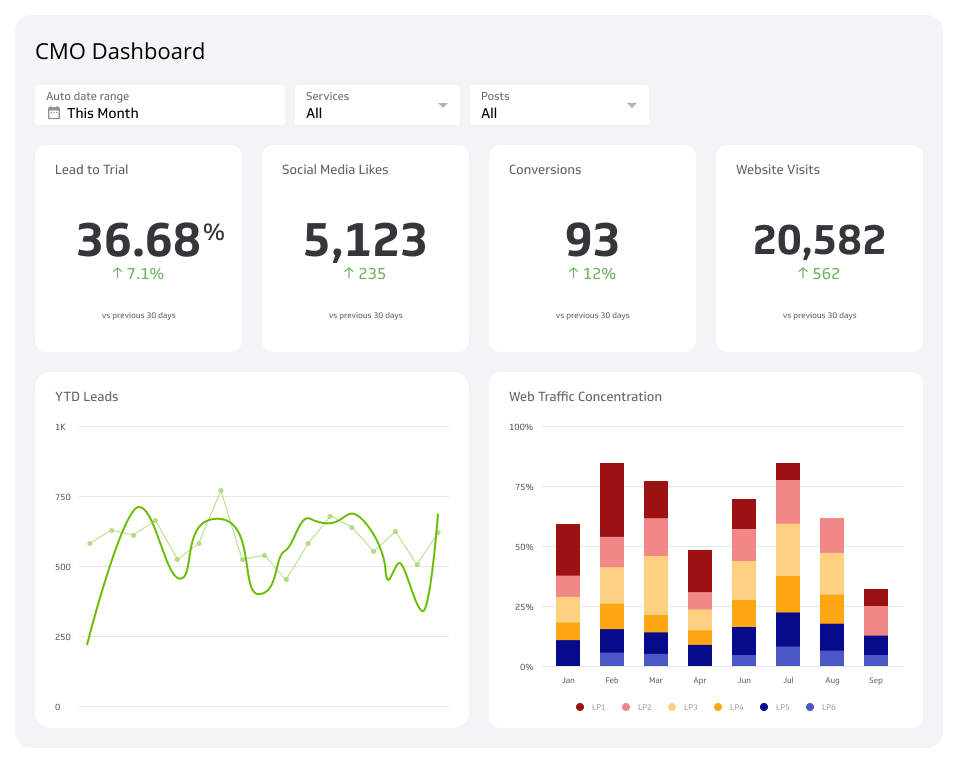
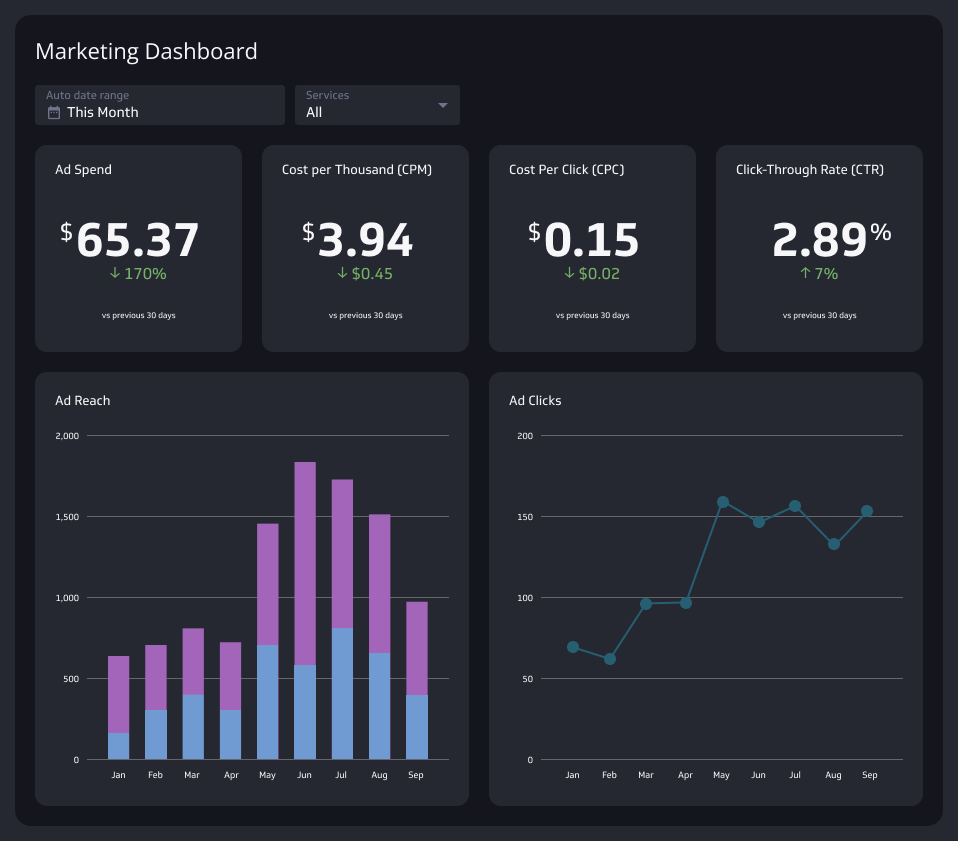
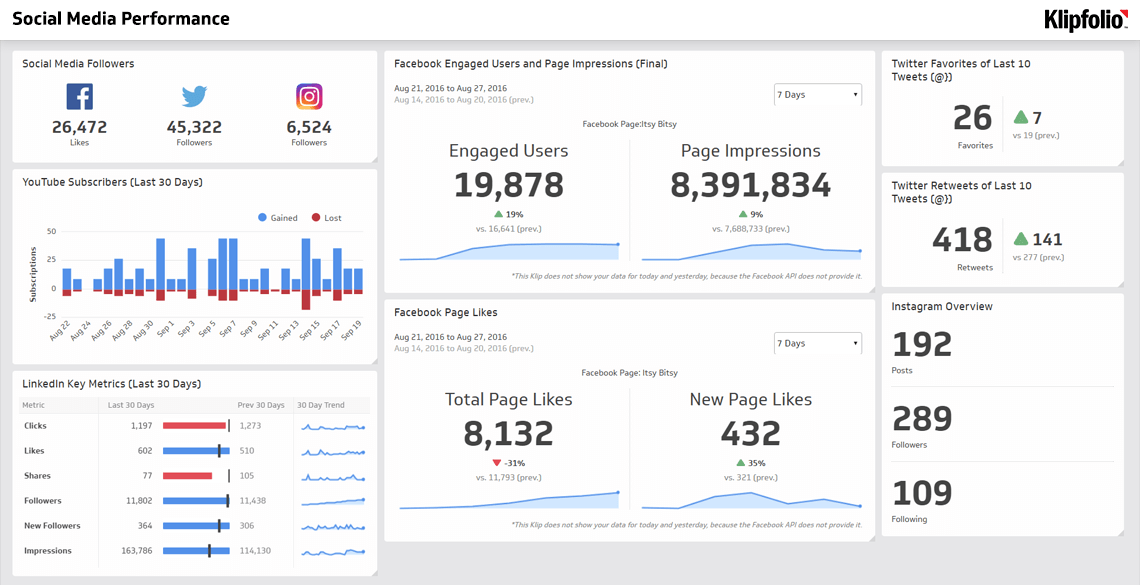
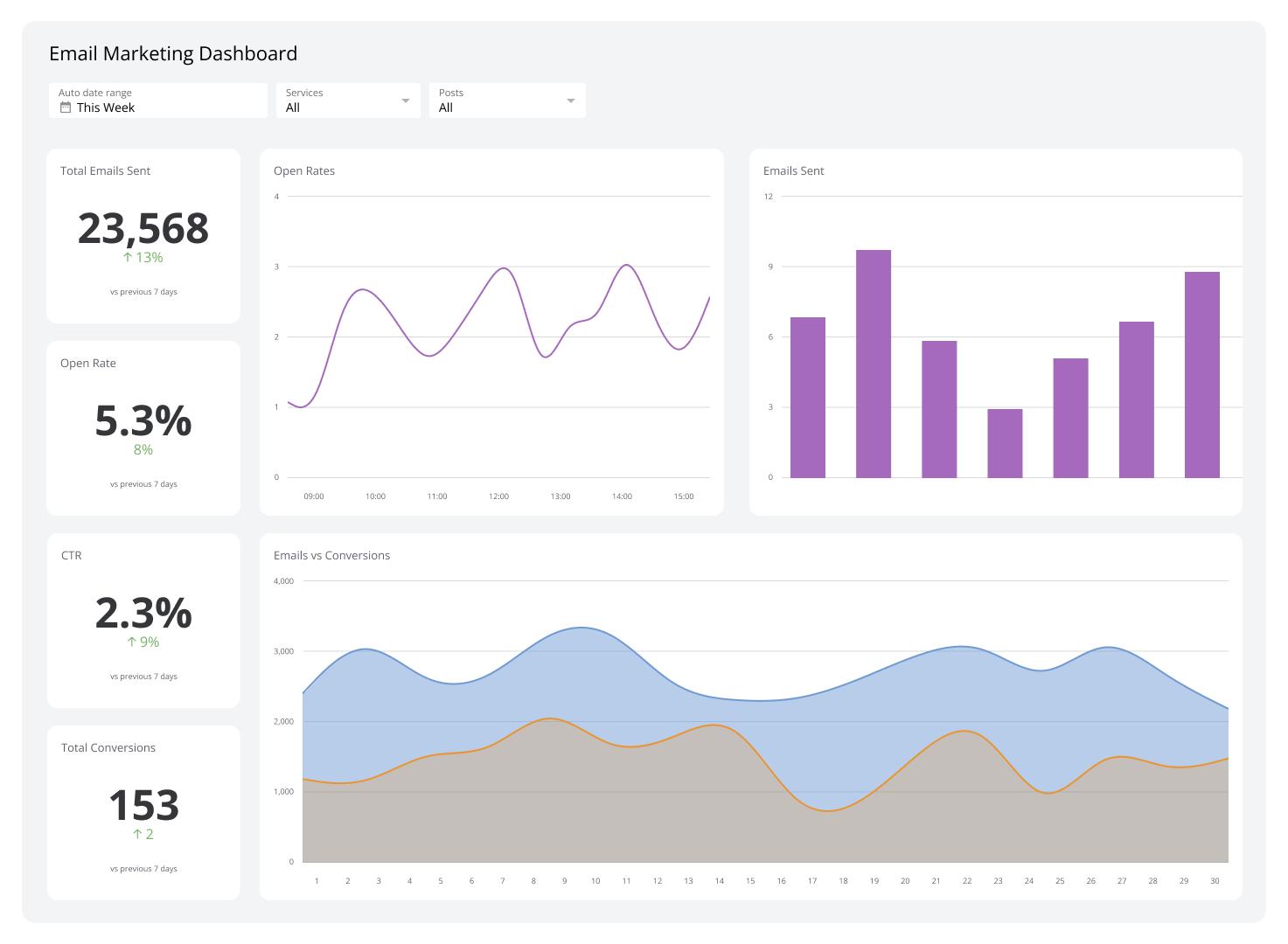
A marketing performance dashboard is a real-time, consolidated view of your most important marketing metrics, pulled from every channel into one place.
Is your budget actually working? Most marketing leaders can't answer that question without pulling numbers from three different tools, building a spreadsheet, and hoping nothing changed by the time they present it. A marketing dashboard replaces that process with a live view you can trust, so you know what's working, what isn't, and where to focus next, without waiting for someone to pull a report.
Key metrics for your Marketing Performance Dashboard
An effective Marketing Performance Dashboard connects spending to real business results. Here are the essential metrics to track.
Cost Per Lead (CPL): CPL tells you what each new lead costs across your channels. Track it to stop pouring budget into acquisition that doesn't pay off, and redirect spend to what actually fills your pipeline.
Customer Acquisition Cost (CAC): CAC captures the full cost of winning a new customer. Pair it with customer lifetime value and you'll know whether your growth is sustainable, not just fast.
Lead Generation: Volume matters, but only in context. Monitor new leads alongside conversion rate so you can tell whether a slow quarter is a pipeline problem or a quality problem.
Lead-to-Conversion Rate: This metric reveals whether your leads are worth chasing. A high volume with a low conversion rate is a signal, not a success.
Return on Marketing Investment (ROMI): ROMI is the number that justifies the budget. It shows how much revenue every marketing dollar generates, and it's the clearest way to demonstrate marketing's contribution to the business.
Why a Marketing Performance Dashboard matters
Without a centralized view, marketing data lives in disconnected tools: your ad platform, your CRM, your email software, your analytics account. That fragmentation makes it nearly impossible to see the full picture, let alone act on it quickly.
The alternative most teams reach for, pasting numbers into a spreadsheet or asking an AI tool to summarize disconnected exports, doesn't solve the problem. You're still doing the work manually, and you're still explaining your business from scratch every time.
A Marketing Performance Dashboard pulls your data into a single, always-current view. Your team can monitor performance daily and course-correct in real time, not at the end of the month when it's too late to matter.
This is most valuable when budgets are tight and every channel needs to justify its spend. When CPL, CAC, and ROMI sit side by side, you stop guessing and start making decisions grounded in numbers you can trust.
What to include in your Marketing Performance Dashboard
The right metrics depend on your audience. A dashboard built for your marketing team can go deep: channel-level breakdowns, funnel stage data, and campaign-specific KPIs. A dashboard built for executives should stay high-level, focusing on pipeline impact and revenue contribution.
Regardless of audience, most Marketing Performance Dashboards benefit from tracking marketing KPIs across these areas:
Acquisition: Cost Per Lead, Customer Acquisition Cost, traffic by channel
Engagement: Click-Through Rate, Bounce Rate, Average Session Duration
Conversion: Lead-to-Conversion Rate, Goal Completion Rate, pipeline value
Revenue impact: ROMI, Return on Ad Spend (ROAS), revenue attributed to marketing
Keep the layout clean. Group related metrics visually, use consistent date ranges, and make sure every number connects to a decision someone can act on. A dashboard your team trusts is more valuable than one with more charts.
Create custom dashboards for you and your team.
Get started with KlipsHow to build a Marketing Performance Dashboard with Klips
Klipfolio Klips connects to 130+ data sources, including your ad platforms, CRM, email tools, and analytics accounts. You get a holistic view of your efforts across social media, email, SEO, and paid advertising, all in one place, refreshed automatically so the numbers are always current.
Use Excel-like formulas to model your data, choose from 30+ visualization types, and distribute your dashboard to your team via TV mode, scheduled email, or embedded views. Whether you're a marketing manager tracking daily campaign performance or a director presenting results to leadership, Klips gives you the flexibility to build exactly the marketing dashboard examples your audience needs, without waiting on a developer.
The result: fewer manual reports, fewer errors, and a team that always knows where things stand.