Unique visitors
Measure the total number of unique individuals that view your website.
Track all your Digital Marketing KPIs in one place
Sign up for free and start making decisions for your business with confidence.
What is a unique visitor?
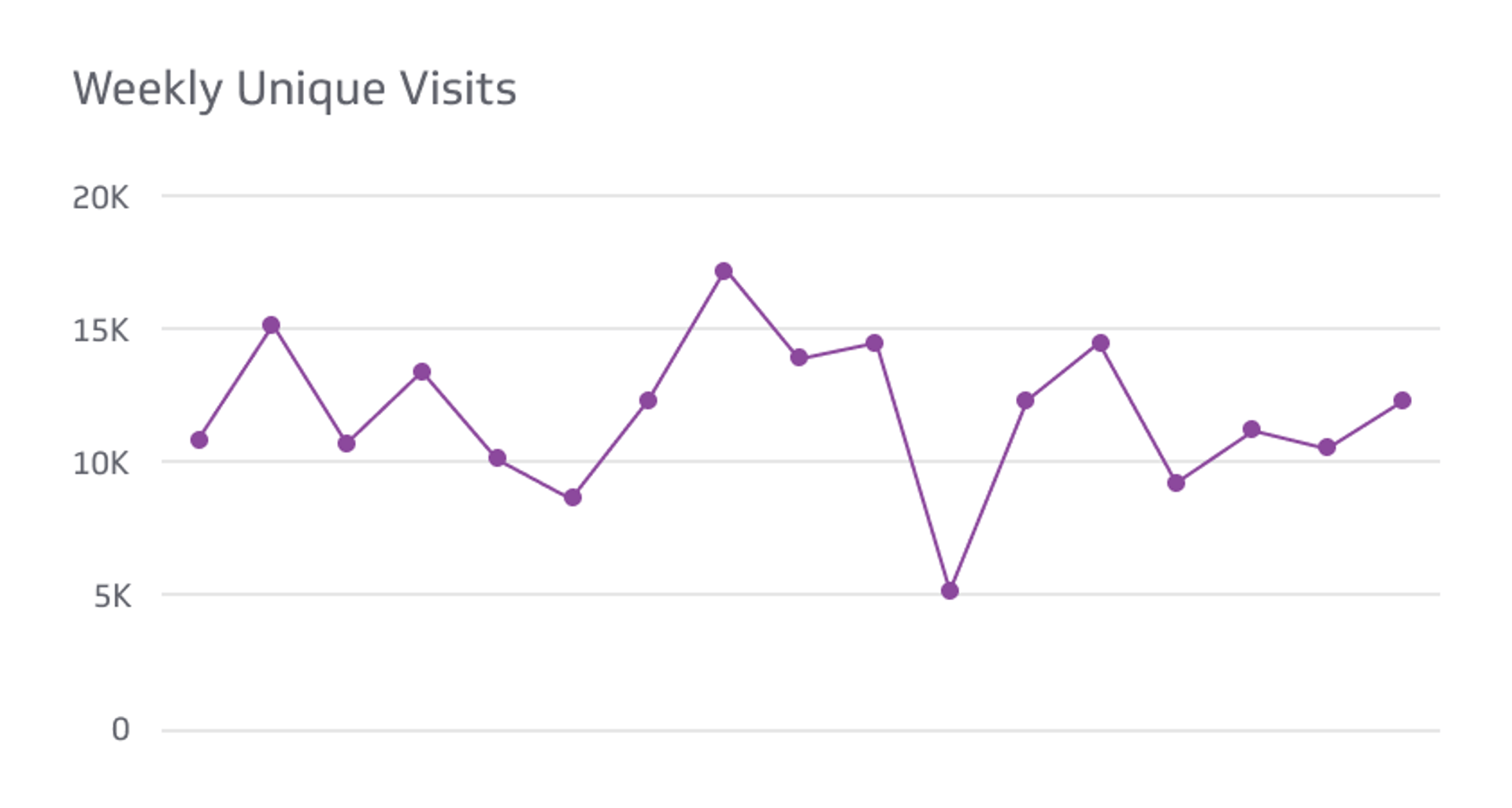
A unique visitor is an individual person who visits your website during a specific time period. This metric counts each person only once, regardless of how many times they return or how many pages they view. Unique visitors reveal how many different people are discovering and engaging with your site.
Why unique visitors matter
Tracking unique visitors gives your team insight into how compelling and popular your site is. This metric indicates the overall awareness and reach of your website—it shows whether your marketing efforts are bringing new people to your door.
Understanding unique visitor trends helps you:
- Measure marketing effectiveness. Are your campaigns attracting new audiences?
- Identify growth patterns. Is your site reaching more people month over month?
- Benchmark performance. Compare your reach against industry standards or your own targets.
- Allocate resources wisely. Focus budget on channels that drive the most new visitors.
How to calculate unique visitors
Unique visitors = Count of distinct individuals visiting your site in a given period
Most analytics platforms (like Google Analytics) automatically track this for you. The system uses cookies, IP addresses, and user IDs to identify and count each person once per session, regardless of how many pages they browse or how long they stay.
Unique visitors vs. related metrics
It's easy to confuse unique visitors with similar metrics. Here's how they differ:
| Metric | Definition |
|---|---|
| Unique visitors | Individual people who visit your site (counted once per period) |
| Sessions | Individual browsing sessions; one person can have multiple sessions |
| Page views | Total number of pages viewed; one person can generate many page views |
| Returning visitors | People who have visited before; subset of total unique visitors |
Unique visitors by traffic source
Breaking down unique visitors by source reveals where your audience is coming from:
- Organic search. People finding you through Google or other search engines.
- Direct traffic. People typing your URL directly or using a bookmark.
- Referral traffic. People clicking through from other websites.
- Paid ads. People clicking on your paid search, social, or display campaigns.
- Social media. People arriving from Facebook, LinkedIn, X, or other platforms.
Each source tells a different story about your marketing effectiveness. High organic traffic suggests strong SEO; high paid traffic shows your ads are working; high direct traffic indicates brand recognition.
Reporting frequency
Monthly is the standard reporting period for unique visitors, though you can track it daily, weekly, or in real-time depending on your needs. Monthly reporting smooths out day-to-day fluctuations and makes trends easier to spot.
Example KPI target
A typical target might be 10,000 unique visitors per month, though this varies widely by industry, business model, and stage. A SaaS startup might aim for 5,000; an established e-commerce site might target 50,000 or more.
Who tracks unique visitors?
Marketing managers and marketing teams rely on this metric to gauge campaign success and audience growth. It's especially important for:
- Content marketers evaluating blog reach
- Paid advertising teams measuring campaign impact
- SEO specialists tracking organic growth
- E-commerce teams monitoring site traffic
- Business owners assessing overall online presence
How to improve unique visitor count
By monitoring unique visitors as one of your digital marketing metrics, you can gain insights into the reach and engagement of your website. Here are practical ways to attract more unique visitors:
- Optimize for search engines. Publish high-quality, keyword-rich content that ranks in Google.
- Leverage paid advertising. Run targeted campaigns on Google Ads, social media, or display networks.
- Build referral partnerships. Collaborate with complementary websites and influencers.
- Strengthen social media presence. Share valuable content across your channels.
- Improve user experience. Fast load times, mobile optimization, and clear navigation keep visitors coming back.
- Create shareable content. Blog posts, infographics, and videos that people want to pass along.
Track unique visitors with Klipfolio
Klipfolio dashboards make it easy to monitor unique visitors alongside your other key metrics. Connect your Google Analytics, Adobe Analytics, or other data sources, and visualize visitor trends in real-time. Set targets, track progress, and share performance with your team—all in one place.
Related Metrics & KPIs