Carrying Cost of Inventory
Measure how much it costs to carry inventory.
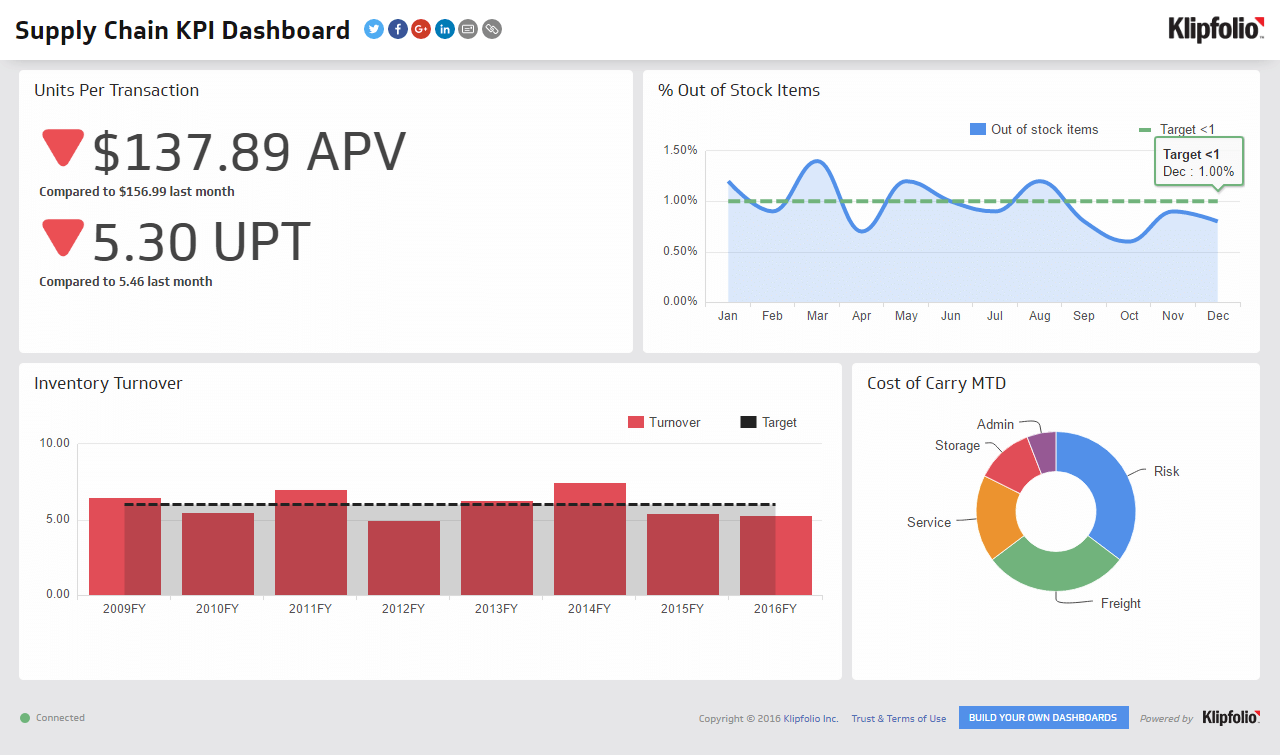
Carrying Cost breakdown
What is Carrying Cost of Inventory?
Carrying Cost of Inventory is the total cost of holding inventory over a given period, expressed as a percentage of inventory value. It captures every expense tied to storing unsold stock.
How to calculate Carrying Cost of Inventory
Use this formula:
Carrying Cost of Inventory = Inventory Carrying Rate × Average Inventory Value
The inventory carrying rate is typically expressed as a percentage. Multiply it by the average value of your inventory during the period to get your total carrying cost.
What's included in carrying costs
Every unit you store generates ongoing expenses. The main cost categories are:
- Storage costs: Rent, utilities, and warehouse overhead tied to the physical space your inventory occupies
- Labour costs: Staff time spent receiving, organizing, and managing stock
- Insurance and risk costs: Coverage against theft, damage, spoilage, or obsolescence
- Freight and handling costs: Inbound shipping and movement of goods within your facility
- Capital costs: The opportunity cost of money tied up in unsold inventory
Why Carrying Cost of Inventory matters
High carrying costs erode profit margins. Knowing your carrying cost tells you how much profit is available from your current inventory and helps you decide when to reorder, discount, or liquidate slow-moving stock.
This metric works alongside the Cash Conversion Cycle to give you a fuller picture of how efficiently your business converts inventory into cash. It also helps your suppliers plan production cycles more accurately, since your reorder patterns become more predictable when you manage carrying costs actively.
What a good Carrying Cost of Inventory looks like
Industry benchmarks vary, but most businesses aim for a carrying rate between 20% and 30% of inventory value annually. The best outcomes combine:
- Low carrying costs: Fewer resources consumed by holding stock
- High inventory turnover: Stock moves quickly, reducing the time goods spend in storage
If your carrying cost is climbing, it usually signals overstocking, slow-moving products, or inefficient storage operations.
How to reduce carrying costs
Reducing Carrying Cost of Inventory means addressing the root causes of excess stock and inefficient storage:
- Improve demand forecasting: Order closer to actual demand to avoid overstocking
- Increase inventory turnover: Faster-moving stock spends less time generating holding costs
- Audit storage efficiency: Consolidate warehouse space and eliminate unused capacity
- Review insurance and risk coverage: Ensure you are not over-insured relative to inventory value
- Negotiate freight terms: Reduce inbound shipping costs through supplier agreements or consolidated orders
Track Carrying Cost of Inventory on a dashboard
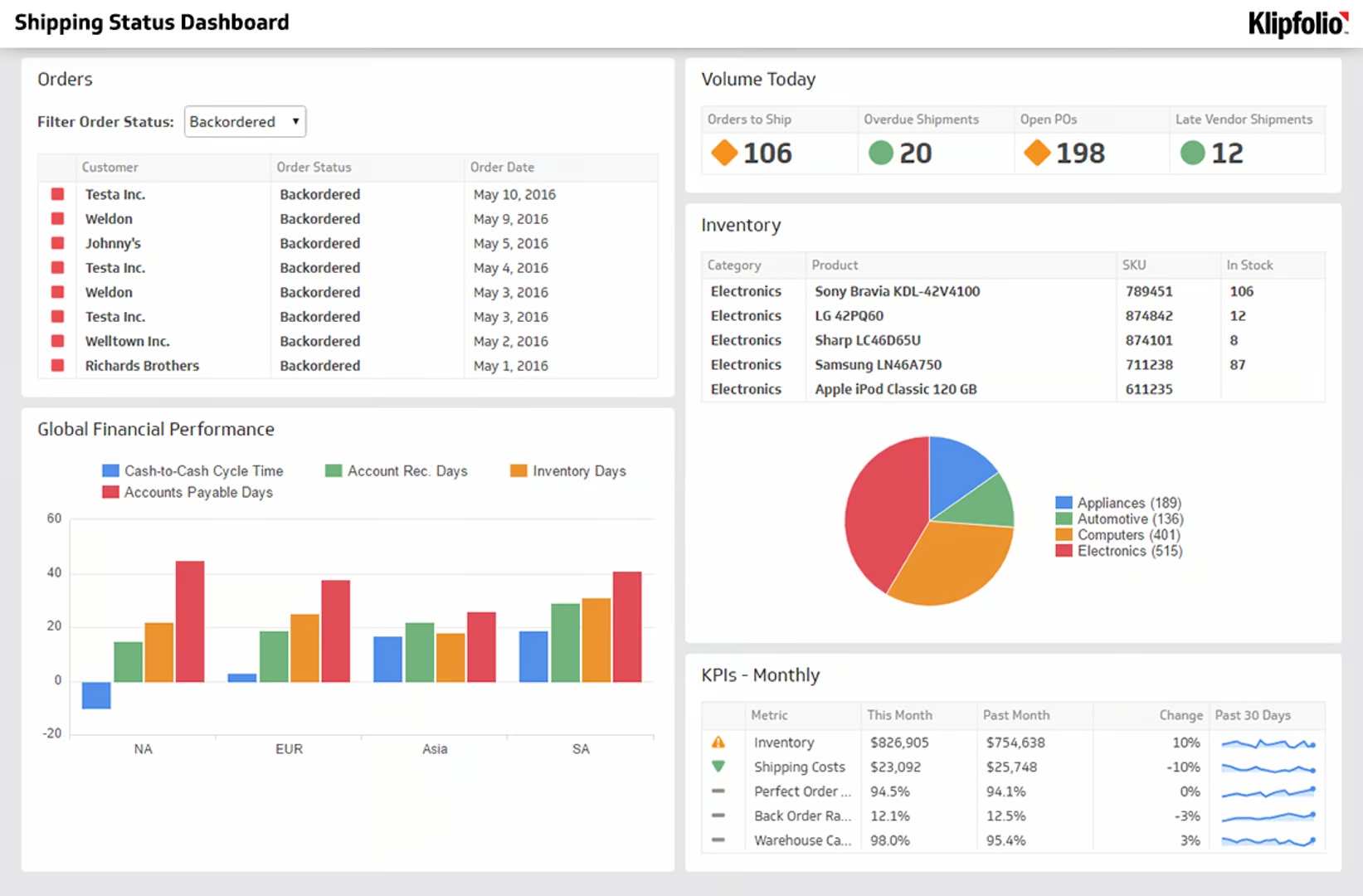
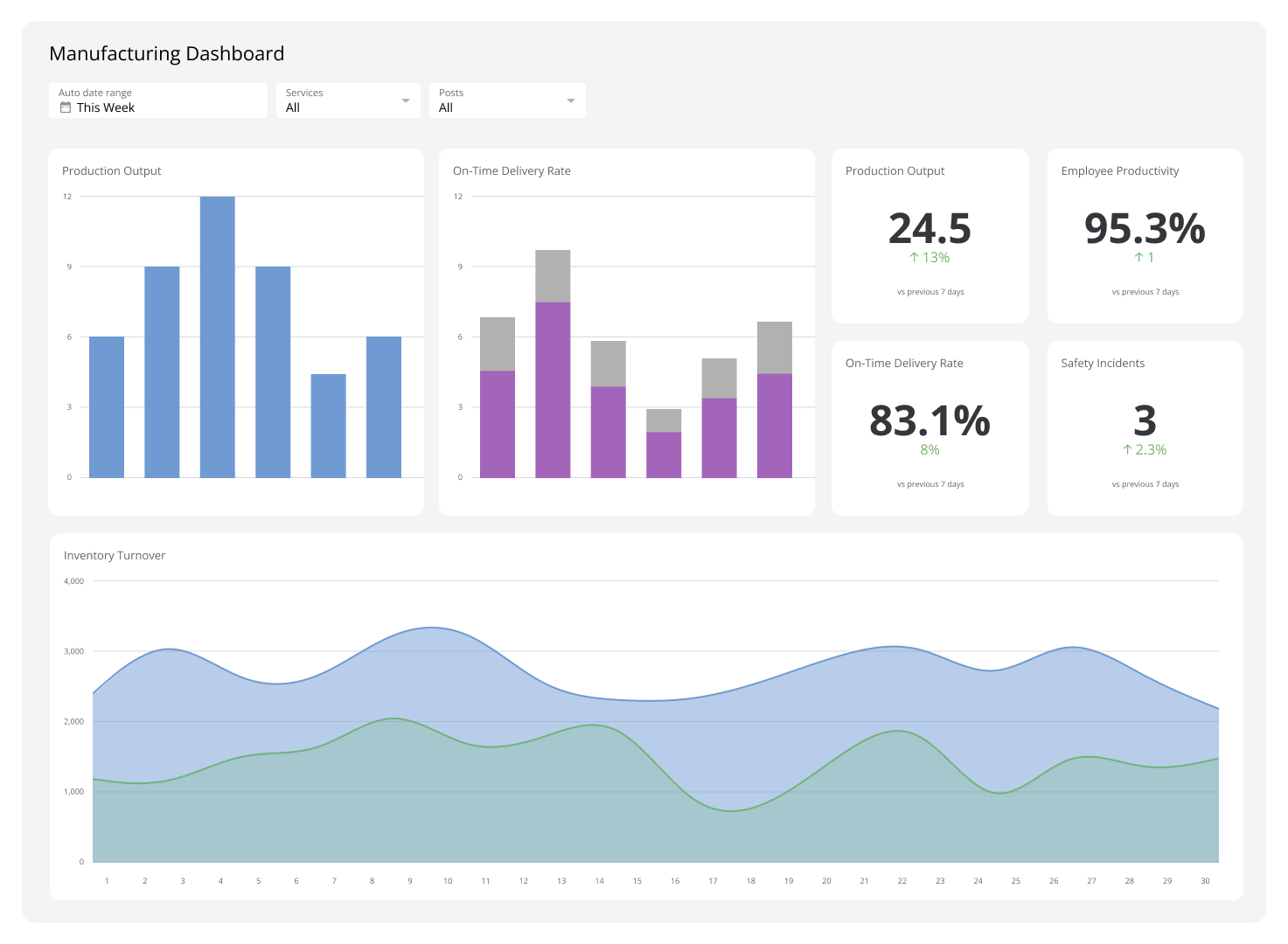
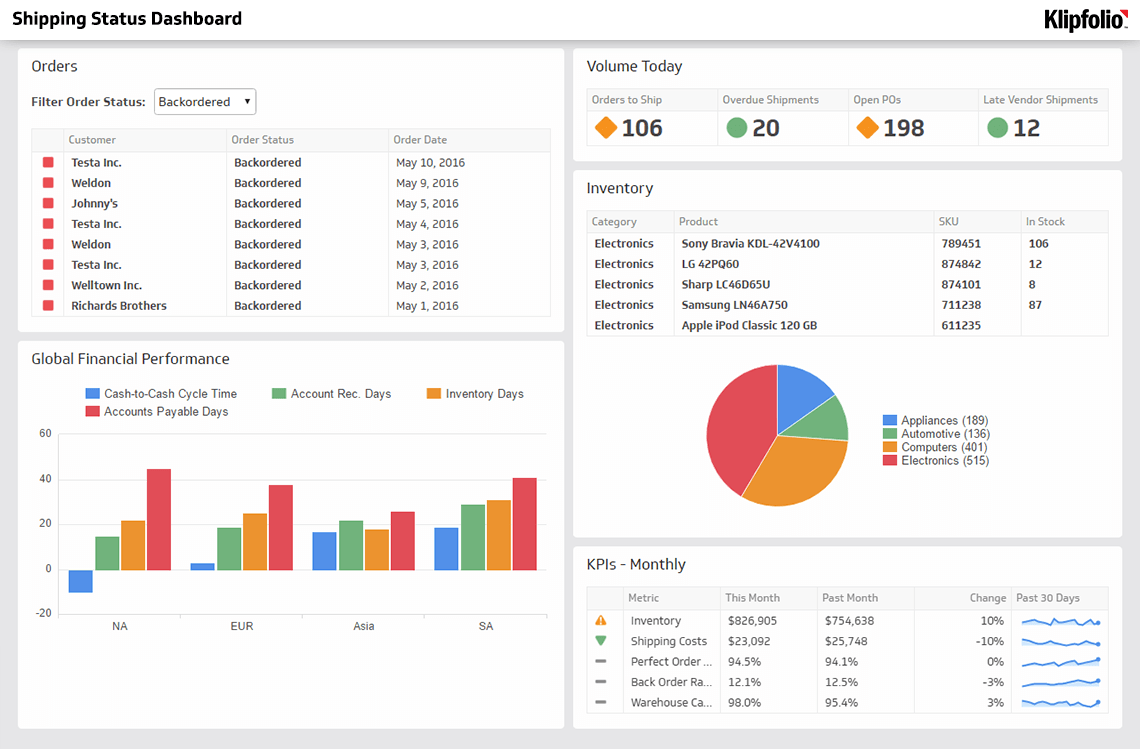
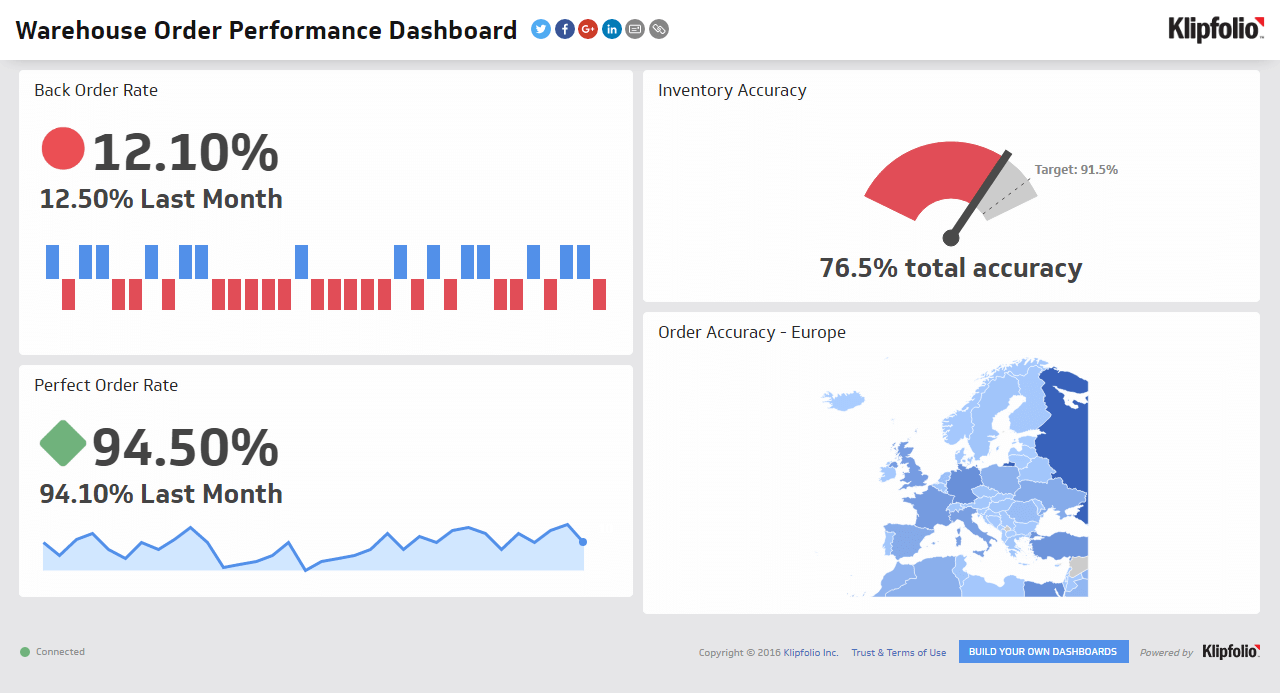
Once you have established benchmarks and targets for Carrying Cost of Inventory, monitoring it consistently is what drives improvement. A supply chain dashboard keeps this KPI visible alongside related metrics like inventory turnover and Cash Conversion Cycle, so your team can act on changes before they affect margins. Read more about supply chain dashboards.