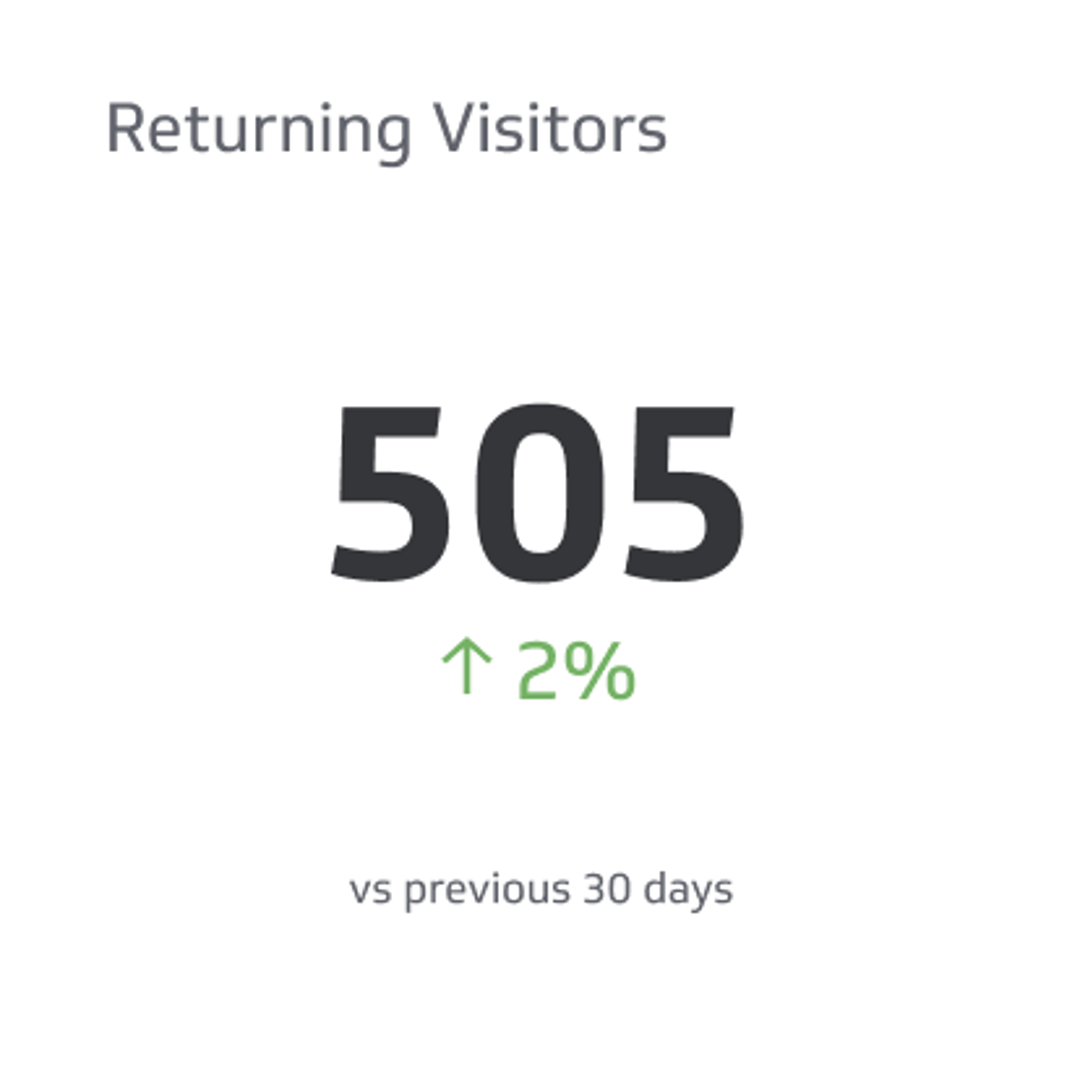
Returning Visitors
Track how often people return to your website and build a loyal audience.
Track all your Digital Marketing KPIs in one place
Sign up for free and start making decisions for your business with confidence.
Returning Visitors Definition
Returning visitors metric are individuals who have previously visited your website and come back for another visit. This metric tracks how often people return to your site, helping you measure the effectiveness of your content marketing strategy and audience retention efforts.
Returning visitors are essential to understand because they indicate whether your website is building a loyal audience. Unlike first-time visitors, returning visitors have already decided your content or product is worth their time—they're coming back for more.
What does the returning visitors metric measure?
The returning visitors metric organizes visits into groupings based on visit frequency: 2–3 visits, 4–9 visits, and 10+ visits. It also tracks supporting data like average pages per session and average time on site for return visits. Month-over-month comparisons let you see whether your audience is growing more engaged over time.
By analyzing these patterns, you can reverse-engineer traffic trends to understand how your content marketing strategy influences visitor behavior.
Why returning visitors matter
Returning visitors signal that your website is resonating with people. They're more likely to convert into customers, subscribers, or advocates than first-time visitors. A growing base of repeat visits suggests your content strategy is working and your audience finds value in what you offer.
For growing companies, returning visitors often cost less to serve than acquiring new visitors, making them a more efficient source of engagement and revenue.
Challenges with the returning visitors metric
The returning visitors metric has a significant limitation: cookie-based tracking is unreliable. If a visitor deletes their cookies, uses a different device or browser, or has cookies disabled, they won't be identified as a returning visitor—even though they are one.
This means your actual returning visitor rate is likely higher than what your analytics show. Keep this in mind when interpreting the data.
How to interpret returning visitors data
Visit frequency doesn't equal loyalty. A visitor returning 2–3 times may be highly loyal depending on your business. A luxury brand might see fewer repeat visits than an everyday product company. Context matters.
Don't rely on this metric alone. Returning visits are one piece of the puzzle. Combine this metric with visitor conversion data, engagement metrics, and customer feedback to build a complete picture.
Watch pages per session. If returning visitors are browsing fewer pages than before, it may signal that your content isn't matching what they're looking for. Use this signal to refine your site structure or content strategy.
How to monitor returning visitors in real-time
The returning visitors metric is most useful when paired with related digital marketing metrics. Track it alongside:
- Brand awareness metric
- First visit metric
- Online conversions metric
Together, these metrics provide a complete view of how your audience is discovering and engaging with your site.
Learn more about how to track your returning visitor metric on a digital marketing dashboard.
Top resources on returning visitors
Related Metrics & KPIs
.png)